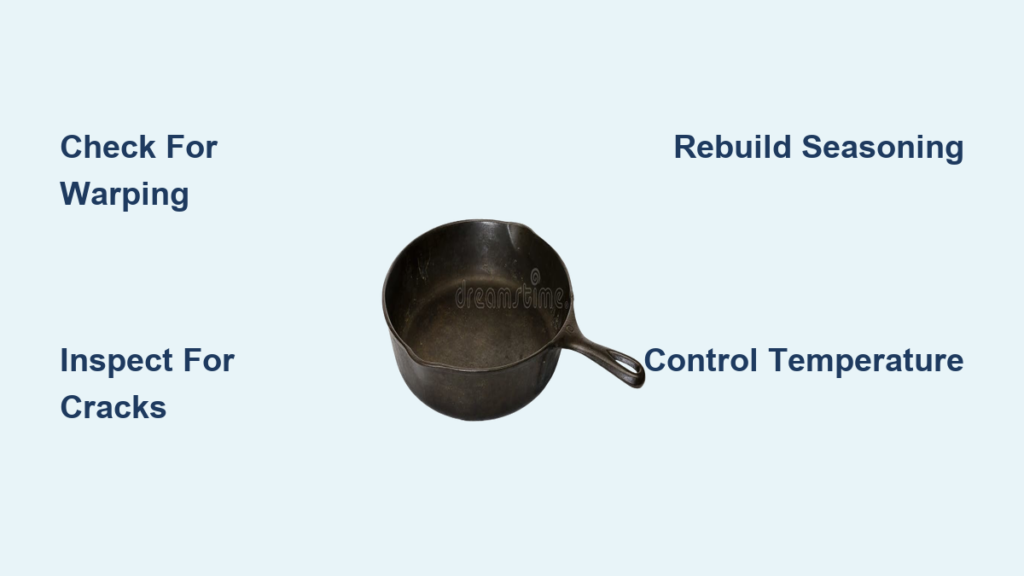
Cast iron cookware is beloved for its durability and heat retention, but even this resilient material has its limits. When your skillet develops strange discoloration, warping, or stubborn food sticking where there never was before, you might be dealing with heat damage. This common issue occurs when cast iron is exposed to temperatures beyond its structural tolerance, causing irreversible changes to the metal’s composition. Understanding how to recognize the signs of heat damage, address what you can fix, and prevent further deterioration will extend the life of your cherished cookware. In this guide, you’ll learn specific visual indicators to watch for, practical restoration techniques for salvageable pieces, and crucial temperature thresholds to avoid in your daily cooking routine.
Why Cast Iron Fails at High Temperatures
Cast iron’s vulnerability to heat damage stems from its molecular structure. When heated beyond 450°F (232°C) repeatedly or exposed to direct flame without proper seasoning, the metal undergoes thermal stress that compromises its integrity. The most common failure point occurs when users attempt to clean cookware in self-cleaning ovens, where temperatures can exceed 900°F (482°C)—far beyond what cast iron can withstand.
How Thermal Shock Warps Your Skillet
Sudden temperature changes create immediate damage to cast iron cookware. Placing a hot skillet directly into cold water triggers rapid contraction that can cause visible warping within seconds. The telltale sign? Your once-flat cooking surface develops a noticeable curve, making it unstable on burner grates. To check for warping:
- Place your skillet on a known-flat surface like a granite countertop
- Rotate the pan while observing the edge contact
- Look for light gaps between the pan bottom and surface
When Seasoning Burns Beyond Repair
Your cast iron’s protective seasoning layer begins breaking down at 500°F (260°C), but complete carbonization happens around 650°F (343°C). At this point, the polymerized oil turns to ash rather than building up the non-stick surface you need. Instead of the usual dark brown patina, you’ll notice:
- A chalky, ashy appearance that rubs off easily
- Patchy areas where metal shows through
- Persistent food sticking despite proper preheating
Recognizing Irreversible Cast Iron Damage

Not all heat damage can be fixed, and knowing when to stop restoration efforts saves you time and frustration. The following indicators mean your cookware has sustained permanent damage that compromises both performance and safety.
Cracks That Compromise Structural Integrity
Hairline cracks might seem minor, but they’re the first sign of catastrophic failure. These develop when thermal stress creates microscopic fractures that grow with each heating cycle. Test for cracks by:
- Holding your skillet up to bright light
- Running your fingertip along suspected areas (never use sharp objects)
- Listening for faint clicking sounds when gently tapping the metal
If you detect cracks, especially near the handle attachment point, discontinue use immediately—these will widen during cooking and could cause the handle to detach.
When Warping Exceeds 1/8 Inch
While slight warping can sometimes be corrected, measurements beyond 1/8 inch indicate permanent deformation. Use a straightedge ruler to measure the gap between your skillet’s highest point and a flat surface. Significant warping creates dangerous hot spots that cause uneven cooking and accelerate further damage.
Salvageable Heat Damage Restoration Methods
Many cases of heat damage fall within the repairable range if addressed promptly. These techniques focus on rebuilding your cast iron’s protective layer while working with the metal’s current condition rather than fighting its altered state.
Step-by-Step Seasoning Recovery Process
- Initial Cleaning: Use fine steel wool (000 or 0000 grade) to remove all flaking seasoning without scratching the base metal
- Degreasing: Wash thoroughly with hot water and mild dish soap, then dry completely with low heat on your stovetop
- Oil Application: Apply a micro-thin layer of high-smoke point oil (grapeseed or sunflower) using a lint-free cloth
- Baking Cycle: Heat upside down in oven at 450°F (232°C) for 1 hour, then cool completely in oven
- Repeat: Perform 2-3 additional seasoning cycles for severely damaged pieces
Temperature Control Techniques for Recovery
:max_bytes(150000):strip_icc()/sea-product-thermoworks-hi-temp-industrial-ir-circle-laser-ashlee-redger-15-703a3db7e10d4fe3bfa86db00b5f1854.jpeg)
During the restoration phase, strict temperature management prevents further damage. Never exceed 475°F (246°C) when rebuilding seasoning on heat-damaged pieces. Use an infrared thermometer to verify surface temperatures before adding oil during stovetop seasoning. For oven seasoning, place your thermometer inside the oven—not just relying on the dial setting.
Preventing Future Cast Iron Heat Damage
:max_bytes(150000):strip_icc()/faw-cast-iron-cookware-set-june-24-test-lodge-skillet-red-silicone-hot-handle-holder-nsimpson-672-15bdbf4788134d6fbd56fecb3193b943.jpeg)
The most effective restoration strategy is avoiding damage in the first place. Implement these practical measures to protect your investment during everyday cooking.
Safe Maximum Temperature Guidelines
- Stovetop cooking: Never exceed medium-high heat (approximately 375°F/190°C surface temperature)
- Oven use: Keep below 450°F (232°C) for extended periods
- Broiler exposure: Limit to 5 minutes maximum for finishing dishes
- Preheating: Always start with cold pan on cold burner
Cooling Protocol to Prevent Thermal Shock
Develop a consistent cooling routine that minimizes temperature stress:
- Turn off heat source but leave cookware in place
- Allow to cool gradually for 10-15 minutes before handling
- Never place hot cast iron directly on cold surfaces or in water
- For rapid cooling needs, set on a wooden trivet away from drafts
When to Retire Damaged Cast Iron
Despite best efforts, some pieces reach the end of their usable life. Recognize these definitive endpoints where continued use creates safety hazards:
- Visible holes or perforations in the cooking surface
- Cracks extending through the entire thickness of the metal
- Severe warping that prevents stable placement on burners
- Persistent metallic taste that doesn’t resolve after multiple seasoning attempts
Retired cast iron shouldn’t go to landfill—consider repurposing as garden edging, fire pit accessories, or donating to artists who work with metal.
Maintaining Restored Cast Iron Performance
Once you’ve successfully recovered heat-damaged cookware, implement these maintenance practices to lock in your results:
- Hand-wash only with minimal soap and immediate drying
- Apply a maintenance oil layer after each use
- Store with paper towel between stacked pieces
- Use regularly to build natural seasoning through cooking
For pieces that suffered significant heat damage, avoid cooking acidic foods for at least 20 uses to allow the new seasoning layer to fully polymerize and stabilize.
Final Note: Proper temperature management transforms cast iron from fragile to formidable. By recognizing early damage signs and implementing these targeted restoration techniques, you’ll preserve your cookware’s performance for generations. Remember that prevention through controlled heating and gradual cooling remains your most effective strategy against heat damage. When in doubt about a piece’s condition, prioritize safety over sentimentality—your cast iron should enhance your cooking experience, not compromise it. For ongoing maintenance, keep a dedicated restoration kit with fine steel wool, high-smoke point oil, and your infrared thermometer to address minor issues before they become major problems.