If you’ve ever stood in a golf shop staring at rows of irons with no idea which ones suit your game, you’re not alone. Golf iron categories confuse even seasoned players, yet selecting the right type dramatically impacts your performance on the course. Without understanding the fundamental differences between iron designs, you could be sacrificing yards, accuracy, and enjoyment with every swing. This guide cuts through the marketing jargon to help you identify which iron category matches your skill level and playing style—so you can make an informed decision that improves your scores rather than wasting money on clubs that work against your natural swing.
Why Iron Category Selection Matters More Than You Think
Golf irons aren’t one-size-fits-all equipment. Manufacturers design specific iron categories to address different player needs, from beginners struggling with consistency to tour professionals seeking precision control. Choosing the wrong category creates an uphill battle against your own equipment. When mismatched irons force you to alter your natural swing mechanics, you develop compensatory habits that become harder to correct over time. The right iron category, however, works with your swing rather than against it, making solid contact more repeatable and building confidence with each shot.
The Four Primary Golf Iron Categories Explained
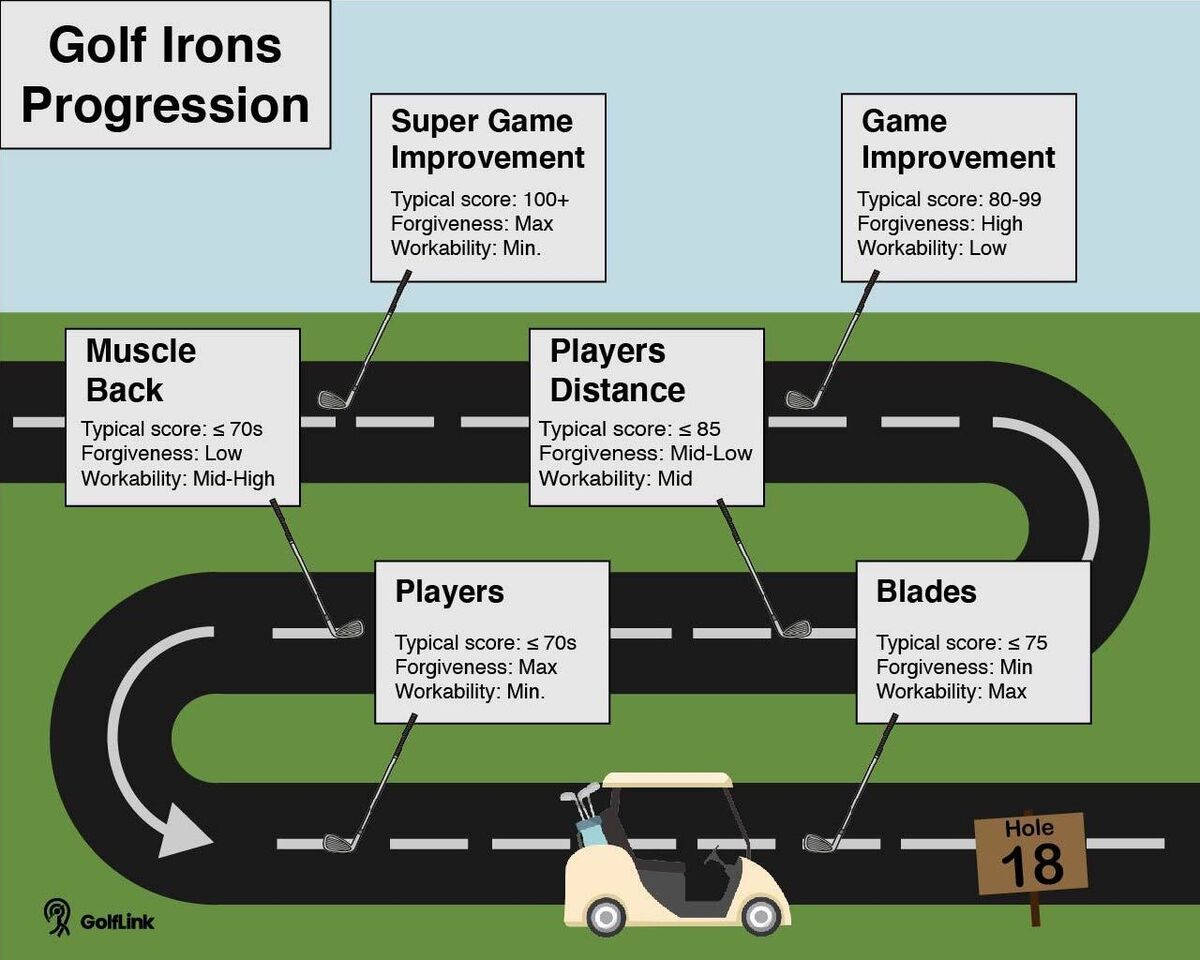
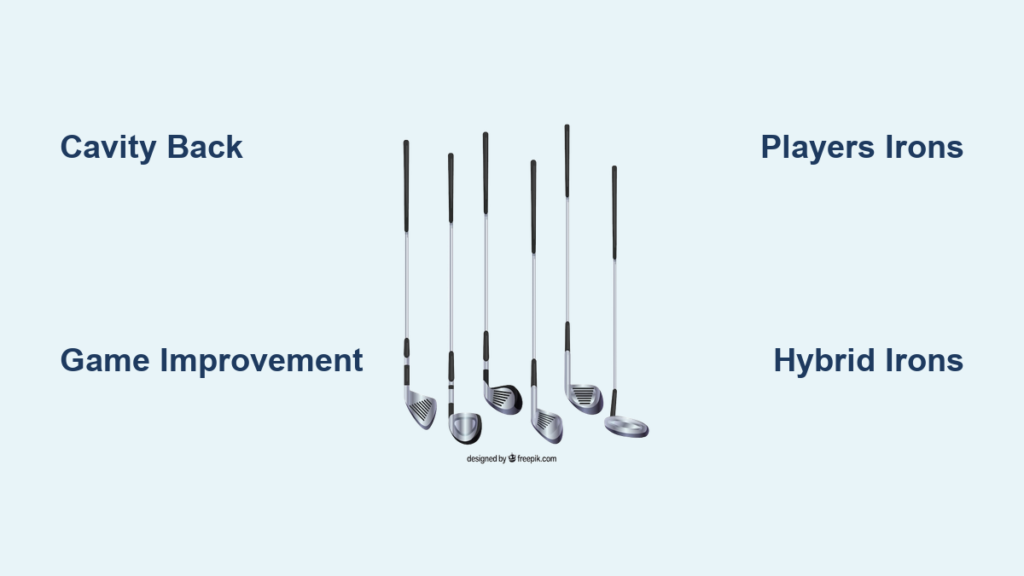
Cavity Back Irons: Forgiveness Engineered for Average Players
Cavity back irons feature a hollowed-out section on the back of the clubhead, redistributing weight to the perimeter. This design creates a larger sweet spot that minimizes distance and accuracy loss on off-center hits. Most recreational golfers benefit significantly from cavity backs because they:
- Increase consistency on mishits common in amateur swings
- Launch the ball higher with less effort
- Provide more distance through improved energy transfer
- Offer visual confidence at address with larger clubheads
Mid-handicap players (10-18 handicap) typically find cavity backs deliver the optimal balance between forgiveness and workability. The perimeter weighting helps maintain ball speed even when contact isn’t perfect—a crucial advantage when pressure mounts during competitive play.
Game Improvement Irons: Maximum Forgiveness for High Handicappers
Game improvement irons take cavity back technology further with even more extreme perimeter weighting, wider soles, and lower centers of gravity. These clubs feature:
- Thicker toplines that inspire confidence at address
- Progressive offset that helps square the face at impact
- Larger overall head sizes than traditional cavity backs
- Strategic weighting that promotes higher launch angles
Beginners and high-handicap golfers (18+ handicap) gain the most from game improvement designs. The extra forgiveness compensates for inconsistent strikes while helping get the ball airborne more easily. Don’t let the “game improvement” label fool you—many modern versions maintain enough workability for mid-handicappers seeking additional help with their long irons.
Players Irons: Precision Tools for Low-Handicap Golfers
Players irons—sometimes called muscle backs or blades—feature minimal offset, thin toplines, and compact head shapes that appeal to skilled golfers. These clubs offer:
- Direct feedback on strike quality through crisp sound and feel
- Greater workability for shaping intentional shots
- Lower trajectories preferred by better players
- Traditional aesthetics that inspire confidence
Low-handicap players (0-10 handicap) typically choose players irons because they demand consistent ball-striking but reward clean contact with superior control. The reduced forgiveness becomes an asset for these players, as immediate feedback helps diagnose and correct swing flaws. Many tour professionals rely on players irons for their short irons while mixing in more forgiving designs for longer clubs.
Hybrid Irons: The Modern Solution for Long Iron Replacement
Hybrid irons combine wood-like clubhead shapes with iron lofts to create easier-to-hit alternatives for traditional long irons. These innovative designs feature:
- Lower, deeper centers of gravity that launch the ball higher
- Wider soles that glide through turf more smoothly
- Shorter shafts than fairway woods for better control
- Versatility from various lies including rough and sand
Most golfers struggle with 2-5 irons due to their narrow soles and low lofts. Hybrid irons solve this problem by maintaining similar distances while being significantly more forgiving. Many sets now include hybrid replacements for long irons, or players carry hybrids separately to complement their main iron set.
How Handicap Level Determines Your Ideal Iron Category

High-Handicap Golfers (18+): Prioritize Maximum Forgiveness
If you consistently shoot over 90, game improvement irons should be your primary consideration. Look for models with:
- Maximum perimeter weighting (often measured as high MOI)
- Offset hosels that help close the face through impact
- Wide soles that prevent digging on off-center strikes
- Progressive set designs where long irons are more forgiving than short irons
These design elements work together to reduce side spin on mishits, keeping your ball flight more predictable even when your swing isn’t perfect. The confidence boost from more consistent contact often leads to immediate score improvements.
Mid-Handicap Golfers (10-18): Balance Forgiveness with Control
Golfers in this range often benefit from cavity back irons that offer a blend of forgiveness and feedback. Focus on:
- Sets with progressive cavity designs (more forgiveness in long irons)
- Moderate offset that helps without being excessive
- Compact enough head shapes to allow shot shaping when needed
- Soles wide enough for forgiveness but not so wide they feel clunky
This balanced approach helps mid-handicappers continue improving while maintaining enough workability for developing shot-making skills around the greens.
Low-Handicap Golfers (0-10): Precision Over Forgiveness
As your ball-striking consistency improves, you’ll likely prefer players irons that provide:
- Immediate feedback on strike location through sound and feel
- Compact head shapes that inspire confidence in better players
- Minimal offset for greater workability on intentional fades and draws
- Lower trajectories that better players can control
Many low-handicappers now opt for “players distance” irons that blend some forgiveness features with traditional players iron aesthetics and workability.
Common Iron Selection Mistakes to Avoid

Choosing Clubs Based on Looks Alone
Many golfers fall in love with the sleek appearance of players irons without considering whether their game can handle the reduced forgiveness. Be honest about your miss-hit patterns before selecting club style.
Ignoring Shaft Flex and Weight
The right iron category matters little if your shafts don’t match your swing speed. Get properly fitted for shaft flex (regular, stiff, etc.) and weight to maximize performance from your chosen iron category.
Keeping Outdated Irons Too Long
Iron technology advances significantly every few years. If your irons are more than 5 years old, newer designs in your appropriate category could add multiple yards and improve consistency.
Maintaining Your Irons for Peak Performance
Regardless of which iron category you choose, proper maintenance preserves performance:
- Clean clubfaces after every round with warm water and mild soap
- Check groove condition regularly—worn grooves reduce spin and control
- Store clubs in a dry environment to prevent rust on carbon steel models
- Replace grips every 12-18 months or when they become slick
Final Note: The right iron category works with your natural swing rather than against it. By matching your equipment to your actual skill level—not your aspirations—you’ll build confidence through more consistent contact and see tangible improvements in your scores. When shopping for new irons, prioritize forgiveness appropriate for your current ability rather than what looks impressive in the display case. Your best golf comes when your equipment complements rather than complicates your game.