Neglected golf irons lose performance faster than you might realize. When dirt, moisture, and wear accumulate on your clubs, you’re not just damaging equipment—you’re sacrificing spin, accuracy, and distance on every shot. Many golfers don’t realize that proper iron maintenance directly impacts their scores, with worn grooves alone potentially reducing backspin by up to 20%. Whether you’re using premium forged irons or reliable cavity-back models, implementing a consistent maintenance routine preserves your investment and keeps your game sharp. This guide delivers actionable steps you can take immediately to protect your irons’ performance and extend their lifespan significantly.
Clean Your Golf Irons After Every Single Round
Skipping post-round cleaning might seem harmless after one or two rounds, but debris buildup creates a compounding effect that rapidly degrades performance. Grass, sand, and moisture left on clubfaces overnight accelerate wear on critical performance areas, particularly the grooves that generate spin.
Essential post-round cleaning procedure:
Grab a soft-bristle brush and damp towel immediately after finishing your round while dirt remains moist and easier to remove. Start by wiping away surface debris from each clubhead, then focus on the grooves where grass clippings embed most stubbornly. For thorough cleaning, mix warm water with a few drops of mild dish soap in a container, submerge clubheads, and gently scrub with your brush using circular motions. Pay special attention to the leading edge and sole areas where dirt accumulates heavily. Rinse each club thoroughly with clean water and dry immediately—never let clubs air dry.
Critical drying techniques most golfers miss:
Most amateur golfers make the mistake of setting their clubs aside to air dry, which invites rust formation in hidden areas. Instead, use a microfiber towel to meticulously dry every surface, running the cloth through each groove to extract trapped moisture. For hard-to-reach areas around the hosel, a cotton swab works perfectly. In humid conditions or after rainy rounds, consider applying a light coat of mineral oil to the clubface after drying to create a moisture barrier. This simple step prevents water spots and significantly reduces early-stage corrosion.
Prevent Rust Before It Damages Your Irons

Rust doesn’t just affect appearance—it permanently alters the molecular structure of your clubface, creating microscopic pits that reduce friction and spin. Once rust takes hold, even professional polishing can’t fully restore the original surface texture, directly impacting ball flight characteristics.
Identify your rust risk factors:
Coastal golfers face particular challenges as salt air dramatically accelerates corrosion. Humidity levels above 60% create ideal rust conditions, especially when clubs transition between temperature extremes (like moving from air-conditioned cars to humid courses). Leather grips retain moisture longer than synthetic alternatives, creating a damp environment against club hosels where rust often starts.
Effective rust prevention system:
After thorough cleaning and drying, apply a thin coat of food-grade mineral oil to clubheads using a soft cloth. This creates an invisible barrier against moisture without affecting performance. Store clubs in a climate-controlled space rather than garages or vehicle trunks where temperature fluctuations cause condensation. Place silica gel packets inside your golf bag to absorb ambient moisture between rounds. For frequent players in humid environments, consider investing in moisture-resistant club headcovers that provide an additional protective layer when clubs aren’t in use.
Restore and Maintain Groove Performance for Maximum Spin

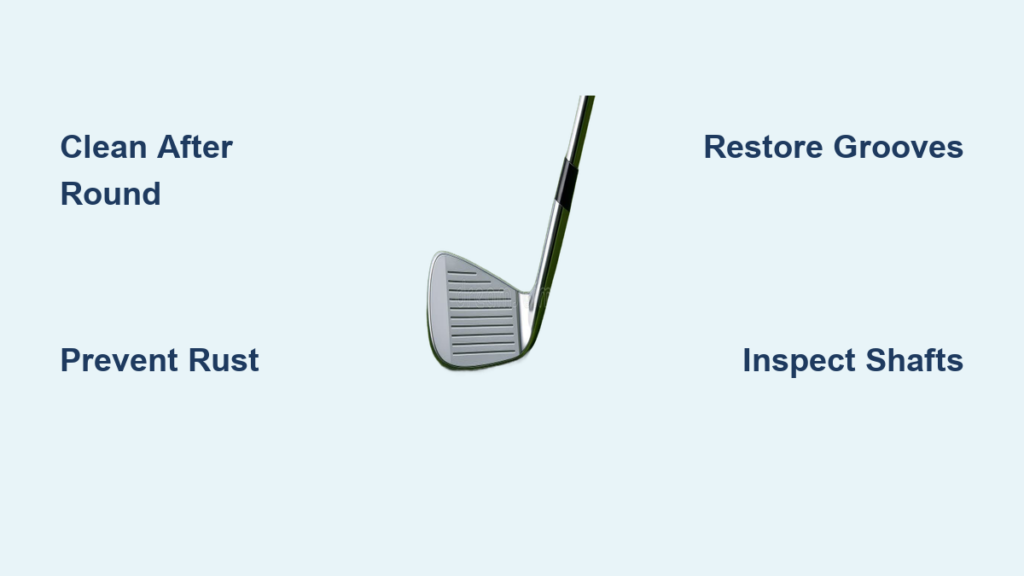
Your iron grooves function like tire treads, channeling moisture and debris away to maintain clean contact with the ball. Worn or clogged grooves dramatically reduce spin rates, causing shots to fly unpredictably and roll out excessively on approaches.
Deep groove cleaning that actually works:
Standard brushing often misses debris packed deep within grooves. Use a dedicated groove cleaning tool or a straightened paperclip to carefully extract stubborn buildup, working from heel to toe along each groove. For severe accumulation, soak clubheads in warm, soapy water for 15-20 minutes before cleaning to loosen hardened debris. Never use metal scrapers or abrasive pads that widen grooves beyond USGA specifications—this not only reduces spin but could make your clubs non-conforming in competitive play.
When to consider professional groove restoration:
Grooves naturally wear down from impact with golf balls and practice mats, with visible rounding typically appearing after 50-75 rounds of regular play. If you notice your approach shots running out farther than usual or reduced stopping power on greens, your grooves may need attention. Professional clubmakers use precision equipment to restore groove sharpness without compromising conformity, but this service removes small amounts of metal and can only be performed a limited number of times. Avoid DIY sharpening attempts that create uneven groove edges and inconsistent performance.
Inspect and Maintain Iron Shafts for Safety and Performance
Shaft damage often develops gradually without obvious signs until complete failure occurs mid-swing—a potentially dangerous situation that also ruins shot consistency. Regular shaft inspections catch problems early when they’re still manageable.
Thorough shaft inspection technique:
Examine each shaft under bright light, slowly rotating the club to check the entire surface. Look for dents, scratches, or flat spots that create weak points. Pay special attention to the area just above the clubhead and near the grip where stress concentrates during swings. For graphite shafts, watch for “spider webbing”—fine cracks in the composite material that appear as white lines. Run your fingers along the shaft to detect subtle imperfections that visual inspection might miss.
Addressing shaft issues properly:
Minor surface scratches on steel shafts typically don’t affect performance, but any visible dent or bend requires professional evaluation. Attempting to straighten a bent shaft often creates hidden stress points that lead to sudden failure. Graphite shaft damage usually necessitates replacement rather than repair. If you notice unusual vibration during swings or inconsistent ball flight that isn’t explained by your swing, have a professional inspect your shafts immediately.
Store Golf Irons to Maximize Longevity
How you store your irons between rounds directly impacts their lifespan. Improper storage causes more club damage than many golfers realize, particularly through moisture retention and environmental exposure.
Immediate post-round storage protocol:
Never store clubs in a wet golf bag. After cleaning, unzip your bag completely and stand it in a well-ventilated area to ensure complete drying. If possible, remove clubs from the bag and store them vertically in a dedicated club rack. For extended storage between seasons, wrap clubheads in breathable cloth (never plastic) to allow any residual moisture to evaporate while protecting against dust.
Optimal long-term storage environment:
Store clubs in a climate-controlled space maintaining 65-75°F with humidity below 50%. Basements and attics create damaging humidity fluctuations that accelerate corrosion. Lay bags horizontally rather than standing them upright, which puts consistent pressure on clubheads that can deform over time. Remove grips periodically to check for hidden moisture buildup between the grip and shaft.
Schedule Professional Iron Servicing at Critical Intervals
While home maintenance handles routine care, professional servicing addresses specialized needs that ensure your irons perform optimally throughout their lifespan.
Essential professional services:
Grip replacement should be performed by professionals who properly prepare the shaft surface and apply correct tension during installation. Deep groove restoration requires precision equipment to maintain USGA conformity while restoring performance. Professional inspections identify developing issues like shaft microfractures or hosel loosening that home inspections might miss.
Smart service scheduling:
Competitive golfers playing 2+ rounds weekly should schedule professional servicing every 6 months. Recreational golfers benefit from annual professional attention, ideally before the start of each golf season. Golfers in coastal or high-humidity environments need more frequent professional inspections to address accelerated corrosion. Always request a comprehensive performance check when having any service performed.
Extend Your Irons’ Performance Lifespan Through Consistent Care
The difference between clubs that perform well for years versus those that deteriorate quickly comes down to maintenance consistency. Well-cared-for irons maintain their original performance characteristics significantly longer, delivering better value and more consistent play.
Performance preservation through maintenance:
Regular cleaning prevents debris buildup that alters bounce angles and sole grinds over time. Preserving groove integrity maintains consistent spin rates across your set, crucial for distance control. Proper storage prevents microscopic corrosion that gradually changes clubface texture and friction characteristics. These seemingly small factors combine to deliver more predictable ball flight and shot outcomes round after round.
Financial benefits of proper iron care:
Consider the math: replacing a single iron costs $100-$200, while a full set runs $1,000+. Meanwhile, quality cleaning supplies cost less than $50 annually. Consistent maintenance preserves your clubs’ resale value—well-kept used irons command 30-50% higher prices than neglected ones. More importantly, maintaining consistent equipment characteristics avoids the performance disruption of frequent club replacements, helping you focus on improving your game rather than adjusting to new equipment.
Proper golf iron maintenance requires just minutes after each round but delivers season-long performance benefits. By implementing these cleaning protocols, rust prevention strategies, and storage techniques, you protect your investment while maintaining the spin, control, and consistency that separate good shots from great ones. The most successful golfers treat their equipment with the same care they give their swings—because when your clubs perform consistently, your game follows suit. Start today with a thorough cleaning of your current set, and establish the habits that will keep your irons delivering peak performance for years to come.