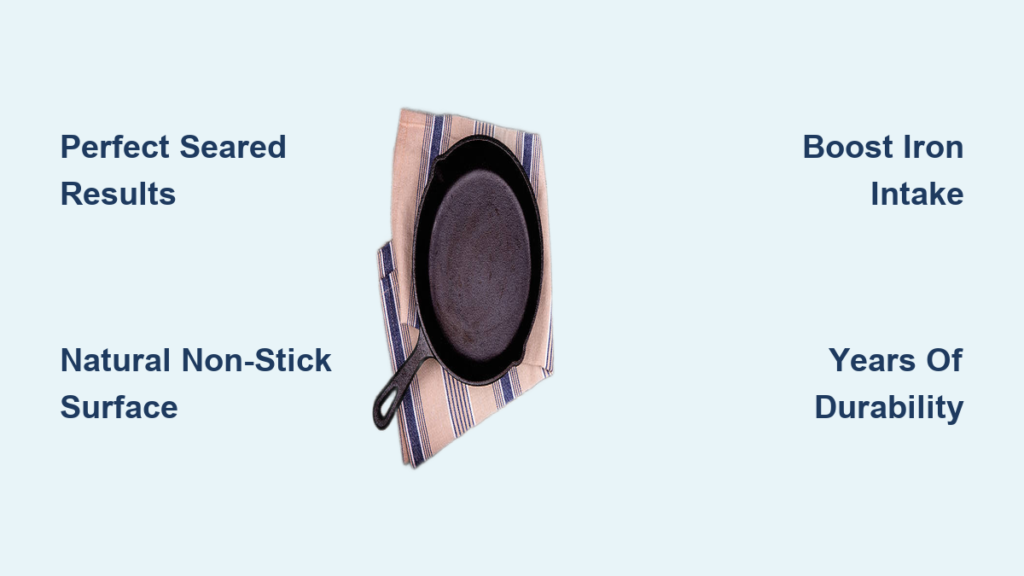
Nothing ruins a cooking experience faster than watching your carefully prepared meal stick stubbornly to the pan, tearing apart as you try to flip or serve it. For cast iron owners, this frustrating scenario often stems from improper seasoning rather than a fundamental flaw in the cookware. Learning how to make cast iron non-stick transforms your heavy skillet from a potential kitchen headache into your most reliable cooking companion. Unlike modern non-stick pans with synthetic coatings that degrade over time, properly seasoned cast iron develops a natural, durable non-stick surface that actually improves with use. This guide reveals the exact steps needed to create and maintain that coveted slick cooking surface on your cast iron cookware.
The secret to non-stick cast iron lies in a simple but often misunderstood process called seasoning. This isn’t about adding salt and pepper—it’s a chemical transformation where oil bonds to the iron surface through heat, creating a protective polymerized layer. Without this crucial barrier, cast iron’s naturally porous surface provides countless tiny footholds for food to grip and stick. But with proper seasoning, that same porous structure becomes an asset, holding the seasoning layer securely while creating an exceptionally smooth cooking surface. Whether you’ve just purchased your first cast iron skillet or inherited a rusty family heirloom, mastering this technique ensures decades of reliable cooking performance.
Why Your Cast Iron Isn’t Naturally Non-Stick
Cast iron’s microscopic surface structure explains why seasoning is essential for non-stick performance. Under magnification, the cooking surface reveals countless tiny peaks and valleys—this rough texture gives cast iron its excellent heat retention but creates perfect conditions for food to snag and stick. Raw cast iron behaves like fine sandpaper at a microscopic level, providing ample surface area for proteins in food to bond with the metal through a process called the Maillard reaction. This is why eggs and delicate fish become culinary nightmares in unseasoned cast iron.
The good news is that seasoning fills these microscopic gaps with polymerized oil, creating a smooth, protective barrier. When oil is heated to its smoke point on cast iron, a chemical reaction called polymerization occurs—the oil molecules break down and recombine into a hard, plastic-like coating that bonds permanently to the iron. This transformed layer becomes hydrophobic (water-repelling) and oleophilic (oil-attracting), allowing cooking fats to spread evenly while preventing water-based foods from sticking. Properly executed, this process creates a surface as slick as commercial non-stick coatings but with superior heat tolerance and longevity.
Beyond non-stick properties, seasoning protects your investment from rust—the constant threat to bare cast iron. Iron naturally reacts with oxygen and moisture to form rust, which eats away at your cookware over time. The polymerized oil layer acts as a physical barrier, preventing moisture from reaching the metal surface. A well-seasoned pan develops a dark, almost black patina that not only improves cooking performance but also serves as visible proof of proper care. This protective layer continues to build and improve with each use and proper maintenance cycle.
Essential Supplies for Perfect Seasoning

Gathering the right materials before starting ensures your seasoning attempt succeeds on the first try. Your oil selection makes or breaks the entire process—opt for high-smoke point oils rich in unsaturated fats that polymerize effectively. Flaxseed oil remains the gold standard despite some controversy, creating a hard, glossy finish that many consider ideal. Grapeseed oil offers a practical alternative with its high smoke point (420°F) and neutral flavor profile. Avocado oil works well for those seeking a nutrient-rich option with an impressive 520°F smoke point. Vegetable shortening like Crisco provides a traditional, affordable choice that produces reliable results through multiple seasoning cycles.
Avoid oils that sabotage your efforts: extra virgin olive oil’s low smoke point (320-400°F) causes burning before proper polymerization occurs, while coconut oil’s high saturated fat content prevents effective bonding. Canola oil works in a pinch but requires more applications to build adequate seasoning. The amount matters too—start with just one to two teaspoons for a standard 10-inch skillet. You’ll also need lint-free cloths (old cotton t-shirts cut into squares work perfectly) for applying the thinnest possible oil layer, aluminum foil to protect your oven from drips, and high-heat oven mitts for safe handling.
For pans needing restoration, gather additional supplies: a stiff brush (nylon or bamboo), mild dish soap, and optionally a plastic scraper for stubborn residue. Steel wool or abrasive cleaners should be reserved for severe cases only, as they remove seasoning along with the problem areas. Having everything prepared before starting prevents rushed decisions that compromise results—seasoning requires patience, but proper preparation makes the process smooth and efficient.
Prepare Your Pan for Seasoning Success
Proper preparation separates successful seasoning from frustrating failures. For brand-new cast iron, remove the factory-applied wax coating by washing thoroughly with hot, soapy water and a stiff brush—this protective layer prevents rust during shipping but blocks proper oil bonding. Don’t believe the myth that new cast iron shouldn’t be washed with soap; that protective coating must go. For previously used pans, assess whether you’re building on existing seasoning or starting fresh. Minor rust spots or light food residue can often be addressed with focused cleaning, but flaking seasoning or extensive rust requires stripping back to bare metal.
To strip seasoning properly, use a paste of baking soda and water with vigorous scrubbing, or for more severe cases, employ the self-cleaning cycle of your oven (place the pan upside down on the top rack with a foil-lined bottom rack to catch debris). After cleaning, the critical yet often overlooked step is complete drying. Water left on the surface causes seasoning to bubble and peel during heating. Dry your pan thoroughly with a clean towel, then place it on a burner over low heat for 5-10 minutes until completely moisture-free. The pan should feel warm to the touch but not hot—this indicates it’s ready for oil application. Skip this heating step, and your seasoning attempt will likely fail due to trapped moisture.
Apply Oil Using the Thin-Layer Technique
:max_bytes(150000):strip_icc()/__opt__aboutcom__coeus__resources__content_migration__serious_eats__seriouseats.com__images__2016__09__20160817-cast-iron-pan-vicky-wasik-3-c56f176298784fef9e60f6cea198e0e4.jpg)
The single most common seasoning mistake is applying too much oil—less is dramatically more in this process. Pour just enough oil to lightly coat the bottom of your pan (about one teaspoon for a 10-inch skillet), then use your lint-free cloth to spread it in an impossibly thin, even layer across the entire cooking surface. The goal is to create a layer so thin it’s nearly invisible—when done correctly, the pan should appear matte rather than shiny. Wipe away excess by running your cloth over the surface again with light pressure; you should barely feel any oil residue on the cloth.
Focus special attention on the cooking surface center where heat concentrates most during use. While many cooks season only the interior, applying a thin layer to the exterior creates uniform protection against rust. The handle benefits from a light coating too, though this is purely cosmetic. As you work, remember that oil thickness directly impacts results—thick layers become sticky and never fully polymerize, while paper-thin applications create hard, durable seasoning. Your properly oiled pan should look almost dry to the naked eye, with only a faint sheen visible under bright light.
Bake at Precise Temperatures for Polymerization
:max_bytes(150000):strip_icc()/__opt__aboutcom__coeus__resources__content_migration__simply_recipes__uploads__2019__03__HT_Cast_Iron_Method00015-db4a77a9b5404af1be3c116317980433.jpg)
The oven curing process transforms your thin oil layer into permanent seasoning through precise heat application. Preheat your oven to 425°F—the sweet spot between insufficient polymerization at lower temperatures and oil burning at higher extremes. Place your oiled pan upside down on the middle rack (this prevents oil pooling), with aluminum foil on the rack below to catch any drips. The upside-down position ensures any unbound oil drips away from the cooking surface rather than creating thick, uneven spots.
Bake for one to two hours depending on your oil choice—flaxseed typically needs one hour while vegetable shortening benefits from the full two hours. During baking, polymerization occurs as evidenced by a distinct oil-heating smell and possibly light smoke. After the timer ends, turn off the oven but leave the pan inside to cool gradually—this slow cooling prevents thermal shock that could crack the newly formed seasoning layer. Allow at least two hours for complete cooling before handling. When finished, your pan should have a darker, slightly glossy appearance with a smooth, almost glassy feel to the touch.
Build Multiple Layers for Maximum Performance
One seasoning cycle creates a functional base, but three to five layers build the durable, truly non-stick surface cast iron is famous for. Each additional layer bonds to the previous one, gradually filling microscopic imperfections and creating that legendary slick cooking surface. After your pan cools from the first cycle, immediately apply another impossibly thin oil layer and repeat the baking process—back-to-back cycles create superior results compared to spaced-out applications.
Focus extra attention on the pan’s center during subsequent applications, as this area bears the brunt of cooking heat and wear. After multiple cycles, run your finger across the surface—you should feel distinct smoothness with no rough or sticky spots. A properly built seasoning layer appears dark and slightly glossy but never wet-looking. Don’t expect perfect non-stick performance after just one cycle; building exceptional release properties takes patience and multiple layers. Many cast iron enthusiasts perform five consecutive seasoning cycles when restoring a pan, achieving results that rival professional-grade non-stick surfaces.
Maintain Your Non-Stick Surface Through Proper Care
Preserving your hard-earned seasoning requires consistent, simple maintenance after each use. Clean promptly while the pan is still warm (but not scalding hot) using hot water and a stiff brush—modern mild dish soaps won’t harm properly polymerized seasoning despite old myths. For stubborn residue, use coarse salt as a gentle abrasive rather than harsh scrubbers. Never soak cast iron in water, as prolonged moisture exposure causes rust underneath the seasoning layer.
After washing, dry immediately with a clean towel, then place the pan on a low burner for 3-5 minutes to ensure complete moisture evaporation. While still warm, apply a whisper-thin oil layer to the cooking surface using your lint-free cloth—rub until the surface appears dry rather than shiny. Store in a dry location with air circulation; some cooks place a paper towel inside the pan to absorb ambient moisture. Avoid stacking pans directly on top of each other without protection, as this scratches accumulated seasoning. With proper care, your cast iron develops increasingly better non-stick properties over time, rewarding your maintenance efforts with decades of reliable service.
Fix Sticking Problems with These Proven Methods
When food sticks to a previously reliable surface, three common issues are usually to blame. First, insufficient preheating—cast iron must reach proper temperature before food contact. Heat your empty pan over medium heat for 5-10 minutes until a water droplet sizzles and evaporates quickly. Second, inadequate cooking fat—add oil to the preheated pan and let it heat until shimmering before adding food. Third, damaged seasoning—address localized sticking by spot-seasoning the problem area with one or two additional cycles.
For stubborn residue that causes sticking, create a paste of equal parts baking soda and water, apply to the affected area, and scrub gently with a non-abrasive brush. Rinse thoroughly, dry completely, and apply a fresh seasoning layer. Remember that cast iron’s non-stick properties develop gradually—don’t test a newly seasoned pan with eggs or delicate fish right away. Start with heartier foods like seared meats or roasted vegetables for the first few uses, allowing the seasoning to fully cure through regular cooking.
Mastering how to make cast iron non-stick transforms your cooking experience, eliminating frustrating sticking issues while creating a surface that improves with every use. By following these precise seasoning techniques and maintenance practices, your cast iron cookware will deliver exceptional performance for generations, proving that sometimes the oldest methods truly are the best.