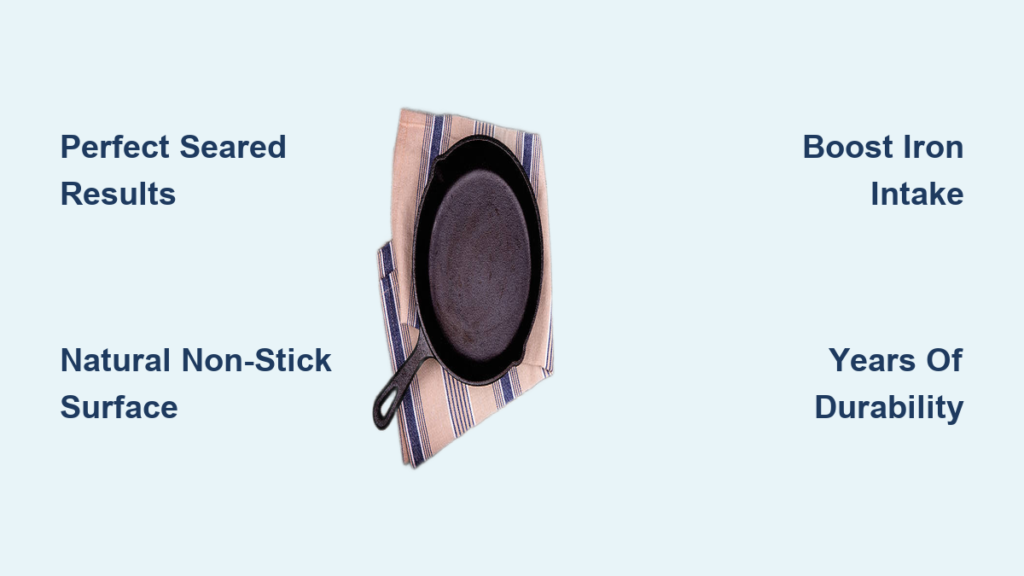
That frustrating moment when your sunny-side-up egg welds itself to your prized cast iron skillet is all too familiar. Despite cast iron’s legendary heat retention and durability, eggs stubbornly cling to its surface, turning breakfast into a scraping battle. The culprit? Egg proteins bonding directly to microscopic pores in the iron as they coagulate at just 140°F. But here’s the good news: with the right seasoning, temperature control, and technique, you can achieve perfectly release-ready eggs every time. This guide reveals field-tested methods to transform your cast iron from egg-adversary to your most reliable breakfast companion—starting with your very next omelet.
The science behind sticking is straightforward yet solvable. Cast iron’s porous surface expands when heated, creating countless attachment points for egg proteins. Without proper seasoning—a polymerized oil barrier—those proteins lock onto bare metal. Combine this with incorrect temperature or insufficient fat, and you’ve created the perfect storm for sticking. Master these three fundamentals—seasoning integrity, precise heat management, and strategic fat application—and you’ll consistently cook eggs that slide right off. Let’s dive into the exact steps that guarantee success.
Build Bulletproof Seasoning Before Cooking

Your pan’s seasoning layer is the non-negotiable foundation for stick-free eggs. This polymerized oil coating seals cast iron’s microscopic pores, creating a smooth barrier that prevents protein bonding. Skip this step, and even perfect temperature control won’t save your eggs from adhesion.
Start by applying an almost invisible layer of flaxseed oil (the gold standard for its complete polymerization) or alternatives like avocado or grapeseed oil. Too much oil causes sticky buildup—wipe excess thoroughly with a paper towel until the surface looks nearly dry. Heat the pan upside down at 400-450°F for 60-90 minutes, then cool completely in the oven. Repeat this three to six times for multiple protective layers.
After each egg-cooking session, maintain this barrier by wiping warm cast iron with a thin oil layer while cooling. If you spot rust or uneven patches, strip seasoning with coarse salt scrubbing, then rebuild from scratch. A properly seasoned surface should feel glass-smooth to the touch—never sticky or rough. This isn’t just preparation; it’s creating the essential non-stick canvas for flawless eggs.
Why Flaxseed Oil Outperforms Other Oils
Flaxseed oil’s high polyunsaturated fat content creates the hardest, most durable seasoning layer. While bacon fat adds flavor during cooking, it won’t build long-term seasoning like flaxseed. For maintenance, use neutral high-smoke-point oils like grapeseed between deep-seasoning sessions. Avoid olive oil—it polymerizes poorly and leaves a gummy residue that guarantees sticking.
Master the 300-350°F Sweet Spot
Temperature mismanagement causes 80% of sticking failures. Too cool (below 300°F), and eggs bond before proteins set; too hot (above 350°F), and fats smoke while seasoning breaks down. Hitting the precise 300-350°F range is non-negotiable.
Preheat your skillet over medium-low heat for 8-10 minutes—cast iron’s density requires patience. Test readiness with the water drop method: flick droplets onto the surface. If they instantly vaporize, the pan’s overheated; if they sit and simmer, it’s too cool. Perfect temperature shows water dancing across the surface for 2-3 seconds before evaporating. For immediate feedback, hold your palm 6 inches above the pan—you should tolerate the heat for exactly 4 seconds.
The Critical Preheat Timeline
Never rush this phase. A 10-inch skillet needs 8 full minutes on medium-low to heat evenly through. Rushing causes uneven hot spots where eggs stick instantly. Set a timer—your patience pays off with effortless egg release. If smoke appears when adding fat, immediately remove the pan from heat and restart at lower temperature.
Select and Apply Fat Like a Pro

Your cooking fat isn’t just lubrication—it’s a thermal conductor, flavor carrier, and seasoning contributor. Choose wrong, and you sabotage everything. Bacon fat reigns supreme: its natural fat ratio matches cast iron’s needs perfectly, it seasons as you cook, and its 375°F smoke point aligns with the egg-sweet-spot temperature. Clarified butter (ghee) at 485°F smoke point offers rich flavor without burning, while avocado oil (520°F) provides maximum heat tolerance for neutral cooking.
Apply fat correctly: pour 1-2 tablespoons into the preheated pan, then swirl aggressively to coat every surface. The oil should flow like water—if it pools in spots, your seasoning has imperfections. Heat until shimmering (not smoking), then add a pinch of kosher salt and swirl for 30 seconds before pouring out. This “salt barrier” fills microscopic crevices. Add fresh fat and proceed—this two-step process prevents sticking on older pans.
Why Butter Alone Fails
Regular butter burns at 300°F, right where eggs need to cook. The milk solids scorch, creating sticky carbon deposits that bond eggs to the pan. Always clarify butter or blend with high-smoke-point oil. For scrambled eggs, increase fat by 25%—the constant stirring requires extra lubrication.
Perfect Your Egg Technique in 60 Seconds
Freshness matters more than you think. Eggs aged 7-10 days have slightly thinner whites that spread less than ultra-fresh eggs, reducing surface contact with the pan. For scrambled eggs, whisk with 1 tsp water per egg—it creates steam pockets for fluffiness and minimizes pan contact.
Never disturb eggs for the first 60 seconds after adding them. This waiting period allows proteins to coagulate into a release-ready skin. Test release by gently lifting edges with a silicone spatula—no resistance means it’s ready to flip. For fried eggs, wait until 80% of the white turns opaque before sliding the spatula underneath.
The Cold-Start Method for Delicate Eggs
For poached-style eggs in cast iron, try the cold-start technique: add cold eggs to room-temperature oil, then place pan over low heat. As temperature rises gradually, proteins set slowly without bonding. This method prevents the rubbery edges caused by sudden high heat, yielding custardy textures with zero sticking.
Deploy Emergency Release Tactics
When eggs threaten to stick despite perfect prep, these pro techniques save breakfast. The steam release method works wonders for stubborn fried eggs: once the bottom sets, cover the pan for 45 seconds. Trapped steam gently cooks the top while moisture loosens adhesion—just tilt the lid away from you to avoid burns. For scrambled eggs, add 1 tsp vinegar to the mixture before cooking; the mild acid slightly denatures proteins for cleaner release without detectable flavor.
The salt-and-oil pre-treatment is your secret weapon for vintage pans. Heat fat, add ½ tsp salt, swirl for 30 seconds, then pour out. The salt crystals act as microscopic ball bearings filling seasoning gaps. Replenish with fresh fat and cook—this creates an ultra-smooth surface even on imperfect pans.
Avoid These 3 Costly Mistakes
Overheating is the #1 sticking culprit. If fat smokes on contact, the pan’s above 375°F—immediately remove from heat and restart at lower temperature. Cast iron retains heat intensely; once hot, reduce burner to low before adding eggs.
Insufficient fat is mistake #2. A 10-inch skillet needs 1.5-2 tablespoons for eggs—enough to visibly coat the surface when tilted. That barely-there layer that works on non-stick pans won’t cut it here.
Aggressive post-stick scrubbing destroys seasoning. Never use steel wool on stuck eggs. Instead, simmer ½ cup water in the pan for 5 minutes—the steam loosens residue for easy wiping with a nylon brush. Preserve that hard-earned seasoning.
Troubleshoot Persistent Sticking in 3 Steps
When eggs still cling, diagnose systematically. First, inspect seasoning: run a finger over the cooking surface. Rough patches or stickiness mean reseasoning is needed—strip with vinegar soak, then rebuild layers. Second, verify temperature: use an infrared thermometer to confirm 325°F at cooking surface. Third, check fat quantity—measure exactly 1.5 tbsp for scrambled eggs in a 10-inch skillet.
If problems persist, your pan may need complete restoration. Vintage Griswold or Wagner pans often have factory-smooth surfaces ideal for eggs, while rough-finish modern cast iron requires extra seasoning layers. For enameled cast iron (like Le Creuset), skip seasoning but never use metal utensils—they scratch the enamel, creating new sticking points.
Extend Your Pan’s Egg-Cooking Lifespan
Cooking eggs weekly actually builds “egg seasoning”—a specialized non-stick layer from repeated fat and protein exposure. To accelerate this, avoid acidic foods (tomatoes, vinegar) for the first 3 months of regular egg cooking. After each use, dry thoroughly over low heat for 2 minutes, then apply oil while warm. Store with a paper towel inside to absorb moisture—never stack pans without cloth barriers.
For long-term storage, apply a heavier oil coat and place in a breathable cotton bag—not plastic, which traps humidity. Check monthly for rust; if found, scrub gently with salt, reseason, and resume cooking. A well-maintained cast iron skillet improves for decades, becoming your most trusted egg-cooking tool.
5-Step Checklist for Guaranteed Success
Follow this sequence every time you cook eggs:
1. Seasoning check: Surface must feel glass-smooth (no stickiness)
2. Preheat precisely: Water drops dance for 2-3 seconds before evaporating
3. Fat application: 1.5-2 tbsp high-smoke-point fat, fully coating surface
4. Patience payoff: Wait 60 seconds before moving eggs
5. Gentle cleaning: Simmer water for stuck bits—never abrasive scrubbing
Remember: medium heat (300-350°F) is your sweet spot. Bacon fat delivers unbeatable flavor and performance, while avocado oil handles extreme heat. When in doubt, underheat rather than overheat—eggs can recover from cool pans but never from scorched seasoning. Master these steps, and your cast iron will release perfect eggs with the satisfying slide you’ve been chasing. The initial effort pays off with every effortless flip, transforming dreaded breakfast battles into culinary victories.