Your cast iron skillet has served countless meals, but when you need a replacement lid or want to confirm compatibility with your cooktop, precise measurements become essential. Many home cooks mistakenly assume all “10-inch” skillets are identical, only to discover frustrating fit issues when purchasing accessories. The truth is that cast iron skillets vary significantly between manufacturers—what one company calls a 10-inch pan might measure 10.5 inches across the rim while another’s measures just 9.75 inches at the base. This discrepancy causes real problems when ordering replacement parts or storage solutions. In this guide, you’ll learn exactly how to measure your cast iron skillet for every possible need, avoiding costly mistakes and ensuring perfect fits for lids, stovetops, and storage spaces. Whether you’re working with vintage Griswold, modern Lodge, or imported cookware, these measurement techniques deliver reliable results.
Why Standard “Size” Labels Don’t Tell the Whole Story
Cast iron skillet sizes create confusion because manufacturers use inconsistent measurement standards, leaving consumers guessing about actual dimensions.
How Manufacturers Measure Differently
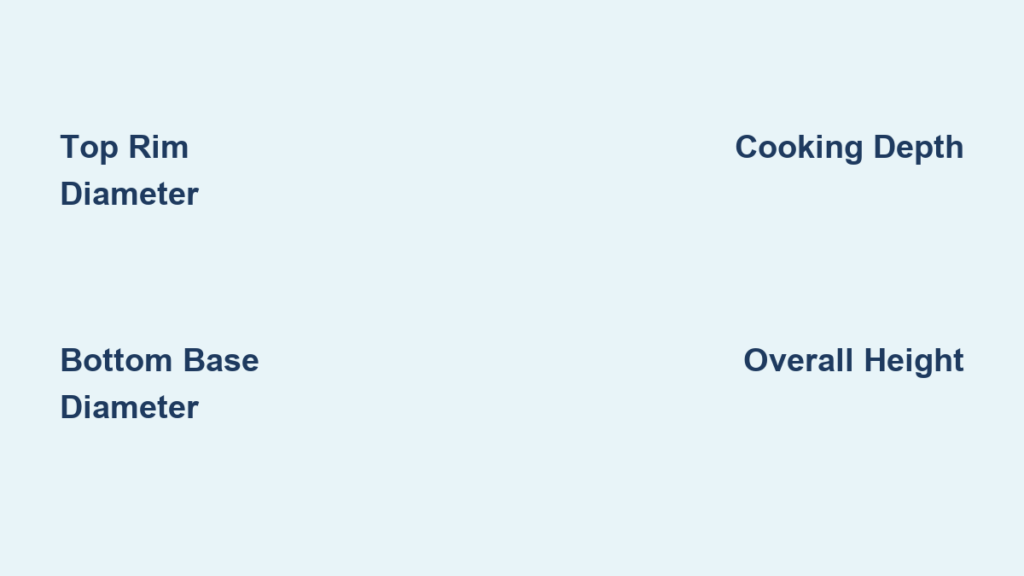
When a skillet is labeled as “10-inch,” this number typically refers to one of three possible measurements: the top rim diameter, the cooking surface diameter, or the bottom base diameter. Vintage American brands like Wagner and Griswold traditionally measured across the top outer edge of the rim, while many modern manufacturers measure the cooking surface inside the rim. European and Asian imports often use metric measurements that don’t precisely convert to standard inch sizes. This inconsistency means two skillets both labeled “12-inch” might differ by nearly an inch in actual dimensions. Before measuring your own skillet, understand which dimension matters for your specific need—lid fitting requires top rim measurements, while stovetop compatibility depends on the bottom base diameter.
Consequences of Inaccurate Measurements
Taking incorrect measurements leads to multiple practical problems. A lid that’s just 1/4 inch too small won’t seat properly, causing steam and heat to escape during cooking. Skillets that exceed burner size by more than an inch develop dangerous hot spots and uneven heating, potentially warping the pan over time. Storage becomes problematic when height measurements are off—skillets that appear to fit in cabinets might actually collide with shelves when handles are considered. Even seasoning results vary with size; larger surfaces require more oil and longer heating times to achieve proper polymerization. These issues compound when dealing with heirloom pieces or discontinued models where replacement parts are scarce.
Step-by-Step Measurement Techniques That Actually Work

Accurate cast iron skillet measurement requires specific techniques for different dimensions, each serving distinct purposes in kitchen functionality.
Measuring Top Rim Diameter for Perfect Lid Fit
Grab a flexible tape measure or rigid ruler to determine your skillet’s top rim diameter—the critical measurement for lid compatibility. Place the tape measure across the skillet from the outer edge of the rim on one side to the outer edge directly opposite, ensuring it passes through the center point. Take three measurements at different points around the rim (12, 4, and 8 o’clock positions) since cast iron’s hand-poured nature creates slight variations. Record all three numbers and calculate the average for your most accurate reference. For a Lodge 10.25-inch skillet, you might get readings of 10.2, 10.3, and 10.25 inches, averaging to 10.25 inches. This precise measurement prevents the common mistake of ordering a “10-inch” lid that actually fits a different manufacturer’s slightly smaller or larger pan.
Determining Bottom Base Diameter for Stovetop Compatibility
Your burner size determines whether your skillet heats evenly, making bottom base diameter measurement essential. Set your skillet upside down on a flat surface and measure across the actual base that contacts your cooktop—from outer edge to outer edge at the widest point. Compare this measurement to your burner diameter; for optimal performance, the skillet base should extend no more than 1 inch beyond the burner edge. A 12-inch skillet with a 10.5-inch base works perfectly on a standard 9-inch electric coil burner but might struggle on a smaller gas burner. Induction cooktop users must pay special attention—many require the base diameter to match the induction zone exactly for proper activation. When in doubt, measure both your skillet base and burner before cooking with a new piece.
Calculating Cooking Depth and Overall Height
Measure cooking depth by placing your skillet upright and measuring vertically from the cooking surface to the top inner rim, excluding any flared lip. This dimension affects how much liquid your skillet holds and whether drop-in lids will fit properly. Most 10-inch skillets have 1.75-2 inch cooking depths, while larger 12-inch models typically reach 2-2.5 inches. Overall height measurement includes the rim and handles—place your skillet on a flat surface and measure vertically from the countertop to the highest point of the handle. This critical dimension determines cabinet clearance and storage options; a standard 10-inch skillet with side handle often measures 2.5 inches deep but reaches 5+ inches tall with handle clearance. Always measure with handle position in mind—some skillets have handles that extend beyond the rim diameter.
Solving Common Measurement Problems for Specific Needs
Different kitchen scenarios require specialized measurement approaches that address particular compatibility challenges.
Finding Replacement Lids When Sizes Don’t Match
When standard lid sizes don’t fit your skillet, try these solutions. First, measure your skillet’s top rim diameter precisely as described, then search for lids labeled with exact measurements rather than generic “10-inch” sizes. Universal adjustable lids work for minor discrepancies (up to 1/2 inch difference) but create steam gaps if the fit isn’t snug. For vintage or unusual skillets, consider custom glass lids from specialty retailers who accept precise measurements. Some clever cooks repurpose baking sheet pieces as temporary covers for skillets without lids—simply cut a round piece slightly larger than your skillet’s diameter. When measuring for custom lids, include rim thickness in your specifications; some skillets have thicker rolled edges that affect how lids seat.
Ensuring Proper Fit on Induction and Glass Top Stoves
Induction and smooth-top ranges have specific requirements that standard measurements might not address. Beyond bottom diameter, check that your skillet’s base has sufficient ferrous metal content—most cast iron passes this test, but some enamel-coated varieties might not. Measure the flat portion of the base separately from any raised edges; induction elements require complete contact with the flat cooking surface. Glass top stoves need perfectly flat bases without significant warping—place your skillet on a known-flat surface and check for rocking. If your skillet rocks noticeably, it won’t heat evenly and might even crack the glass surface. For problematic skillets, consider purchasing a specialized induction interface disk that bridges size differences while maintaining safe operation.
Optimizing Storage Space with Accurate Measurements

Proper storage prevents damage to your cast iron and surrounding cabinetry. Measure not just the skillet diameter but also the handle’s maximum extension beyond the rim—many skillets have handles that add 2-3 inches to the overall footprint. When stacking skillets, measure the interior depth of each to ensure smaller pans fit inside larger ones without scratching seasoning. For drawer storage, measure both the interior drawer height and the clearance beneath the drawer slide mechanism—cast iron’s weight can damage weak drawer glides if not properly supported. Wall-mounted storage requires measuring the distance between hanging points to ensure proper balance; most standard racks space hooks 12 inches apart, which works for skillets up to 10 inches but becomes unstable with larger 12+ inch models.
Practical Measurement Shortcuts for Everyday Use
When precision tools aren’t available, these field-tested techniques deliver surprisingly accurate results.
Using Household Items as Measurement References
No tape measure? Use common kitchen items as reference points. A standard dinner plate (10.5-11 inches) approximates a 10-inch skillet’s top diameter, while a standard soup can (2.75 inches diameter) helps gauge smaller dimensions. Stack two soup cans vertically to estimate typical 5.5-inch cooking depth in larger skillets. For quick bottom diameter checks, compare your skillet base to standard burner sizes—most residential gas burners measure 7-9 inches across, while electric coils typically span 6-8 inches. These approximations won’t suffice for ordering replacement lids but provide useful reality checks when shopping for new cookware or assessing compatibility.
Creating a Permanent Measurement Record
Document your skillet measurements permanently using these methods. Engrave small size identifiers on the underside of vintage pieces (use a center punch and hammer for subtle markings). Photograph each skillet with a ruler placed across the top rim and save these images in a dedicated phone album labeled “Cast Iron Specs.” For extensive collections, create a spreadsheet with columns for top diameter, bottom diameter, height, weight, and purchase date—this tracking system reveals usage patterns and helps identify which sizes you actually use most. Some serious collectors even make silicone molds of their skillets’ rims to guarantee perfect lid matches when replacements are needed years later.
Final Measurement Checklist Before Making Purchases
Before ordering any skillet accessories, verify these five critical measurements:
- Top rim diameter measured at three points with average calculated
- Bottom base diameter compared directly to your burner size
- Overall height including handle clearance in storage position
- Cooking depth from surface to inner rim for capacity estimation
- Handle length extending beyond the rim for storage planning
Accurate cast iron skillet measurements transform guesswork into precision, ensuring every accessory fits perfectly and every cooking session delivers optimal results. By understanding how to measure cast iron skillet dimensions properly, you’ll extend the life of your cookware, maximize kitchen efficiency, and avoid the frustration of ill-fitting replacements. Take five minutes now to measure your most-used skillet—you’ll thank yourself the next time you need a replacement lid or consider upgrading your collection. Proper measurement isn’t just about numbers; it’s about preserving the cooking heritage contained in every well-seasoned cast iron piece.