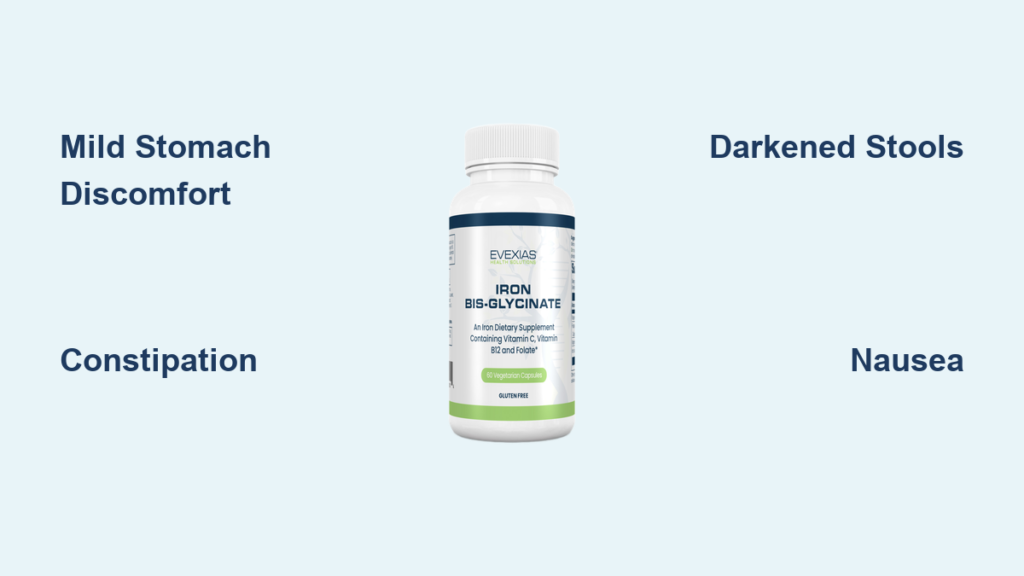
If you’ve struggled with traditional iron supplements that left you with stomach cramps, nausea, or constipation, iron bisglycinate side effects might be significantly milder than what you’ve experienced before. This amino acid-chelated iron form has gained popularity as a gentler alternative for addressing iron deficiency, with research consistently showing better gastrointestinal tolerance compared to conventional iron salts. Understanding exactly what side effects you might encounter—and how they differ from traditional supplements—is crucial for making informed decisions about your iron supplementation.
The development of iron bisglycinate represents a major breakthrough in iron supplement technology. Unlike standard iron salts that frequently cause uncomfortable reactions forcing up to 50% of users to abandon treatment, this specialized formulation was engineered specifically to overcome those tolerability challenges. By binding iron to glycine amino acids in a stable chelate structure, iron bisglycinate fundamentally changes how iron interacts with your digestive system, resulting in fewer side effects while maintaining effective absorption. As you navigate your iron supplementation journey, knowing what to expect can help you maintain consistent dosing and finally address your iron deficiency without the previous burden of unpleasant reactions.
Why Iron Bisglycinate Causes Fewer Digestive Problems
Iron bisglycinate’s superior tolerability stems from its unique molecular structure as an amino acid chelate. This specialized formulation wraps the iron molecule in protective glycine “arms” that prevent it from dissociating in your stomach acid. Unlike traditional iron salts that release free iron ions capable of irritating your digestive lining, the bisglycinate chelate remains intact until reaching optimal absorption sites in your small intestine.
This stability directly translates to reduced gastrointestinal side effects because:
- No free iron ions contact your stomach lining to cause irritation
- Less oxidative stress occurs in your digestive tract
- Controlled release prevents sudden iron surges that trigger nausea
- Gentler absorption process minimizes disruption to your gut microbiome
The result is a supplement that delivers therapeutic iron levels while significantly reducing the common complaints that plague users of ferrous sulfate, ferrous fumarate, and other conventional iron salts. For many people who previously thought they “couldn’t tolerate iron,” this represents a game-changing alternative that finally allows consistent supplementation.
How This Compares to Traditional Iron Supplements

Studies directly comparing iron bisglycinate with standard iron salts reveal dramatic differences in side effect incidence:
- Nausea: Occurs in only 12-15% of bisglycinate users versus 40-50% with ferrous sulfate
- Constipation: Affects approximately 10-15% of bisglycinate users compared to 30-40% with traditional salts
- Abdominal pain: Reported by 8-12% taking bisglycinate versus 25-35% with standard iron
- Diarrhea: Occurs in less than 5% of bisglycinate users compared to 15-20% with iron salts
This improved tolerability profile isn’t just about comfort—it directly impacts treatment success. Research shows patients taking iron bisglycinate maintain compliance rates of 85-90%, compared to just 50-60% with traditional iron supplements. Better adherence means more effective correction of iron deficiency and anemia.
Most Common Iron Bisglycinate Side Effects You Might Experience
:max_bytes(150000):strip_icc()/chelated-iron-benefits-4684057_final_HL-c162a71fac594779b62ef8aed927234d.png)
While significantly milder than traditional supplements, iron bisglycinate isn’t completely side-effect free. Understanding what’s normal helps you distinguish between expected adjustments and reactions requiring attention.
Mild Gastrointestinal Adjustments
Most users experience minimal to no side effects, but some may notice temporary digestive adjustments when first starting supplementation:
- Mild stomach discomfort (usually resolves within 1-2 weeks)
- Occasional nausea (typically when taken on empty stomach)
- Slight changes in bowel regularity
- Temporary darkening of stools (completely normal)
Pro Tip: If you experience mild stomach upset, try taking your supplement with a small snack rather than a full meal—this often provides enough digestive buffer without significantly compromising absorption.
Constipation Management Strategies
Though less common than with traditional iron, some users still experience constipation with bisglycinate. If this occurs:
- Increase your water intake to at least 8 glasses daily
- Add fiber-rich foods like prunes, chia seeds, or psyllium husk
- Maintain regular physical activity
- Consider taking your iron supplement at night rather than morning
Critical Warning: Never exceed recommended dosages attempting to resolve constipation—this can worsen the problem. Consult your healthcare provider if constipation persists beyond two weeks.
Timing Your Supplement for Maximum Comfort
Understanding when side effects typically occur and how long they last helps you gauge whether your experience falls within normal parameters.
First-Time User Adjustment Period
Most initial side effects appear within the first 3-5 days of starting supplementation and typically resolve within 7-14 days as your body adapts. This adjustment period reflects your digestive system establishing efficient pathways for processing the chelated iron.
Red Flag: If symptoms worsen after the first week or persist beyond two weeks, consult your healthcare provider—this could indicate an underlying sensitivity rather than normal adjustment.
Optimal Timing Strategies
Experiment with these timing approaches to minimize side effects:
- With food: Reduces stomach upset but may slightly decrease absorption (about 20-30% less than empty stomach)
- Between meals: Try taking 1 hour before or 2 hours after eating for balance of absorption and comfort
- At bedtime: Some users find nighttime dosing minimizes awareness of mild side effects
Rare but Serious Reactions to Watch For
While uncommon, certain reactions require immediate medical attention:
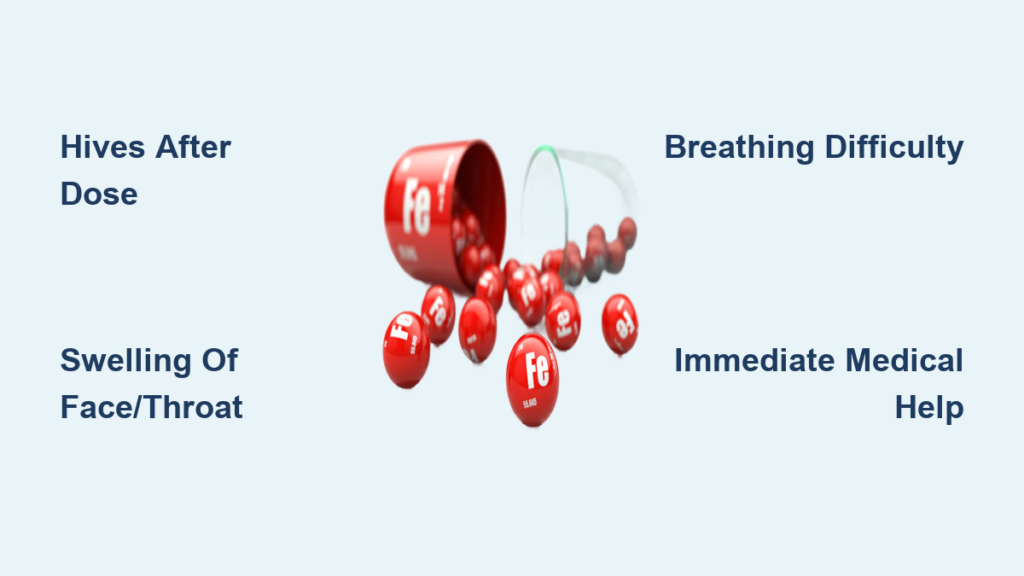
- Allergic reactions: Hives, facial swelling, or breathing difficulties (seek emergency care)
- Severe abdominal pain: Intense cramping that doesn’t resolve with typical management
- Blood in stool: Appears as black, tarry stools (different from normal iron-induced darkening)
- Persistent vomiting: Lasting more than 24 hours
Important Note: Iron bisglycinate side effects rarely include these severe reactions, but awareness helps ensure prompt intervention if they occur.
Medication Interactions That Affect Side Effects
Understanding potential drug interactions helps prevent unexpected side effects:
- Antibiotics: Tetracyclines and quinolones have reduced absorption when taken with iron—separate by at least 2 hours
- Thyroid medications: Iron can interfere with levothyroxine absorption—take at least 4 hours apart
- Proton pump inhibitors: May reduce iron absorption—discuss timing strategies with your provider
- Calcium supplements: Compete for absorption—take at least 2 hours apart
Pro Tip: Create a medication timing schedule that spaces your iron supplement appropriately from other medications to maximize effectiveness of all treatments.
Proven Strategies for Minimizing Side Effects

Implement these evidence-based approaches to further reduce any potential iron bisglycinate side effects:
Gradual Dosing Protocol
- Start with half your target dose for the first week
- Increase to full dose only if well-tolerated
- Consider splitting your daily dose into two smaller administrations
Optimal Consumption Techniques
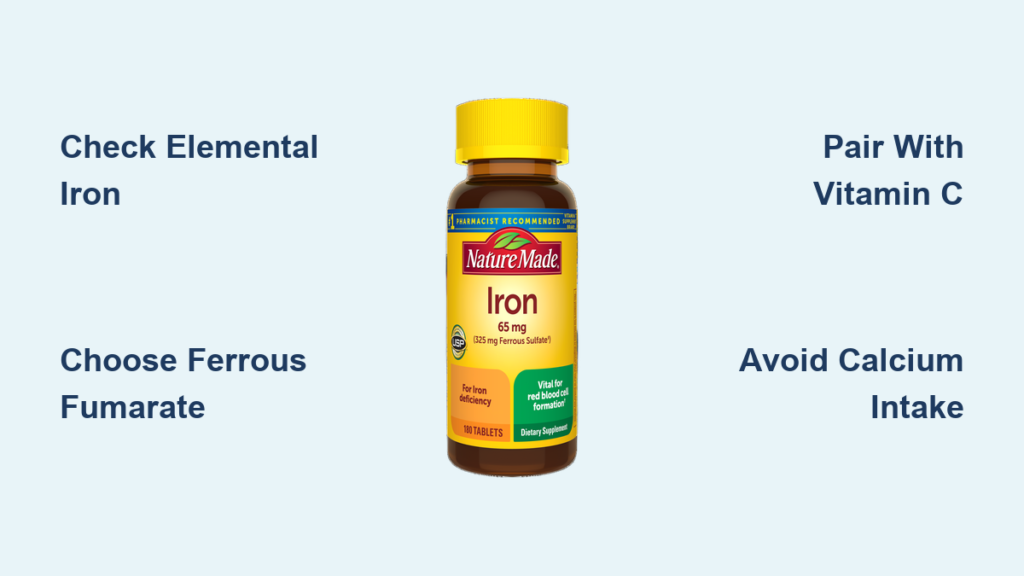
- Take with vitamin C-rich foods to enhance absorption
- Avoid coffee, tea, or dairy products within 2 hours of dosing
- Use a straw when taking liquid formulations to prevent tooth staining
Hydration and Nutrition Support
- Maintain consistent fluid intake throughout the day
- Include magnesium-rich foods (leafy greens, nuts, seeds) to support bowel regularity
- Consider adding probiotic foods to maintain gut health during supplementation
When to Consult Your Healthcare Provider
Seek professional guidance if you experience:
- Side effects that persist beyond two weeks
- Any symptoms that interfere with daily activities
- Signs of potential iron overload (unexplained fatigue, joint pain)
- Unexpected interactions with medications you’re taking
Critical Reminder: Never self-diagnose iron deficiency or self-prescribe iron supplementation. A simple blood test can confirm whether you actually need supplementation, preventing unnecessary exposure to potential side effects.
Essential Safety Considerations
Follow these safety guidelines for responsible iron bisglycinate use:
- Storage: Keep in a locked cabinet away from children (iron overdose is dangerous)
- Dosing: Never exceed recommended amounts without medical supervision
- Monitoring: Get periodic blood tests to track iron levels if supplementing long-term
- Special populations: Those with hemochromatosis or liver disease require medical supervision
Final Takeaways for Safe Supplementation
Iron bisglycinate offers a significantly gentler side effect profile compared to traditional iron supplements while effectively addressing iron deficiency. Most users experience minimal to no side effects, particularly when following proper dosing and timing strategies. The key advantages include substantially reduced gastrointestinal discomfort, better absorption, and improved treatment adherence.
Remember that while iron bisglycinate side effects are typically mild, individual responses vary. Start with lower doses, take with food if needed, stay hydrated, and allow time for your body to adjust. If you experience persistent or concerning symptoms, consult your healthcare provider rather than discontinuing treatment abruptly—there may be simple adjustments that allow you to continue benefiting from this effective iron source.
By understanding what to expect and implementing these evidence-based strategies, you can confidently use iron bisglycinate to address your iron needs with minimal discomfort, finally overcoming the barrier that previously prevented consistent supplementation.