If your cast iron sewer line is failing, traditional excavation isn’t your only option. Trenchless cast iron pipe repair offers a modern alternative that restores aging infrastructure without destroying your landscape or disrupting daily life. This innovative approach has become the go-to solution for municipalities and homeowners alike, providing reliable fixes for cast iron pipes that have served faithfully for decades but now show signs of corrosion, cracks, and joint failures. You’ll save thousands in restoration costs while extending your pipe’s service life by 50+ years—without digging up your driveway or tearing through concrete foundations.
Cast iron pipes installed throughout the early-to-mid 20th century were built to last, but even the most durable materials succumb to time. When these aging systems develop leaks, bellies, or root intrusions, trenchless cast iron pipe repair provides targeted solutions that address specific problems while minimizing disruption. Whether you’re dealing with a single cracked section or widespread corrosion, understanding your trenchless options empowers you to make informed decisions that protect your property and your budget.
Why Cast Iron Pipes Fail After Decades of Service
Cast iron pipes installed during the 1900s were engineered for longevity, but internal corrosion inevitably takes its toll. The electrochemical reaction between cast iron and wastewater gradually transforms the pipe wall into brittle rust and graphitization. This internal deterioration thins the pipe walls until cracks develop and leaks begin. Unlike newer pipe materials, cast iron lacks protective linings that prevent this corrosion process, making trenchless cast iron pipe repair essential once visible damage appears.
Bellied sections represent another common failure mode in aging cast iron sewer lines. As surrounding soil shifts over time, sections of pipe settle unevenly, creating low points where solid waste accumulates. These bellies cause frequent blockages and standing water that accelerates corrosion precisely where the pipe is already weakened. Traditional repair required complete excavation of the affected section, but modern trenchless methods can restore proper slope without digging up your entire yard.
Joint failures plague older cast iron systems because the sealing technologies available decades ago couldn’t match today’s sophisticated gaskets. As these joints degrade, they allow groundwater infiltration or sewage exfiltration—both creating serious problems. Infiltration saturates soil around the pipe, potentially causing sinkholes, while exfiltration introduces contaminants into the surrounding environment. Trenchless cast iron pipe repair seals these failing joints from within, eliminating the pathways for water movement without disturbing the surrounding landscape.
Cured-in-Place Pipe Lining: The Most Effective Cast Iron Solution
Cured-in-place pipe (CIPP) lining has become the gold standard for trenchless cast iron pipe repair because it creates a seamless, jointless new pipe within your existing infrastructure. This “pipe within a pipe” approach addresses all common failure points while restoring flow capacity to nearly original specifications. The resulting structure bears all hydraulic loads, while the original cast iron provides external support and protection.
The CIPP process begins with thorough pipe cleaning to remove scale, roots, and debris that would prevent proper bonding. Robotic cutters handle this critical preparation phase, especially for pipes with significant buildup or root intrusions. Some projects require bypass pumping to maintain wastewater flow during preparation and installation. Without proper cleaning, the liner cannot achieve optimal adhesion to the cast iron surface.
Technicians then insert a resin-saturated felt or fiberglass tube into the cleaned pipe using air or water pressure. As the liner travels through the pipe, it inverts, placing the resin-coated surface against the existing pipe wall. The inversion process ensures uniform coverage and proper positioning throughout the repair section. Once in place, the curing process begins—using hot water circulation, steam injection, or UV light exposure to transform the liquid resin into a rigid, structural liner.
The finished CIPP liner creates a smooth interior surface that actually improves flow characteristics compared to the original rough-surfaced cast iron. With no joints to fail, the rehabilitated section eliminates the weak points that caused the original pipe to deteriorate. The cured resin resists the corrosion mechanisms that attacked the original cast iron, meaning your repaired section should outlast surrounding original pipe by decades.
Spray Coating and Point Repairs for Targeted Fixes

Not every cast iron pipe problem requires a full-length liner. Isolated cracks, small holes, or localized joint leaks often respond better to spray coating or targeted point repair methods that address specific problem areas without the expense of comprehensive CIPP lining.
Spray coating systems apply epoxy or specialized polymer coatings using robotic spray heads that atomize the material and distribute it evenly across the pipe interior. These coatings build up thickness to seal minor cracks and provide corrosion protection, working best when the underlying pipe structure remains fundamentally sound. Unlike CIPP lining, spray coatings don’t bridge large gaps or support structural loads, making them ideal for preventive maintenance on pipes showing early signs of deterioration.
Point repair systems address localized failures through targeted CIPP applications. Instead of lining the entire pipe length, technicians position short liner sections precisely over damaged areas. These point repairs function identically to full CIPP installations but cover only specific problem zones. This approach makes economic sense when surrounding pipe remains in good condition or when budget constraints prevent comprehensive rehabilitation.
The decision between full CIPP lining and localized repair depends on damage patterns revealed through CCTV inspection. Pipes with multiple widely-spaced failures might benefit more from point repairs at each problem location, while continuous deterioration along the pipe length typically justifies full-length lining. Professional assessment identifies which trenchless cast iron pipe repair approach offers the best long-term value for your specific situation.
Cost Analysis: Trenchless vs. Traditional Excavation
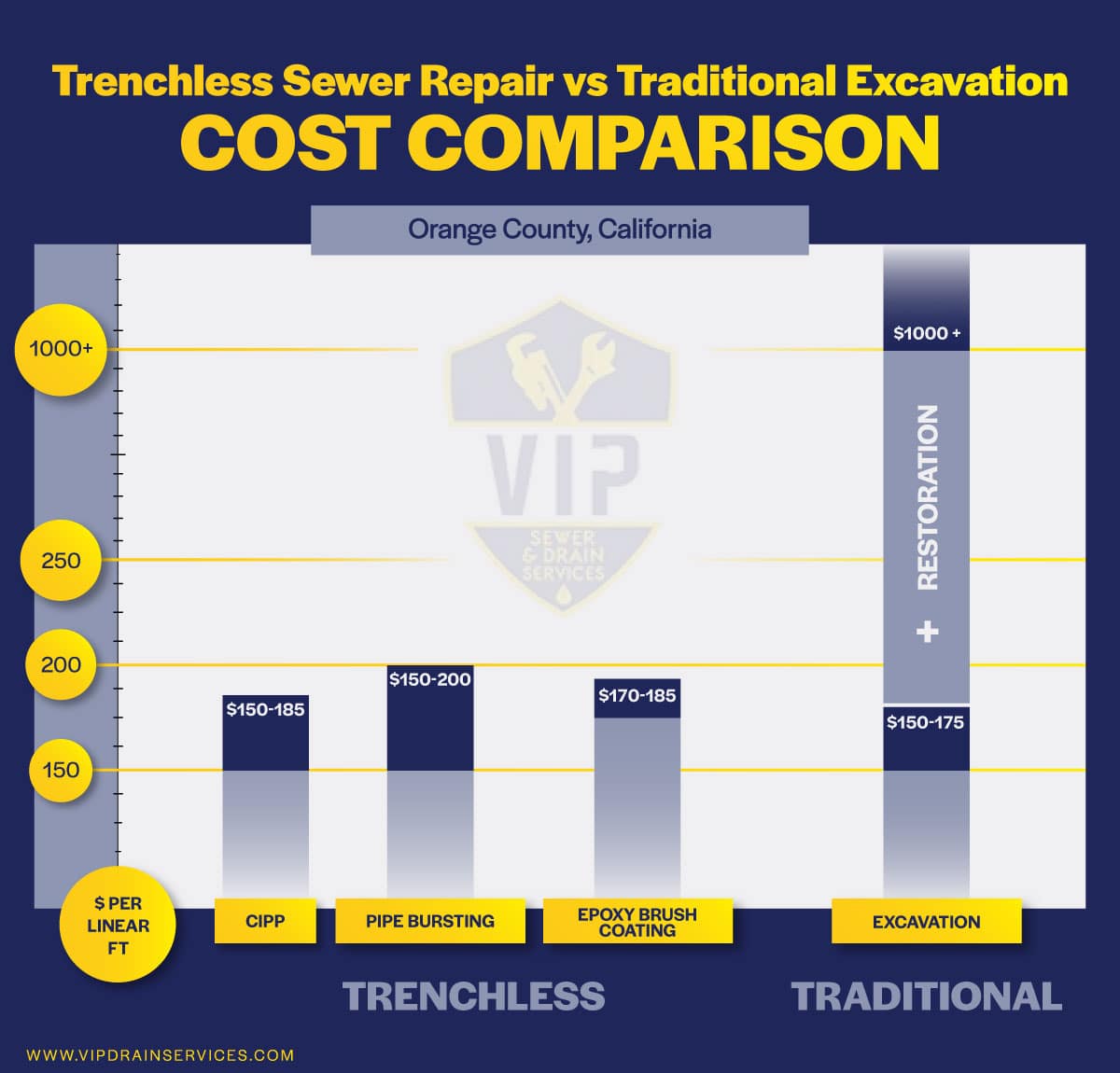
Trenchless cast iron pipe repair typically costs 30-50% less than traditional excavation and replacement, but understanding what drives these costs helps you evaluate proposals effectively. CIPP lining generally costs between $80 and $250 per linear foot, depending on diameter and site conditions. This figure includes preparation, installation, and curing, though some quotes may exclude preliminary CCTV inspection or bypass pumping requirements.
Spray coating and point repairs often cost less per linear foot than full CIPP lining, particularly for limited damage. Point repairs typically range from $500 to $2,000 per repair location, while spray coating runs $30 to $80 per foot depending on pipe size and coating thickness. These localized approaches make economic sense when damage is confined to specific areas and surrounding pipe remains serviceable.
Comparing trenchless costs to traditional excavation reveals why these methods have captured significant market share. Excavation and replacement costs $50 to $200 per foot for the pipework alone, then doubles or triples when adding surface restoration expenses: driveway replacement, landscaping reconstruction, pavement repair, and interior repairs if pipes run under structures. A trenchless project costing $100,000 might require $300,000 or more using traditional methods, with far greater disruption during construction.
Long-term value extends beyond initial cost considerations. CIPP liners carry manufacturer warranties of 50 years or more, with field installations demonstrating service lives exceeding that in many cases. The improved flow characteristics of smooth liners reduce pumping costs and maintenance requirements. When factoring in avoided disruption costs, extended service life, and reduced maintenance, trenchless cast iron pipe repair represents the most economical choice even when initial bids seem comparable to excavation.
Critical Factors When Selecting a Trenchless Repair Method

Choosing the right trenchless cast iron pipe repair method requires matching technology to specific conditions. The pipe’s structural integrity determines which methods are viable—CIPP lining requires sufficient remaining wall thickness to support the curing process, while severely collapsed sections may require excavation.
Damage type significantly influences method selection. Circumferential cracks and joint leaks respond well to CIPP lining, which seals these defects completely. Isolated holes or limited corrosion might be addressed more economically through spray coating or point repair. Root intrusions require not only sealing the current penetration but also addressing the root source—something CIPP lining accomplishes by eliminating the joint or crack that allowed root entry.
Pipe diameter and access constraints often dictate method feasibility. CIPP lining works across a wide range of diameters but requires access at both ends of the rehabilitation section. Spray coating can often proceed from a single access point, making it preferable in urban environments with limited access or pipes running under structures. Professional assessment using CCTV inspection helps identify these constraints before committing to a specific approach.
Maintaining Your Trenchless Repair for Maximum Longevity
Proper maintenance protects your trenchless cast iron pipe repair investment and ensures decades of reliable service. Regular CCTV inspection every five to ten years identifies developing problems before they become emergencies. These inspections catch emerging issues like minor cracks in liners or new root intrusions that escaped the original cleaning process.
Preventive cleaning removes accumulations that could cause problems despite the smoother surface of rehabilitated pipes. Periodic cleaning using water jetting keeps flow capacity at peak levels and removes potential blockage sites before they cause backups. Avoid pouring grease down drains and dispose of solid waste properly to reduce wear on your rehabilitated system.
Prompt attention to warning signs prevents minor issues from becoming major problems. Slow drains, gurgling sounds, unusual odors, or wet areas around pipeline routes all warrant investigation. Catching problems early typically means cheaper, simpler repairs than waiting until failures occur. With proper maintenance, your trenchless cast iron pipe repair should provide reliable service for half a century or more—without the need for disruptive excavation.