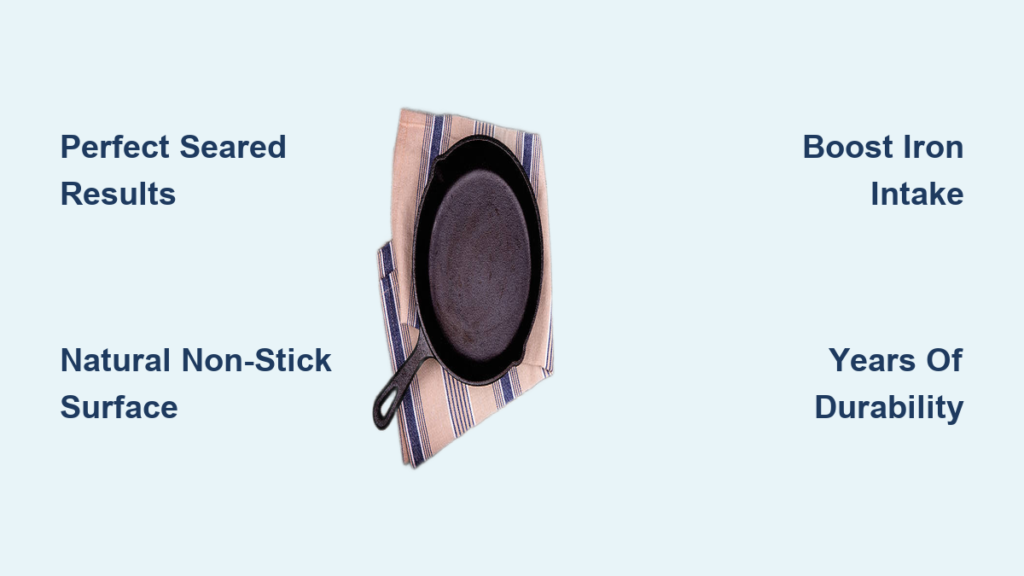
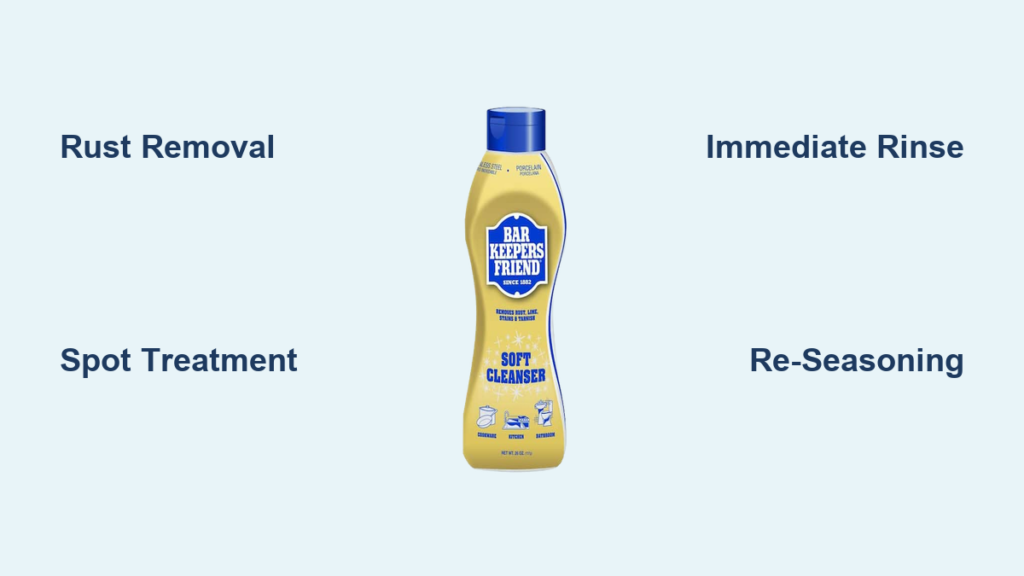
Your cast iron skillet has been with you through countless meals, developing that prized non-stick surface through careful seasoning. But when rust spots suddenly appear despite your best efforts, or stubborn stains from last night’s tomato sauce won’t budge, you might reach for Bar Keepers Friend as a solution. While this popular cleaner can effectively remove rust and discoloration from cast iron, using it requires understanding both its power and its consequences. Many home cooks make the critical mistake of treating Bar Keepers Friend as a regular cleaning solution, only to discover their hard-earned seasoning has vanished. This guide shows you exactly when and how to safely use Bar Keepers Friend on cast iron while preserving your cookware’s performance for years to come.
Why Bar Keepers Friend Removes Rust But Damages Seasoning
Bar Keepers Friend’s oxalic acid formula makes it exceptionally effective at breaking down iron oxidation—the scientific term for rust—without requiring aggressive scrubbing that could gouge your cookware. This chemical reaction dissolves surface rust on contact, making it a powerful tool when you discover your cast iron has developed rust spots after accidental moisture exposure or improper storage. The cleaner works particularly well on light to moderate rust that hasn’t deeply penetrated the metal surface, often removing oxidation in just one application where mechanical scrubbing would take significant effort.
Never use Bar Keepers Friend as part of your regular cast iron cleaning routine—this single mistake destroys seasoning faster than almost any other cleaning method. The same chemical properties that dissolve rust also break down the polymerized oil layer that creates your cast iron’s non-stick surface. Each application strips away seasoning that may have taken months to develop properly through careful cooking and maintenance. If you’ve invested time building a smooth, dark patina on your cookware, understand that using Bar Keepers Friend means sacrificing that seasoning to address immediate rust problems.
For enameled cast iron pieces like Dutch ovens, Bar Keepers Friend poses additional risks beyond seasoning loss. The oxalic acid can react with certain enamel coatings, causing permanent discoloration or micro-abrasions that compromise both appearance and functionality. Always check your manufacturer’s care instructions before applying Bar Keepers Friend to enameled surfaces—most major brands specifically prohibit its use on their coated products.
How to Apply Bar Keepers Friend Without Ruining Your Skillet

Spot-treating rust areas preserves maximum seasoning while addressing specific problems. Here’s the exact process for safe application:
- Dampen a soft cloth or sponge with clean water—never apply dry powder directly to dry cast iron
- Sprinkle just enough Bar Keepers Friend to cover rust spots (about ½ teaspoon for a small area)
- Gently rub the cleaner onto affected areas using circular motions for 30-60 seconds
- Rinse immediately under running water, ensuring all cleaner residue disappears
- Dry thoroughly over low heat on your stovetop for 2-3 minutes
The critical timing factor here is contact duration—never let Bar Keepers Friend sit on cast iron for more than 60 seconds. Extended exposure dramatically increases seasoning damage while providing minimal additional rust removal benefit. If rust persists after your first application, repeat the process rather than leaving the cleaner on longer.
Many users make the mistake of soaking their entire skillet in Bar Keepers Friend solution, which strips seasoning completely and requires extensive re-seasoning. Target only the affected areas—your goal is rust removal, not complete surface stripping. For isolated rust spots, use a cotton swab to apply cleaner precisely to problem areas while leaving surrounding seasoned surfaces untouched.
Re-Seasoning Steps After Bar Keepers Friend Treatment
Re-seasoning isn’t optional after using Bar Keepers Friend—it’s absolutely essential to restore your cast iron’s cooking performance. The cleaner’s effectiveness at rust removal comes at the direct cost of your protective seasoning layer, leaving bare metal vulnerable to immediate re-rusting.
Follow these precise steps for effective re-seasoning:
- Choose the right oil: Flaxseed oil creates the hardest seasoning but can become brittle; vegetable or canola oil offers more flexible, durable results for everyday cooking
- Apply an ultra-thin layer: Wipe oil across the entire cooking surface using a paper towel, then immediately rub it off with a clean towel—the surface should look almost dry, not shiny or oily
- Bake upside down: Place your oiled skillet upside down in a 450°F oven with a baking sheet below to catch drips, baking for 1 hour
- Cool gradually: Turn off the oven and allow the skillet to cool completely inside—rushing this process causes seasoning to crack
For spot-treated areas where only small sections received Bar Keepers Friend, you can focus re-seasoning efforts on those specific zones rather than the entire pan. Apply oil only to cleaned areas and heat on your stovetop over medium heat for 5-7 minutes until the oil smokes slightly, then wipe clean. This targeted approach preserves existing seasoning while protecting repaired areas.
Better Daily Cleaning Alternatives to Bar Keepers Friend
Your cast iron shouldn’t need Bar Keepers Friend if you maintain proper cleaning habits. These proven methods handle 95% of cleaning challenges without damaging seasoning:
- Hot water and chain-mail scrubber for stuck-on food particles (works better than steel wool without scratching)
- Baking soda paste (equal parts baking soda and water) for stubborn residue—apply with soft cloth and rinse thoroughly
- Salt scrub for delicate seasoning maintenance (coarse salt with minimal water creates gentle abrasive action)
When rust does appear, try these safer alternatives before reaching for Bar Keepers Friend:
- Vinegar soak (1:1 vinegar/water solution for no more than 30 minutes)
- Potato and salt method (rub cut potato dipped in salt on rust spots)
- Steel wool with immediate re-seasoning (for severe rust)
The most effective rust prevention method costs nothing: proper drying after each use. Always heat your cleaned skillet on the stovetop for 2-3 minutes after washing to evaporate all moisture, then apply a micro-thin oil layer while still warm. This simple habit prevents 90% of rust problems that tempt users to reach for harsh cleaners.
When Bar Keepers Friend Is Worth the Seasoning Sacrifice
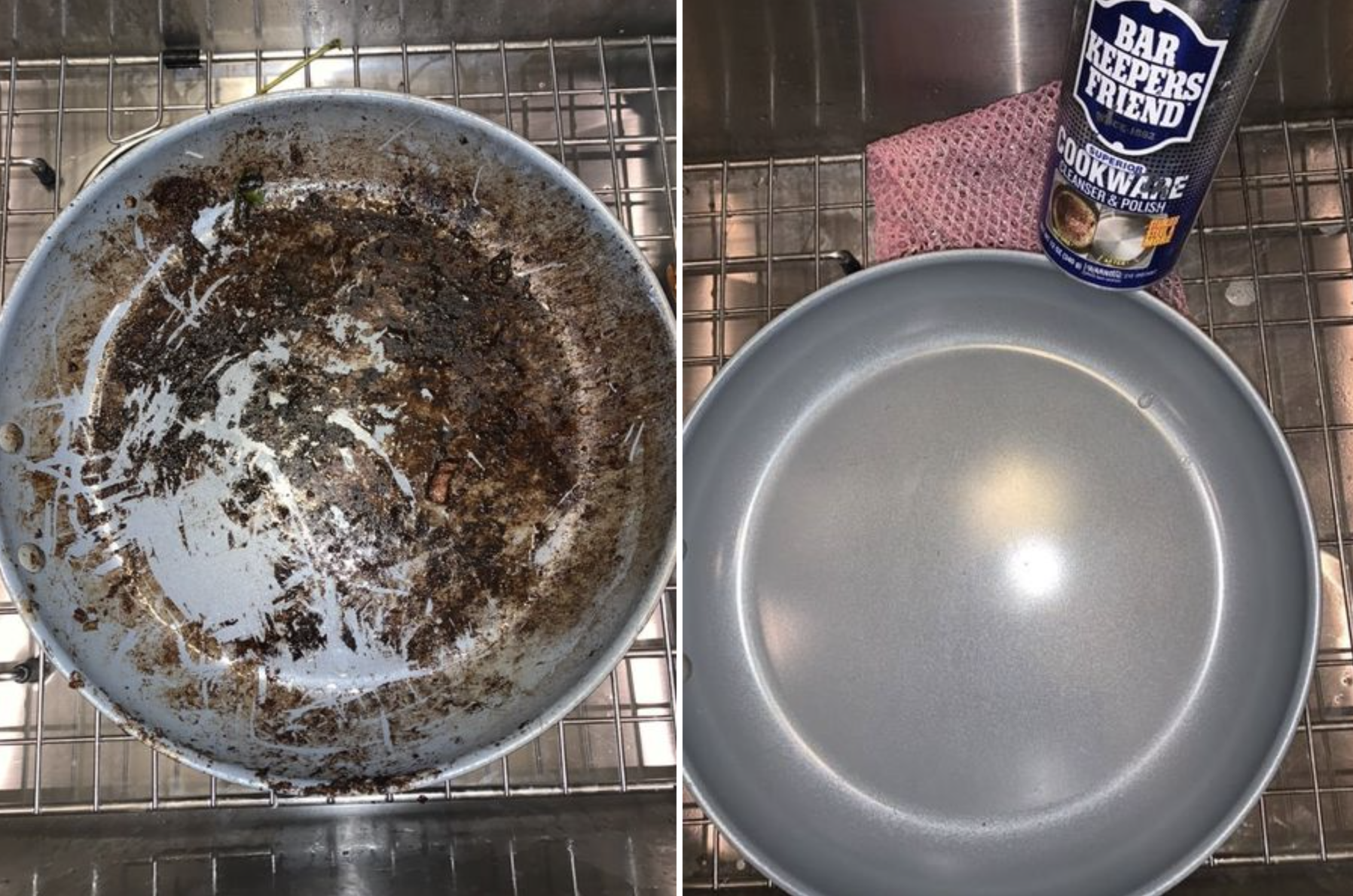
Bar Keepers Friend has legitimate uses for cast iron restoration when applied judiciously:
- Neglected vintage pieces with heavy rust that resist mechanical removal
- Accidental rust outbreaks from prolonged water exposure (like leaving a wet skillet overnight)
- Stain removal from cooking highly acidic foods that have discolored the surface
However, if your cast iron shows only minor surface discoloration or light rust that comes off with a baking soda paste, skip Bar Keepers Friend entirely. The seasoning you preserve through patience will serve you better than immediate cosmetic improvement. Reserve this cleaner for true emergencies where rust threatens to compromise your cookware’s structural integrity.
For well-seasoned cast iron with a smooth, dark patina, the cost of using Bar Keepers Friend usually outweighs the benefits. That prized non-stick surface represents months of careful cooking and maintenance—sacrificing it for minor cosmetic issues makes little sense when gentler alternatives exist.
Final Maintenance Protocol for Long-Lasting Cast Iron
Bar Keepers Friend should occupy a specific, limited role in your cast iron care routine—not as a regular cleaner but as an emergency rust treatment with mandatory re-seasoning. Treat it like cast iron first aid: effective for acute problems but potentially harmful with overuse. Each application requires accepting a trade-off between immediate rust removal and long-term seasoning preservation.
Your ideal cast iron maintenance protocol looks like this:
– Clean with hot water and chain-mail scrubber after each use
– Dry completely over low heat for 2-3 minutes
– Apply micro-thin oil layer while still warm
– Bake in oven monthly for deep seasoning reinforcement
– Use Bar Keepers Friend only when rust won’t respond to vinegar soaks
By following this approach, you’ll rarely need chemical cleaners while building increasingly better seasoning over time. Remember that properly maintained cast iron shouldn’t develop significant rust between uses—if it does, address your storage conditions (avoid humid environments) rather than repeatedly treating symptoms with harsh cleaners.
When you do need Bar Keepers Friend’s rust-removing power, follow the precise application, rinsing, and re-seasoning protocol outlined here. This disciplined approach ensures your cast iron cookware remains a reliable kitchen companion for generations, combining the immediate effectiveness of modern cleaning solutions with the timeless performance that makes cast iron irreplaceable.