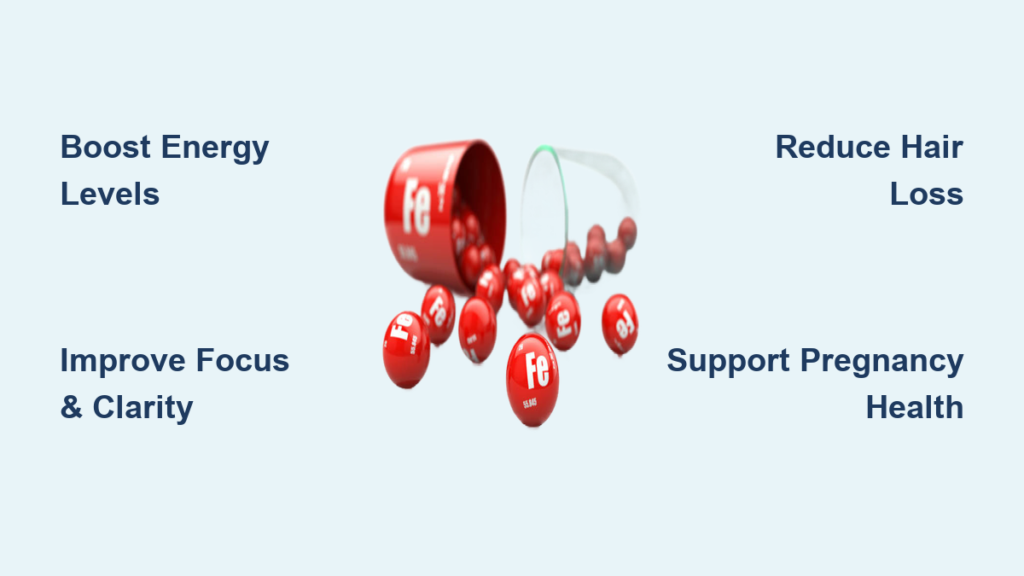
Feeling constantly drained despite getting enough sleep? You’re not alone—nearly 20% of women struggle with low iron levels that sap energy and impact daily functioning. The benefits of iron supplements for women extend far beyond preventing anemia, directly influencing your energy production, mental clarity, and overall vitality. When monthly periods, pregnancy demands, or dietary restrictions deplete your iron stores, supplementation becomes a powerful tool to restore balance and reclaim your natural energy levels. Understanding how iron deficiency manifests specifically in women and recognizing when supplementation could transform your health empowers you to take control of your wellbeing.
Women face unique iron challenges that men rarely encounter. Monthly blood loss from menstruation creates a consistent drain on iron reserves, while pregnancy demands nearly double your daily requirements to support growing blood volume and fetal development. Vegetarian and vegan women absorb less iron from plant-based sources, and endurance athletes lose iron through sweat, foot-strike hemolysis, and gastrointestinal bleeding. These factors combine to make iron deficiency one of the most prevalent nutritional gaps affecting women across all life stages, often without obvious symptoms until energy levels plummet.
Heavy Periods Draining Your Energy? Iron Replenishment Explained
Women experiencing heavy menstrual bleeding lose significantly more iron than the average 30-40 milliliters of blood per cycle. When your flow soaks through pads or tampons every hour for several hours, you’re losing precious iron stores faster than your body can replenish them. This chronic depletion creates a cycle of fatigue that coffee and extra sleep can’t fix, as your red blood cells struggle to carry sufficient oxygen to your tissues.
The moment you address this iron deficit through targeted supplementation, your body begins rebuilding hemoglobin production. Within weeks, many women report regaining the energy to tackle afternoon tasks without crashing. Unlike quick-fix stimulants, iron works at the cellular level to restore your natural energy production system, giving you sustained vitality from morning until night without artificial spikes and crashes.
Why Fatigue Persists Despite Adequate Sleep: The Iron Connection
If you’re logging seven to eight hours of sleep but still dragging by 2 PM, low iron could be the hidden culprit. Iron deficiency reduces hemoglobin production, which means less oxygen reaches your muscles and brain—your body’s primary energy generators. This oxygen shortage creates cellular fatigue that sleep alone can’t resolve, leaving you feeling exhausted regardless of rest.
You’ll recognize iron-related fatigue through specific patterns:
– Energy crashes consistently around the same time each day
– Difficulty completing tasks that previously felt manageable
– Brain fog that makes concentration nearly impossible
– Needing multiple stimulants to get through your workday
When supplementation restores your iron levels, your mitochondria—the energy powerhouses inside each cell—regain their capacity to efficiently convert nutrients into usable energy. This cellular reboot provides natural, sustainable energy that doesn’t rely on caffeine or sugar spikes.
Hair Loss Reversal: How Iron Supplements Restore Shine and Thickness

Thinning hair and excessive shedding often signal declining iron stores before blood tests confirm deficiency. When iron levels drop, your body prioritizes oxygen delivery to vital organs over hair follicles, interrupting the growth cycle and causing premature shedding. You might notice more hair on your brush, wider part lines, or reduced ponytail volume—classic signs that your follicles aren’t getting the oxygen they need.
Within 2-3 months of consistent iron supplementation, many women observe reduced shedding as follicles return to their normal growth cycle. The transformation continues as new growth emerges stronger and thicker, restoring hair density and vibrancy. For maximum results, pair supplementation with vitamin C-rich foods to boost iron absorption and support keratin production.
Pregnancy Iron Needs: Protecting Mother and Baby Health

During pregnancy, your iron requirements skyrocket to support the 50% increase in blood volume needed for fetal development. Without adequate supplementation, both mother and baby face serious risks including preterm delivery, low birth weight, and postpartum complications. The recommended 27 milligrams daily—nearly double your pre-pregnancy needs—proves difficult to achieve through diet alone, especially with morning sickness limiting food intake.
Iron supplementation during pregnancy delivers critical benefits:
– Reduces risk of maternal anemia by 50% in clinical studies
– Supports proper brain development in the growing fetus
– Builds the baby’s iron reserves for the first six months of life
– Decreases likelihood of postpartum depression through neurotransmitter support
Work with your obstetrician to determine the right supplement type and dosage for your specific needs, as timing and formulation significantly impact absorption during pregnancy.
Iron Timing Secrets: Maximizing Absorption While Avoiding Side Effects

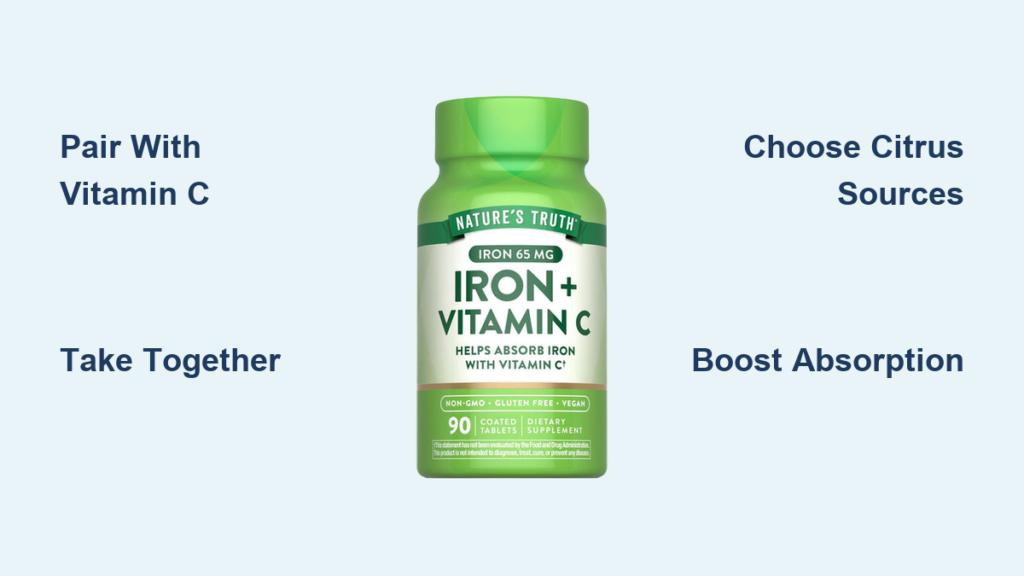
Getting the most from your iron supplement depends entirely on proper timing and pairing. Take your dose on an empty stomach with vitamin C-rich orange juice for optimal absorption, but if stomach upset occurs, try a small piece of toast rather than abandoning supplementation altogether. Avoid these common absorption killers by waiting at least two hours:
- Calcium-rich foods and supplements
- Coffee and tea (even decaffeinated)
- High-fiber cereals and whole grains
- Antacids and acid-reducing medications
If constipation becomes problematic, increase your water intake and add magnesium glycinate to your routine—never reduce your iron dose without consulting your healthcare provider. Splitting your daily dose into two smaller servings taken 12 hours apart often improves tolerance while maintaining effectiveness.
Morning Energy Without Coffee: Iron’s Cognitive Clarity Benefits
Struggling to focus during morning meetings or forgetting why you walked into rooms? Low iron impairs oxygen delivery to your brain, which consumes 20% of your body’s oxygen supply. This cognitive drain manifests as difficulty concentrating, memory lapses, and mental fatigue that makes complex tasks feel overwhelming.
Iron supplementation restores optimal oxygen flow to brain tissue, sharpening mental clarity within weeks. Clinical studies show iron-deficient women who begin supplementation demonstrate measurable improvements in attention, working memory, and processing speed—without the jitters or crashes associated with caffeine. You’ll notice enhanced ability to manage multiple tasks, recall information quickly, and maintain focus throughout demanding workdays.
Immune System Support: Iron’s Hidden Role in Fighting Infections
Frequent colds and slow-healing cuts may indicate compromised immunity due to low iron levels. Your white blood cells require iron to multiply and effectively combat pathogens, making adequate stores essential for robust immune function. Women with marginal iron deficiency often experience more frequent infections and longer recovery times when illness strikes.
When you maintain optimal iron levels through strategic supplementation:
– Your lymphocytes multiply more efficiently to target invaders
– Macrophages increase their pathogen-destroying capacity
– Recovery time from common infections shortens significantly
– Overall immune response becomes more coordinated and effective
Remember that balance is crucial—both deficiency and excess iron impair immunity, which is why working with your healthcare provider to monitor levels ensures you stay in the optimal range.
When to Stop Supplementing: Recognizing Iron Overload Warning Signs
While iron deficiency poses significant risks, excessive supplementation creates its own dangers. Iron overload causes oxidative damage to organs and joints, with symptoms including:
- Unexplained joint pain, particularly in knuckles
- Abdominal discomfort without clear cause
- Chronic fatigue that worsens despite continued supplementation
- Irregular heart rhythms or palpitations
Never continue iron supplementation without regular blood testing to monitor your ferritin levels. Your healthcare provider will advise when to reduce or discontinue supplementation based on your individual results, typically when ferritin reaches 50-70 ng/mL for women. Genetic conditions like hemochromatosis require specialized management under medical supervision.
The true benefits of iron supplements for women emerge when you address deficiency with precision—restoring energy that powers your daily life, sharpening mental clarity for better decision-making, and strengthening your body’s natural defenses. By recognizing your unique risk factors, choosing the right supplement formulation, and timing doses for maximum absorption, you transform how you feel from morning until night. Work with your healthcare provider to confirm deficiency through proper testing, then implement these targeted strategies to experience the full spectrum of benefits that optimal iron levels provide. Your renewed vitality, mental sharpness, and overall health transformation await when you give your body this essential mineral it needs to thrive.