Cast iron components are common in many industrial and household applications, but when they crack or break, repairing them presents unique challenges. Unlike steel, cast iron’s high carbon content makes traditional welding problematic due to its tendency to crack during cooling. Brazing offers a viable alternative repair method that many DIYers and professionals turn to—but without proper technique, even brazing can fail. If you’ve ever tried repairing a cast iron part only to have it fail prematurely, you understand the frustration of not knowing the right brazing cast iron procedures. This guide covers the essential techniques that actually work for creating durable repairs on cast iron components without causing further damage.
Why Brazing Works Better Than Welding for Cast Iron Repairs

Cast iron’s high carbon content (2-4%) creates significant challenges when attempting repairs. The carbon wants to form graphite flakes during cooling, which leads to stress cracks in welded areas. Brazing circumvents this issue by keeping the base metal below its melting point.
The Science Behind Successful Cast Iron Brazing
Brazing uses filler metals with lower melting points than the base material. For cast iron repairs, bronze or nickel-based alloys typically melt between 1,300-1,800°F, well below cast iron’s 2,000+°F melting point. This critical temperature difference prevents the thermal shock that causes cracking.
Common Applications Where Brazing Cast Iron Succeeds
Many industrial facilities rely on brazing for cast iron repairs because it preserves the material’s integrity. Common successful applications include:
– Repairing cracks in engine blocks and cylinder heads
– Fixing broken pump housings and valve bodies
– Restoring antique machinery components
– Mending cast iron pipe fittings in older systems
Essential Preparation Steps Before Brazing Cast Iron
Skipping proper preparation guarantees brazing failure with cast iron. The surface must be perfectly clean and free of contaminants that prevent proper filler metal adhesion.
Cleaning Cast Iron Surfaces for Optimal Brazing Results
Begin by removing all oil, grease, and paint from the repair area using a suitable degreaser. Next, thoroughly clean the crack itself using a sharp chisel or grinder to create a V-groove that’s at least 1/8 inch wide. This groove provides mechanical keying for the brazing material.
Preheating Cast Iron to Prevent Thermal Shock
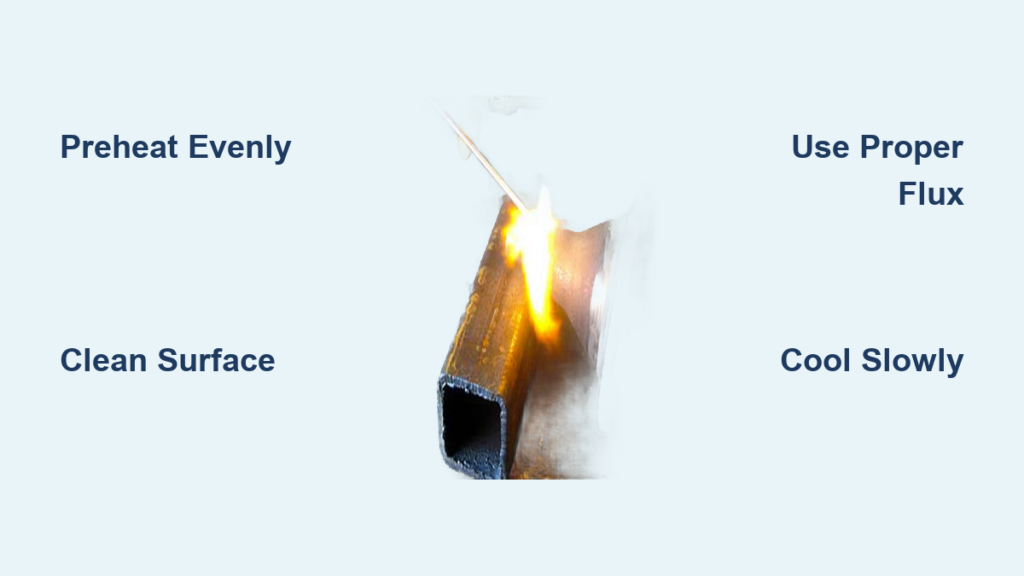
Preheating is non-negotiable when brazing cast iron. Heat the entire component slowly and evenly to 500-1,200°F (depending on thickness) before applying the torch to the repair area. Use multiple torches if necessary to maintain even temperature distribution across the part. A temperature crayon helps verify you’ve reached the proper preheat temperature.
Selecting the Right Brazing Materials for Cast Iron

Not all brazing rods work equally well for cast iron repairs. Choosing the appropriate filler metal significantly impacts the repair’s durability and appearance.
Bronze vs. Nickel Alloys: Which Works Best?
Silicon bronze rods (60% copper, 40% tin with silicon) offer excellent fluidity and produce strong joints that can be machined after cooling. They create a repair that’s slightly softer than the base metal.
Nickel-based rods provide superior strength and thermal expansion properties closer to cast iron. These are preferable for high-stress applications but cost more and require higher skill to apply properly.
Flux Selection for Cast Iron Brazing Success
Use a specialized cast iron brazing flux that prevents oxidation during the heating process. Apply flux generously to both the cleaned joint area and the brazing rod before heating. The flux should bubble and become transparent when properly heated, indicating it’s ready for the filler metal.
Step-by-Step Brazing Cast Iron Process
Following a systematic approach ensures your brazing cast iron repair has the best chance of success. Rushing through any step compromises the final result.
Creating the Proper Heat Zone for Brazing
- Maintain the preheat temperature across the entire component
- Focus the torch on the area immediately adjacent to the joint, not directly on it
- Heat until the base metal reaches the brazing temperature (indicated by flux behavior)
- Touch the brazing rod to the joint—the metal should melt immediately from base metal heat
Applying the Brazing Filler Material Correctly
Move the torch in small circles while feeding the rod steadily into the joint. Let the capillary action draw the molten filler into the joint—don’t try to force it. Build up the repair in thin layers rather than attempting to fill the entire groove in one pass.
Common Mistakes That Cause Brazing Cast Iron Failures
Many DIY repairs fail because of preventable errors. Avoid these critical mistakes:
– Inadequate preheating or uneven temperature distribution
– Using the wrong brazing rod composition for the application
– Moving too quickly through the process without allowing proper heat soak
– Quenching the part instead of allowing slow, controlled cooling
Post-Brazing Treatment for Cast Iron Repairs
What you do after completing the brazing process determines whether your repair will last or fail prematurely.
Proper Cooling Techniques to Prevent Cracking
Never allow brazed cast iron to cool rapidly. Cover the repair area with insulating materials like firebricks or ceramic fiber blankets to slow the cooling rate. For critical components, place the entire part in a bed of dry sand or vermiculite to cool overnight.
Finishing and Machining Brazed Cast Iron Repairs
Once completely cooled, file or grind the brazed area smooth. For functional surfaces that require precise dimensions, machine the repair to specification. Bronze repairs machine similarly to brass, while nickel-based repairs require carbide tooling.
Troubleshooting Common Brazing Cast Iron Problems
Even with proper technique, issues can arise during cast iron brazing. Knowing how to address them makes the difference between success and failure.
Why Brazing Material Won’t Stick to Cast Iron
If the filler metal beads up instead of flowing into the joint, the surface isn’t clean enough or hasn’t reached proper temperature. Stop immediately, clean the area again, and ensure adequate preheating before continuing.
Fixing Porosity in Brazed Cast Iron Joints
Small holes in the brazed area indicate trapped gases. Increase preheat temperature slightly, ensure thorough cleaning, and apply more flux. Work in smaller sections to maintain consistent temperature throughout the repair process.
Safety Considerations When Brazing Cast Iron
Working with high temperatures and potentially hazardous materials requires strict safety protocols.
Essential Protective Equipment for Cast Iron Brazing
Always wear:
– Heavy-duty welding gloves rated for high temperatures
– Dark shade safety glasses (shade #5 minimum)
– Flame-resistant clothing without synthetic materials
– Respiratory protection when brazing in confined spaces
Ventilation Requirements for Safe Brazing Operations
Cast iron often contains residual oils that produce toxic fumes when heated. Work in a well-ventilated area with adequate cross-ventilation or use a fume extraction system specifically designed for metalworking operations.
When Brazing Cast Iron Isn’t the Right Solution
Not all cast iron repairs are suitable for brazing. Recognizing these situations prevents wasted effort and potential safety hazards.
Components That Require Replacement Rather Than Repair
Avoid brazing cast iron in these high-risk scenarios:
– Critical structural components under constant high stress
– Parts subjected to extreme thermal cycling
– Components with extensive cracking throughout the structure
– Safety-critical automotive or machinery parts where failure could cause injury
Extending the Life of Brazed Cast Iron Repairs
Proper maintenance significantly extends the service life of your brazed cast iron components.
Preventative Measures to Avoid Future Failures
After completing your brazing cast iron repair, implement these strategies:
– Gradually bring the component up to operating temperature
– Avoid sudden temperature changes during use
– Apply protective coatings to the repair area if exposed to corrosive environments
– Inspect the repair periodically for signs of stress or developing cracks
Final Note: Brazing cast iron successfully requires understanding both the material’s limitations and the brazing process. While this guide provides foundational knowledge, complex repairs benefit from consultation with experienced metalworkers. Always prioritize safety and proper technique over speed when working with cast iron components. For critical applications, consider professional repair services to ensure structural integrity and longevity of the repaired part. Properly executed brazing can restore functionality to valuable cast iron components that would otherwise require costly replacement.