
Cast iron bells make stunning decorative pieces, functional doorbells, and charming garden features, but finding the right mounting solution can transform a simple bell from an afterthought into a focal point. Whether you’ve inherited a vintage farmhouse bell, purchased a decorative cast iron bell for your garden, or want to install a functional doorbell with vintage character, the mounting method you choose affects both the bell’s appearance and its acoustic performance. This guide explores creative mounting approaches for cast iron bells of all sizes, helping you find the perfect display method for your space, skill level, and budget.
Before selecting a mounting approach, consider how you want to use your cast iron bell. A functional doorbell requires a different mounting system than a purely decorative garden piece, and a large church-style bell needs substantially more structural support than a small handbell or desk bell. The mounting hardware, location, and installation method should match both the bell’s weight and intended purpose, ensuring safe installation and optimal sound projection.
How to Determine Your Bell’s Mounting Requirements
Understanding your specific cast iron bell is the essential first step before any mounting project. Cast iron bells vary dramatically in size, weight, design, and intended use, and these characteristics directly influence which mounting approaches will work safely and effectively.
Weight serves as the most critical factor in determining mounting requirements. Small decorative cast iron bells might weigh only five to fifteen pounds, while larger functional bells can exceed fifty or even one hundred pounds. A small bell might mount securely on a simple nail or small bracket, but a fifty-pound bell requires substantial structural support, typically involving heavy-duty mounting hardware and consideration of the mounting surface’s load-bearing capacity. Always verify the bell’s weight before purchasing mounting hardware, and when in doubt, err on the side of over-engineering the support system.
The bell’s design also matters significantly for mounting decisions. Some cast iron bells feature built-in mounting loops or hooks at the top, while others have smooth crowns that require different attachment methods. Bells with clapper mechanisms for ringing need consideration of how the clapper will move when mounted, and whether the mounting position allows proper swinging motion. Decorative bells without functional mechanisms offer more flexibility in positioning since you won’t need to account for movement or sound projection.
Examine the bell’s condition as well, particularly for vintage or salvaged pieces. Cast iron can crack under stress, especially at mounting points, so inspect any existing holes or mounting surfaces for signs of wear, rust, or damage. A compromised bell may require reinforced mounting or might be better displayed on a protective pedestal rather than suspended where stress could worsen existing cracks.
Best Wall-Mounting Methods for Cast Iron Bells

Wall mounting represents one of the most popular approaches for cast iron bells, offering versatility, space efficiency, and the opportunity to incorporate the bell into your existing decor. The right wall mounting method depends on your wall material, the bell’s weight, and the visual style you want to achieve.
For brick or stone walls, sleeve anchors or expansion bolts provide secure attachment points capable of supporting substantial weight. Install these into properly sized holes drilled with a masonry bit, ensuring the anchor length matches your wall’s thickness and the bolt diameter suits your mounting hardware. A decorative bracket mounted to the wall can then support the bell’s hanging loop or a attached hook. Brick mortar joints typically offer easier drilling than solid brick, though the mortar may not provide as secure an anchor point for very heavy bells.
Wood-frame walls with drywall or wood paneling require locating the wall studs for secure mounting of heavy bells. A hanging bracket or board mounted directly to studs using structural screws or lag bolts provides the necessary support. For lighter bells under twenty pounds, heavy-duty picture hanging systems rated for the appropriate weight may suffice, but always verify weight ratings and consider that dynamic forces from ringing add stress to the mounting system.
Iron mounting brackets and decorative supports offer both function and style enhancement for wall-mounted cast iron bells. Wrought-iron-style brackets available from hardware stores and online retailers come in various designs from simple S-hooks to ornate scrollwork brackets. These mounts typically attach to the wall surface and provide a horizontal arm from which the bell hangs, creating visual interest while positioning the bell at a comfortable height for ringing.
Ceiling Suspension Techniques for Dramatic Bell Displays
Suspending a cast iron bell from a ceiling beam, rafter, or overhead structure creates dramatic visual impact and allows the bell to function as both decoration and practical piece. This approach requires careful attention to structural support and proper hardware selection.
Exposed ceiling beams offer ideal mounting points for suspended bells, particularly in rustic, farmhouse, or industrial-style spaces. Locate the beam’s center or a structurally sound section, and install a heavy-duty eye hook or swing bolt rated for overhead use. The mounting hardware should screw into solid wood rather than drywall or plaster. For very heavy bells, consider using a mounting plate secured to the beam with multiple bolts to distribute weight across a larger surface area.
Chain or rod suspension creates visual interest while providing adjustability for height positioning. Heavy-duty chain made from steel or wrought iron attaches to the ceiling mounting point and the bell’s hanging loop, with chain links allowing easy height adjustment. Decorative link chain in antique brass, black iron, or copper finishes complements cast iron bells beautifully. Rigid steel rods offer a cleaner, more modern look while providing stable support that won’t sway or swing during ringing.
Rope mounting works well for casual, rustic, or nautical-style settings. Natural fiber rope like manila creates a warm, organic appearance, while synthetic rope offers greater weather resistance for outdoor applications. Thread the rope through the bell’s mounting loop and secure with appropriate knots—figure-eight knots or anchor bends provide secure attachment that won’t slip. For functional bells, ensure the rope allows proper clapper movement for effective ringing.
Ground-Level Mounting Solutions for Garden Bells
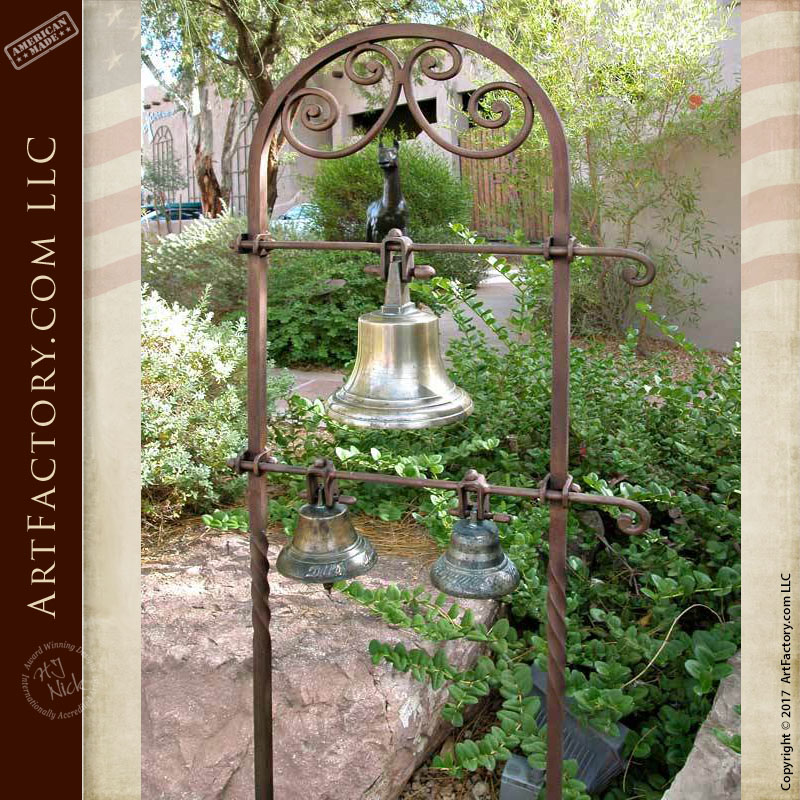
Ground-level mounting options provide stability, accessibility, and opportunities for creative display that wall or ceiling mounting can’t achieve. These approaches work particularly well for large garden bells, functional doorbells where wall mounting isn’t practical, and situations where you want the bell to serve as a standalone sculptural element.
Decorative pedestals and stands designed for urns or statues work excellently for displaying medium-sized cast iron bells at standing height. Choose a sturdy pedestal made from stone, concrete, or heavy wood that provides a stable base significantly wider than the bell’s widest point. Position the bell on top, securing it with appropriate hardware if needed to prevent tipping.
Freestanding bell posts or towers create authentic, traditional mounting for garden and outdoor bells. A sturdy wooden post set securely in the ground or in a weighted base supports the bell at a comfortable height for ringing. Pressure-treated lumber or naturally rot-resistant woods like cedar provide outdoor durability. The post can be simple and functional or carved and decorated for enhanced visual appeal.
Ground-mounted bells with integrated bases or stands offer stability without requiring separate pedestals. Some cast iron bells come with decorative iron stands designed for ground placement, featuring legs or a tripod design that anchors in soil or gravel. For custom installations, create a level base using compacted gravel or a concrete pad, then position a sturdy stand or frame that holds the bell at the desired height.
Weather-Proof Outdoor Mounting Strategies

Mounting cast iron bells outdoors requires additional considerations for weather exposure, material durability, and structural stability that indoor installations don’t face. Proper planning ensures your outdoor bell installation remains secure and attractive for years to come.
Material selection becomes critical for outdoor mounting. All mounting hardware, chains, brackets, and support structures must resist rust and corrosion from moisture, humidity, and temperature changes. Stainless steel, galvanized steel, and weather-resistant coatings provide durability in outdoor environments. Brass and bronze hardware develops attractive patina over time that many find desirable, while black iron and steel require protective finishes to prevent rust.
Weather protection for the bell itself extends its lifespan and maintains appearance. While cast iron is inherently weather-resistant, prolonged exposure to moisture can lead to rust formation, particularly in humid climates or coastal areas. Regular maintenance including cleaning, inspection, and protective coatings prevents corrosion. Consider positioning the bell under an overhang or roofed structure if possible, or use protective waxes and sealants designed for cast iron.
Structural stability for ground-mounted outdoor bells requires proper installation techniques. Posts set in soil need adequate depth—at least one-third of the post’s total length—to resist tipping when the bell is rung. Setting posts in concrete provides additional stability, particularly for larger bells. Anchor systems and weighted bases offer alternatives for installations where in-ground posts aren’t practical.
Common Cast Iron Bell Mounting Mistakes to Avoid
Learning from common mounting errors helps ensure your cast iron bell installation is safe, functional, and long-lasting. These pitfalls catch many DIY installers, but awareness helps you avoid them.
Underestimating weight causes more mounting failures than any other factor. Always verify your bell’s actual weight and select mounting hardware and surfaces rated for significantly more capacity than the bell’s static weight. Dynamic forces from ringing can multiply the effective load on mounting hardware by two or three times, so rated capacity should substantially exceed static weight.
Ignoring wall or ceiling structure leads to dangerous failures. Drywall, plaster, and other wall surfaces cannot support significant weight without attachment to underlying studs, joists, or solid backing. Similarly, ceiling installations require attachment to structural members rather than ceiling surface materials alone. Always locate structural members using a stud finder or by measuring from known reference points.
Using inadequate hardware creates safety hazards and potential damage. Standard nails, small screws, and lightweight picture hanging hardware rarely suffice for cast iron bells, even smaller ones. Invest in quality hardware rated for the appropriate weight, and use rated anchors for hollow-wall installations.
Maintain Your Mounted Cast Iron Bell for Longevity
Regular maintenance keeps mounted cast iron bells looking beautiful and functioning properly while preventing damage to both the bell and its mounting system. A consistent maintenance routine catches small problems before they become major issues.
Inspect mounting hardware regularly for signs of stress, loosening, or corrosion. Check that brackets remain securely attached, chains or ropes show no signs of fraying or weakening, and hanging loops or hooks show no deformation. Tighten any loose hardware promptly, and replace worn components before they fail.
Clean the bell and mounting hardware periodically to remove dirt, debris, and environmental buildup. For cast iron, a soft brush and mild soap solution followed by thorough drying works well for regular cleaning. Avoid abrasive cleaners or tools that could scratch the surface.
Protect cast iron from rust formation through regular application of protective coatings. Paste wax designed for cars or dedicated cast iron protectants create barriers against moisture. Apply protective coatings more frequently for outdoor bells or those in humid environments.
Address any structural concerns with mounting systems immediately. If a bracket loosens, a post begins to lean, or any component shows signs of failure, correct the issue before using the bell. Continuing to use a compromised installation risks damage to the bell, surrounding structure, or injury to people nearby.
Finding the right mounting approach for your cast iron bell depends on your specific bell, its intended use, your space’s characteristics, and your design vision. Whether you choose a simple wall bracket, an elaborate ceiling suspension, or a stately pedestal display, proper installation ensures safe, attractive, and functional presentation of your cast iron bell for years of enjoyment. Take time to assess your needs, select appropriate materials and hardware, and install carefully following best practices—and your cast iron bell will become a cherished feature of your space.