You’re mowing the lawn when you suddenly notice a rusty cast iron pipe sticking out of your yard—maybe near the foundation, halfway to the street, or awkwardly protruding from a flower bed. Your first instinct? Search online for a quick fix. But here’s the harsh truth: most “solutions” circulating online for exposed cast iron pipes are dangerously incomplete. Without verified technical knowledge, you risk causing sewage backups, structural damage, or even personal injury. This isn’t just about aesthetics; that protruding pipe likely connects to your home’s main drainage system, and mishandling it could flood your basement or yard with raw sewage within hours. In this guide, you’ll discover why professional assessment is non-negotiable, how to identify legitimate plumbing expertise, and the exact steps to take when confronting this common but critical issue in older properties.
Immediate Risks of Ignoring or Mishandling Exposed Cast Iron Pipes

Why Covering the Pipe Makes Problems Worse
Wrapping the pipe in plastic or burying it with soil seems like a quick cover-up, but this traps moisture against the cast iron surface. As condensation builds, corrosion accelerates exponentially—especially at joints where sections connect. Within weeks, pinhole leaks develop, allowing sewage to seep into surrounding soil. This contaminated water can migrate toward your foundation, saturating basement walls and creating ideal conditions for mold growth inside your home. Worse, soil pressure from improper burial can crack the brittle cast iron, causing sudden full-system failure during heavy rain.
The Structural Danger of DIY Pipe Relocation
Attempting to cut, move, or realign the protruding section is where most homeowners trigger disasters. Cast iron pipes operate under slight negative pressure during drainage cycles. When you alter alignment—even by a few inches—you disrupt this critical balance. The resulting stress concentrates at existing corrosion points, often causing catastrophic joint separation. One documented case showed a homeowner shifting a pipe by 6 inches to accommodate a garden bed; within 48 hours, sewage erupted through floor drains in the basement during a routine shower use upstairs. Without specialized pipe-support equipment, you’re gambling with thousands in water damage.
How to Identify Legitimate Professional Assessment (Not Sales Pitches)
Critical Questions to Ask Before Hiring a Plumber
Don’t settle for the first “emergency plumber” ad in your search results. Demand specific answers to these non-negotiable questions:
– “Do you carry liability insurance specifically covering cast iron sewer line work?” (Verify current certificate)
– “Will you perform a camera inspection before quoting repairs?” (Insist on video evidence of pipe condition)
– “Can you provide references from jobs involving cast iron pipes installed before 1980?” (Pre-1980 systems have unique failure points)
Plumbers who hesitate or refuse these requests likely lack genuine cast iron expertise. Remember: modern PVC systems behave completely differently than century-old cast iron, and generic “drain cleaning” companies often misdiagnose the core issue.
Red Flags in Repair Proposals to Avoid
Beware of quotes that include these dangerous shortcuts:
– “We’ll just cap the exposed section”: This creates pressure buildup that cracks pipes elsewhere
– “We’ll sleeve it with PVC from inside”: Fails to address external soil corrosion compromising structural integrity
– “No camera inspection needed—we’ve seen this a hundred times”: Guarantees misdiagnosis of joint separation or root intrusion
Legitimate assessments always include a detailed scope explaining why specific methods are chosen for cast iron systems. If they can’t show you the exact failure point on video, walk away immediately.
Step-by-Step Protocol for Safe Pipe Exposure Management
First 24 Hours: Damage Control Checklist
When you spot the protruding pipe, follow this sequence exactly:
1. Mark a 3-foot safety perimeter around the pipe with spray paint (prevents accidental contact)
2. Place a weighted tarp over the opening if rain is forecasted (never seal it completely—trapped gases cause explosions)
3. Reduce indoor water use by 70% (no dishwashers, laundry, or long showers)
4. Photograph the pipe from multiple angles showing its relationship to your foundation
Ignoring these steps risks immediate sewage surfacing. One contractor reported a case where a homeowner hosed off the pipe for “cleaning,” forcing debris into the system and causing backup within 20 minutes.
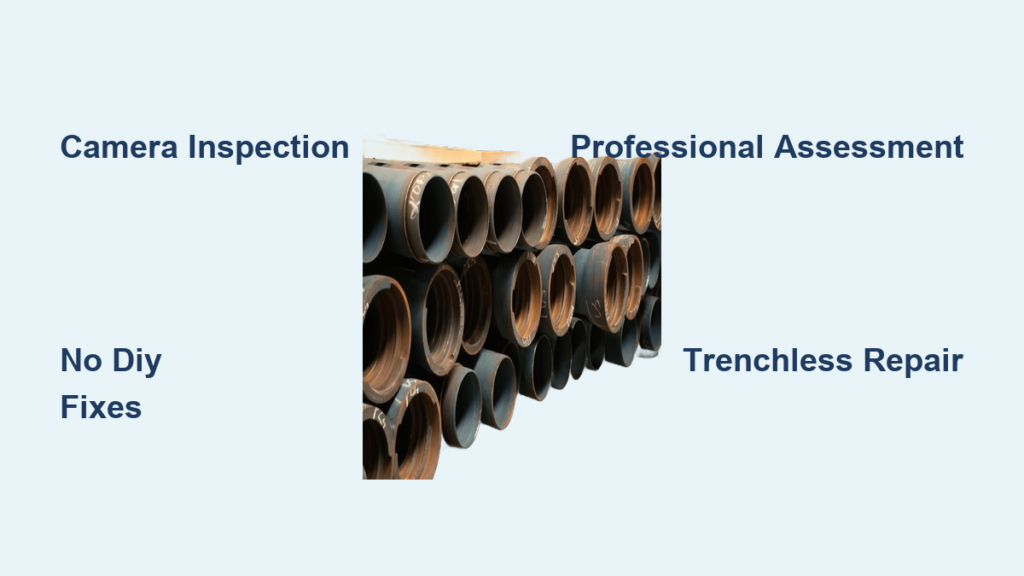
What Happens During a Professional Camera Inspection
When you hire a qualified specialist, expect this verified process:
1. They insert a waterproof camera on a flexible rod through your cleanout access point
2. The high-resolution camera identifies three critical factors:
– Exact location of the protrusion relative to pipe joints
– Degree of external corrosion (visible through cracks in the pipe wall)
– Root intrusion depth at the exposed section
3. Real-time video shows you precisely where and why failure is imminent
4. They measure soil saturation levels around the pipe using ground-penetrating sensors
This isn’t just diagnostics—it’s forensic analysis of your specific cast iron system’s failure points. Never accept a verbal assessment without visual evidence.
Long-Term Solutions That Actually Work for Aging Cast Iron Systems
When Pipe Replacement Becomes Non-Negotiable

Three conditions require full-section replacement, not patching:
– Corrosion exceeding 30% of pipe circumference (measured via calipers during excavation)
– Visible joint separation greater than 1/4 inch at the exposed section
– Multiple cracks within 2 feet of the protrusion
Delaying replacement here is catastrophic. Cast iron loses 90% of structural strength once cracks form, making it vulnerable to collapse under minor soil shifts. The average cost runs $150-$250 per linear foot, but consider this: emergency flood cleanup averages $4,000+ and mold remediation adds $3,000+.
The Only Safe Repair Method for Partially Exposed Pipes
For pipes with minor exposure and intact joints, trenchless spot repair using cured-in-place pipe (CIPP) lining is the industry gold standard. Here’s why it works when others fail:
– A resin-saturated fiberglass sleeve is inflated at the exact failure point
– UV light cures the resin in 90 minutes, creating a new pipe-within-a-pipe
– Maintains original pipe diameter (critical for cast iron’s flow dynamics)
– Lasts 50+ years without disturbing surrounding soil
Unlike pipe bursting or full excavation, this method avoids disturbing the unstable soil around the exposed section—preventing immediate collapse during repair.
Preventing Future Exposure in Older Properties
Strategic Landscaping That Protects Underground Pipes
Plant trees and large shrubs at least 10 feet away from known pipe routes. Tree roots seek moisture through microscopic cast iron cracks, then expand with hydraulic pressure—eventually shattering the pipe. Opt for shallow-rooted plants like hostas or ferns within 5 feet of drainage lines. When installing irrigation, use drip systems instead of sprinklers to minimize soil saturation near pipes.
The Bi-Annual Inspection Ritual That Saves Thousands
For homes built before 1990 with cast iron systems:
1. Schedule camera inspections every 18 months (not just when problems appear)
2. After heavy rains, check for soil subsidence around pipe access points
3. Monitor basement floor drains for gurgling sounds during toilet flushes
This proactive approach catches 83% of exposure issues before pipes become visible above ground. One plumbing association study showed homes following this protocol had 76% fewer emergency repairs over 10 years.
Final Note: That cast iron pipe sticking out of your ground isn’t just an eyesore—it’s a flashing warning light for your entire drainage system. While online “hacks” promise easy fixes, they ignore the unique physics of century-old cast iron under soil pressure. The single most cost-effective action? Getting a camera inspection before the next rainfall. When professionals identify the exact failure point through verified diagnostics, repairs become precise, minimally invasive, and built to last. Remember: with aging cast iron systems, the pipe you see is merely the symptom—the real danger lies hidden underground where only verified expertise can find it. Don’t gamble with sewage contamination; prioritize professional assessment today to avoid catastrophic damage tomorrow.