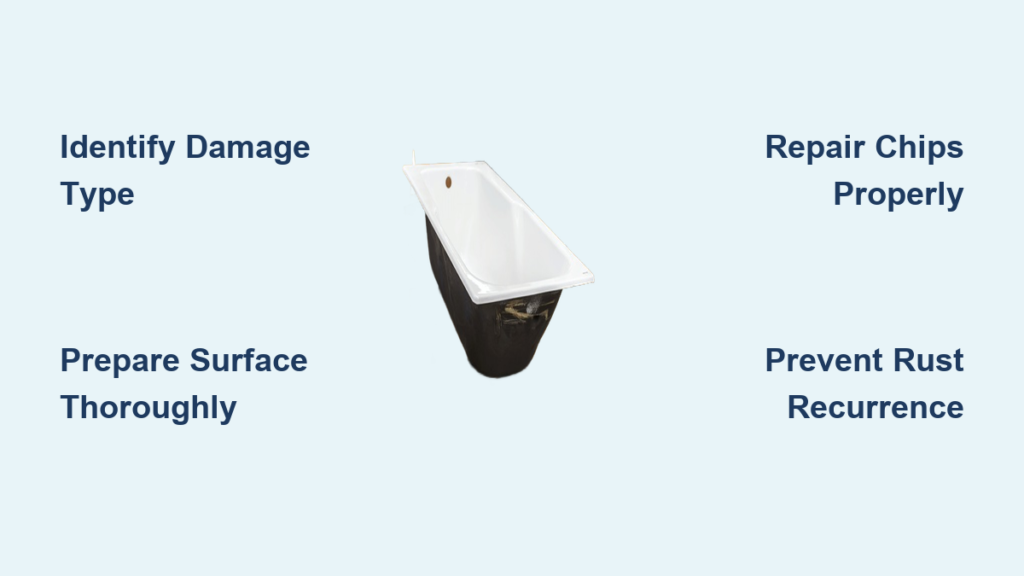
Nothing compares to the luxurious feel of a cast iron tub—its exceptional heat retention keeps your bathwater warm far longer than modern acrylic alternatives, while the substantial weight provides an unmatched sense of quality underfoot. These heirloom fixtures can easily last a century when properly maintained, but time and use inevitably take their toll. Whether you’ve chipped the enamel with a dropped shampoo bottle, noticed hairline cracks spiderwebbing across the basin, or discovered stubborn rust spots that won’t clean away, cast iron tub repair is often simpler and more affordable than you might think. This guide shows you exactly how to address common damage types and restore your vintage tub to like-new condition without the $2,000-$5,000 expense of replacement.
Understanding your tub’s construction is crucial before attempting any repair. Cast iron tubs consist of a heavy iron core covered with a porcelain enamel coating that’s fused to the metal at extremely high temperatures during manufacturing. This isn’t paint—it’s a glass-like surface that provides exceptional durability against scratches, stains, and chemicals. When this enamel fails through chipping, cracking, or wear, the exposed iron begins rusting almost immediately. The good news is that modern repair products can effectively restore both function and appearance, often with results that last decades rather than months. Proper repair not only preserves your investment but maintains the historical character that makes cast iron tubs so desirable.
Identify Your Specific Damage Type

Accurate diagnosis determines whether your cast iron tub repair succeeds or becomes a frustrating waste of time and materials. Different damage patterns require entirely different approaches, and misidentifying your problem leads to using inappropriate products that fail prematurely.
Surface Chips Require Different Approaches Based on Size
Chips from dropped objects like shampoo bottles or metal fixtures expose the iron substrate and appear as small bare spots with ragged edges. Size matters significantly—spots smaller than a dime (about 1/4 inch) typically need only simple touch-up products, while larger chips require epoxy filling before resurfacing. Examine the chip’s depth by running your fingernail across the edges; if you feel a definite lip where enamel has separated from iron, you’re dealing with damage requiring multi-step repair. Small chips repaired quickly before rust establishes themselves yield the most successful, long-lasting results.
Distinguish Cosmetic Cracks from Structural Damage
Cracks demand immediate attention but require careful assessment before attempting repair. Hairline cracks—barely visible lines less than a millimeter wide—often result from thermal stress when hot water contacts cold enamel or from foundation settling over decades. These surface cracks may be purely cosmetic if they haven’t penetrated through to the iron beneath. Structural fractures represent serious problems where the iron itself has cracked, often accompanied by slight flexing when weight is applied. Test by pressing firmly on areas surrounding the crack; if the tub floor or walls give even slightly, you’re dealing with structural damage requiring professional assessment. Never attempt DIY repairs on structural fractures, as water pressure and body weight will eventually cause failure, potentially resulting in catastrophic water damage.
Rust Spots Indicate Progressive Enamel Failure
Rust spots signal enamel deterioration beyond simple impact damage, often from prolonged exposure to moisture and harsh cleaning chemicals that gradually break down the porcelain surface. Unlike chips with defined edges, rust spots typically show gradual transition from intact enamel to corroded metal, sometimes covering several square inches. These zones require aggressive preparation—loose, flaky enamel must be completely removed, and the underlying iron treated with rust converters to prevent continued corrosion. Skipping proper preparation of rusted areas leads to bubbling and peeling of any applied finish within months as rust continues spreading beneath the surface.
Gather the Right Repair Supplies

Using proper materials makes the difference between a repair that lasts years versus one that fails within months. Quality matters significantly—cheap options often require more layers and yield inferior results that yellow or peel prematurely.
Surface preparation supplies form the critical foundation of successful repairs. You’ll need fine-grit wet/dry sandpaper in 400, 800, and 1200 grit ranges, along with a sanding block for consistent pressure. Clean, lint-free rags help remove dust between sanding steps, while a shop vacuum with brush attachment captures fine particles from crevices. Rubber gloves protect your hands from chemicals, and safety glasses prevent debris from entering your eyes during sanding.
Repair compounds vary by damage severity. Small chips under 1/4 inch respond well to porcelain touch-up pens or small jars of appliance epoxy. Medium chips between 1/4 and 1/2 inch typically require two-part automotive body fillers to build up the missing enamel layer. Larger repairs exceeding 1/2 inch may need marine-grade epoxy putties designed for wet environments. Rust spots require quality rust converter products that neutralize corrosion before priming.
Topcoat finishes must withstand constant moisture exposure. Acrylic urethane bathtub refinishing kits provide the most durable DIY option with excellent chemical resistance. Epoxy-based tub paints work adequately but tend to yellow over time, particularly in bathrooms with insufficient ventilation. Spray-on porcelain finishes create the most authentic appearance but require careful technique to avoid runs.
Prepare the Surface Thoroughly Before Repair
Surface preparation determines 80% of your cast iron tub repair success. Skimping here represents the most common DIY mistake, as even the finest topcoat cannot adhere to contaminated or improperly prepared substrates.
Begin by cleaning the entire tub thoroughly with a non-abrasive bathroom cleaner, removing soap scum, body oils, and mineral deposits that interfere with adhesion. Pay special attention to areas surrounding the damage, extending your cleaning zone at least six inches beyond repair boundaries. Rinse completely and allow to dry, then inspect for residue by wiping with a clean white cloth—any discoloration indicates contaminants requiring additional cleaning.
For chipped areas, sand carefully with 400-grit wet/dry sandpaper using light circular motions to create a slightly roughened surface around the chip edges. This “key” allows filler materials to mechanically bond rather than simply sitting on smooth enamel. Feather the sanding outward so the transition between damaged and intact enamel becomes gradual rather than abrupt. Remove all sanding dust with tack cloth or slightly damp rag before proceeding.
Rust spots require more aggressive treatment. Use a wire brush to remove all loose, flaking material until you reach firmly adhered enamel or bare iron. Apply rust converter according to instructions, typically allowing several hours until the treated area turns black. Sand lightly with 400-grit paper to smooth the converted surface before priming.
Repair Small Chips in Under an Hour
Small chips measuring less than 1/4 inch represent the simplest cast iron tub repair, often completed in under an hour with minimal materials. These touch-ups work best when performed shortly after damage occurs.
Clean the chip area once more with isopropyl alcohol to remove any oils. Allow to dry completely. If using a two-part epoxy, mix small amounts of filler and hardener on a disposable surface, working quickly as these products have limited working time.
Apply filler material to the chip using a fine artist’s brush, building it up slightly above the surrounding enamel level to account for shrinkage during curing. For very small chips, touch-up pens work adequately but require multiple thin layers rather than single heavy applications. Allow initial layers to dry per manufacturer recommendations before adding more.
Once filler has fully cured—typically 24 hours—sand carefully with 800-grit wet sandpaper using a sanding block to maintain flatness. Progress to 1200-grit for final smoothing. Apply matching topcoat using the smallest brush available, building color in thin layers with drying time between applications. Allow final coat to cure fully before water exposure.
Fix Medium and Large Chips with Proper Technique
Chips exceeding 1/4 inch require building up the substrate before topcoating. Automotive body filler provides an excellent base when properly sealed. Mix filler with hardener per instructions, using only what you can apply within three to four minutes.
Press filler firmly into the prepared chip cavity, overfilling slightly to account for sanding. Shape approximately with a putty knife before the material sets. Allow filler to cure completely—usually 20 to 30 minutes—before sanding.
Begin with 400-grit paper on a sanding block, flattening the filled area and blending edges into surrounding enamel. Progress through finer grits, with each stage removing scratches from the previous grade. The surface should feel completely smooth with no detectable lip when your fingers cross the transition zone.
Seal the filled area with quality primer designed for metal surfaces. Apply thin, even primer coats, allowing proper drying between applications. Lightly sand primed areas with 1500-grit paper before topcoat application. Plan for at least three to four topcoat layers to achieve adequate coverage and durability.
Address Cracks with Precision
Cracks require fundamentally different treatment than chips. Begin by assessing crack characteristics using a magnifier to reveal depth and pattern. Single, straight hairline cracks may be purely surface issues. Multiple cracks radiating from a central point often indicate deeper problems.
For confirmed surface cracks, widen the crack slightly using a sharp utility knife to create a “V-groove” that gives filler material something to grip. Clean thoroughly, removing all debris. Apply epoxy filler designed for ceramic and metal, working material deeply into the groove. Overfill slightly and allow to cure fully before sanding level.
Large or structural cracks require professional assessment. Specialized shops can weld cast iron tub cracks and refinish the entire surface—a process beyond typical DIY capabilities but often cost-effective compared to full replacement.
Prevent Rust Recurrence After Removal
Rust removal requires thorough treatment to prevent continued spreading beneath new coatings. Mechanical removal using wire brushes eliminates loose rust and corroded material. Work systematically with firm pressure until you reach firmly adhered enamel or bare iron showing no signs of continuing corrosion.
Apply chemical rust converters liberally, ensuring complete coverage. Most products require four to 24 hours to complete the chemical reaction, during which the treated surface typically turns black. Don’t rush this step—insufficient reaction time leaves rust only partially converted.
Neutralize and clean the converted surface according to instructions, typically involving thorough rinsing. Allow to dry completely, then sand lightly with 400-600 grit sandpaper to smooth the surface. Prime with rust-inhibiting primer containing zinc compounds that create a protective barrier.
Maintain Repaired Surfaces for Longevity
Proper maintenance extends repair results significantly. Allow all repaired surfaces to cure fully before first use—this cannot be overemphasized. Many products feel dry within hours but require extended curing time to develop full hardness.
Clean refinished tubs with non-abrasive products specifically designed for bathroom surfaces. Avoid cleaners containing bleach, ammonia, or harsh acids that gradually break down refinished surfaces. Mild dish soap diluted in warm water works excellently for regular cleaning.
Prevent impact damage by installing non-slip bath mats with smooth rubber backing rather than textured surfaces. Use care with bath accessories, avoiding dropping shampoo bottles onto tub surfaces. Address any new damage immediately rather than allowing water exposure to cause rust and expansion.
Your cast iron tub represents significant investment in quality and character—proper repair protects that investment while preserving a piece of bathroom history that newer fixtures simply cannot match. With careful diagnosis, proper materials, and thorough preparation, you can restore even badly damaged vintage tubs to decades more service.