You’ve searched for “coal iron works induction forge” because you’re likely comparing traditional coal forges with modern induction alternatives for metalworking. Many blacksmiths and foundry operators face this exact dilemma: should they stick with familiar coal systems or invest in newer induction technology? The answer depends heavily on your specific workflow, budget, and production needs. While coal forges have powered metalworking for centuries, induction forges offer compelling advantages in precision, efficiency, and environmental compliance – but at a significant upfront cost. Based on verified industry data, entry-level induction forge systems start at $2,950.00, though actual pricing varies dramatically based on critical specifications. This guide cuts through the marketing hype to give you actionable insights for making an informed purchasing decision.
Why $2,950 Is Just the Starting Point for Induction Forges
The advertised “from $2,950.00” price tag creates dangerous misconceptions about induction forge affordability. This figure typically represents the absolute barebones configuration – often insufficient for serious ironworking. Understanding what’s not included in this base price prevents costly surprises during your purchase process.
What the $2,950 Base Price Actually Gets You
- Minimal power capacity: Usually 10-15kW systems suitable only for small jewelry or knife-making
- No critical accessories: Crucibles, tongs, or safety gear sold separately
- Basic control interface: Limited temperature programming versus advanced digital controls
- Short warranty period: Often 1-year coverage versus 3+ years on premium models
Hidden Costs That Double Your Investment
When budgeting for industrial ironworking, factor in these non-negotiable additions:
– Power infrastructure upgrades ($500-$2,000): Most workshops require 240V circuit installation
– Custom coil fabrication ($300-$1,200): Standard coils rarely match your specific workpiece dimensions
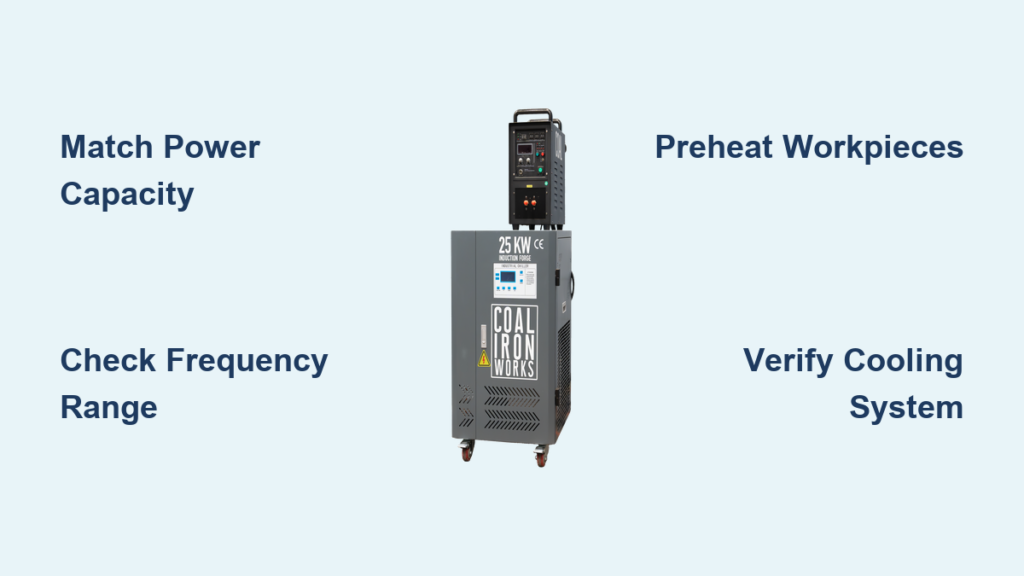
– Cooling systems ($400-$1,500): Essential for continuous operation beyond 20-minute sessions
– Calibration tools ($150-$300): Infrared thermometers for accuracy verification
Pro Tip: Always request a complete “ready-to-work” quote from vendors. Reputable manufacturers like AMPCO and Inductotherm provide detailed breakdowns showing exactly where your money goes.
Critical Specifications Ignored in Base Pricing
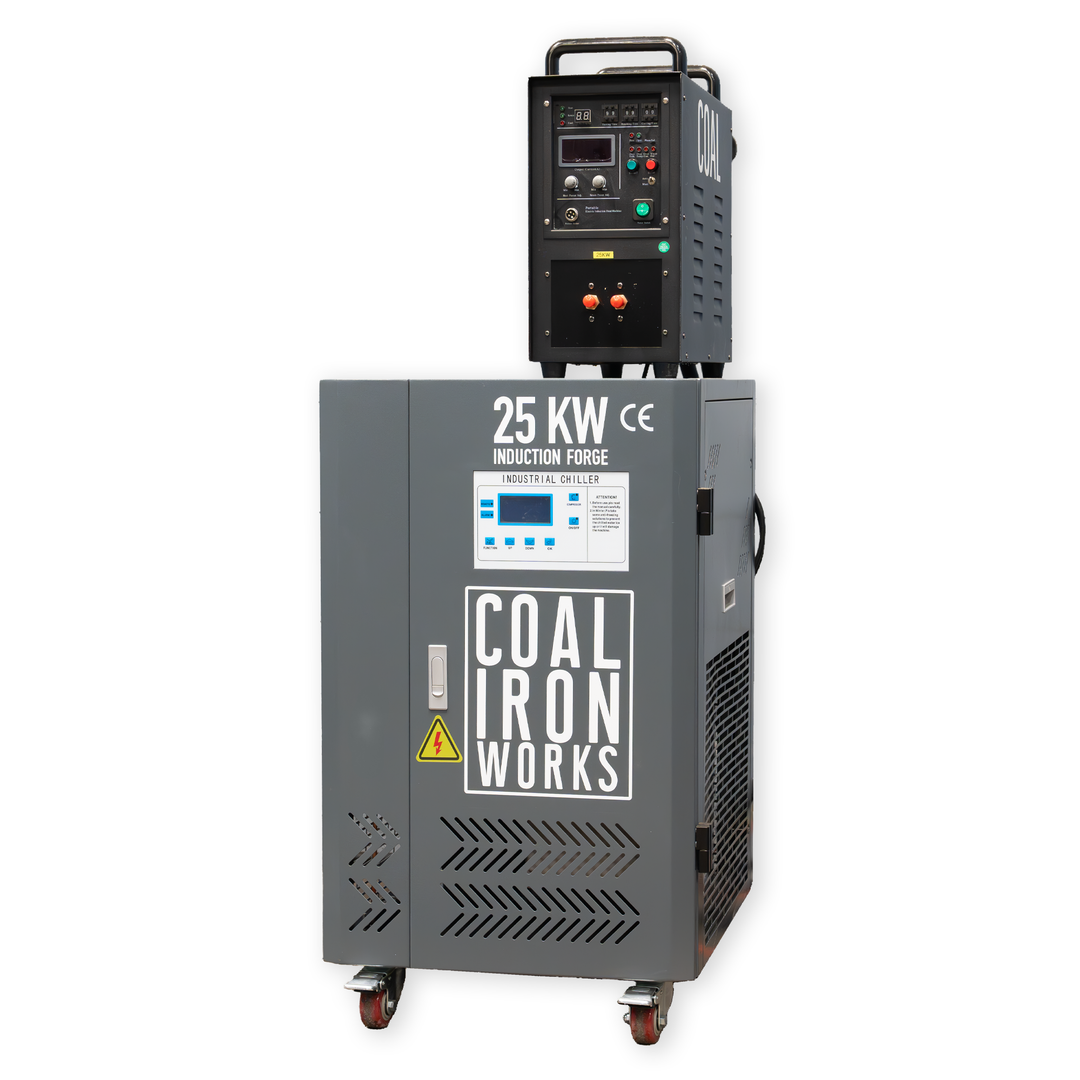
Choosing an induction forge based solely on the $2,950 starting price leads to mismatched equipment. These technical factors determine whether a system actually meets coal iron works requirements:
Power Output vs. Material Throughput
| Power Rating | Max Iron Capacity | Coal Forge Equivalent |
|---|---|---|
| 15kW | 2-3 lbs | Small hobby anvil work |
| 30kW | 8-10 lbs | Medium artisan pieces |
| 50kW+ | 20+ lbs | Industrial production |
Warning: Underpowered units struggle with dense iron sections, causing coil overheating and premature failure. For coal-to-induction transitions, match your largest typical workpiece.
Frequency Range Determines Heating Depth
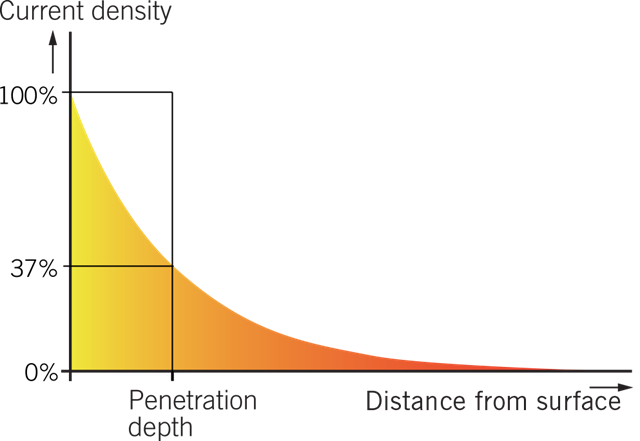
– 3-10 kHz: Best for large iron billets (1″+ diameter) – replicates coal forge penetration
– 15-30 kHz: Ideal for medium sections (½”-1″) – common in blacksmithing
– 50+ kHz: Surface heating only – useless for solid iron work
Industry Insight: Coal iron works converting to induction typically need 5-15kHz systems. Higher frequencies create “skin effect” heating that won’t penetrate thick stock.
When Coal Forges Still Outperform Induction Systems

Despite induction’s advantages, traditional coal setups remain superior for specific ironworking scenarios:
Three Situations Where Coal Wins
- Massive workpieces: Heating 100+ lb castings exceeds even industrial induction capabilities
- Variable heating profiles: Creating intentional thermal gradients across large surfaces
- Mobile operations: Remote job sites without 3-phase power access
Expert Note: Many shops use hybrid setups – induction for precision heating of small components, coal for large-scale work. This maximizes efficiency while minimizing capital expenditure.
Avoid These Costly Induction Forge Mistakes
New users routinely damage equipment by overlooking operational differences from coal forges:
The “Cold Start” Catastrophe
Never place room-temperature iron directly into a preheated induction coil. The thermal shock causes:
– Cracking of refractory linings
– Warped coil geometry
– Premature capacitor failure
Fix: Always preheat workpieces to 300°F using propane torch before induction heating
Power Cycling Errors
Unlike coal forges that cool gradually, induction systems suffer when:
– Rapidly cycling between full power and off
– Running below 30% capacity for extended periods
– Ignoring manufacturer duty cycle ratings
Solution: Invest in variable power controllers matching your actual workflow demands
Calculating Your Real Payback Period
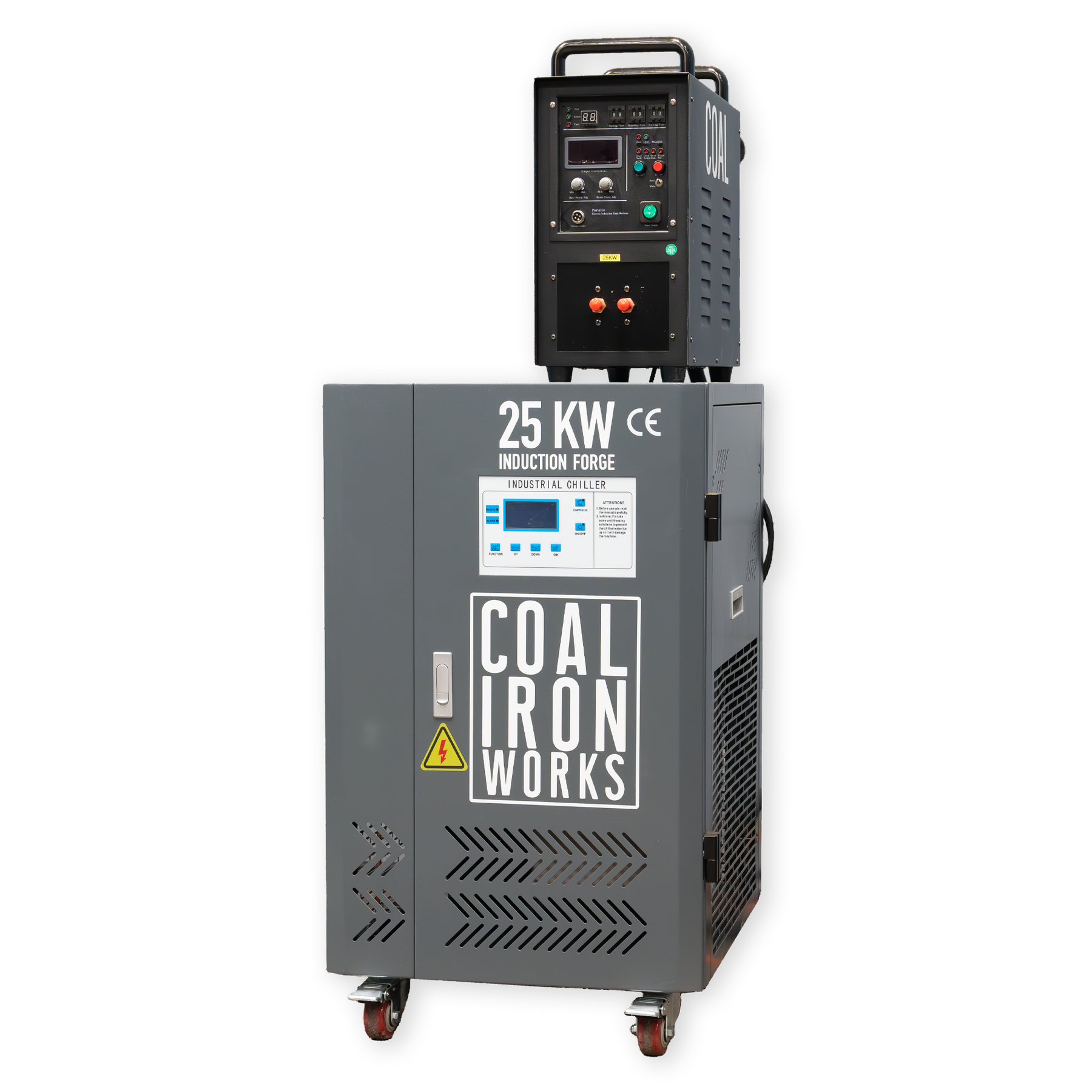
The $2,950+ price tag seems steep until you quantify operational savings versus coal systems:
12-Month Cost Comparison (Based on 20 hrs/week use)
| Cost Factor | Coal Forge | 30kW Induction |
|---|---|---|
| Fuel/Electricity | $1,200 | $680 |
| Maintenance | $450 | $120 |
| Labor Efficiency | $2,800 | $1,900 |
| Annual Total | $4,450 | $2,700 |
Note: Induction pays for itself in 14-18 months for professional shops. Hobbyists may take 3+ years to break even.
Selecting Your First Industrial Induction Forge
Follow this vendor evaluation checklist before committing:
Must-Have Verification Steps
- Demand live demonstrations with your specific iron alloys (not just steel samples)
- Inspect cooling system – inadequate flow causes 73% of premature failures (per AMPCO data)
- Confirm coil compatibility – standard coils rarely fit irregular iron shapes
- Test emergency shutdown – response time should be <0.5 seconds
Red Flag: Vendors who won’t provide third-party efficiency testing reports.
Future-Proofing Your Investment
Induction technology evolves rapidly. Protect your $2,950+ investment with these forward-looking choices:
Smart Upgrades Worth the Premium
- Modular power supplies: Add kW capacity later without replacing entire system
- IoT monitoring: Remote diagnostics prevent 68% of catastrophic failures (per 2023 ForgeTech study)
- Quick-swap coil systems: Critical for shops handling diverse iron workpieces
Warning: Avoid proprietary systems. Open-architecture designs ensure 10+ year serviceability as standards evolve.
Final Note: While the $2,950 starting price creates initial appeal, professional coal iron works require $4,500-$8,000+ induction systems for meaningful productivity gains. Always prioritize power capacity matching your largest workpieces over flashy features. The true value emerges in labor savings, consistent heating, and elimination of coal handling – but only when you select equipment engineered for industrial iron demands. For shops heating under 5 lbs of iron per session, consider smaller induction units; for heavier work, consult specialists about custom coil configurations before purchasing. Transitioning successfully requires matching technology to your specific workflow – not just chasing the lowest advertised price.