Struggling with inconsistent iron shots that leave you scrambling to save par? You’re not alone. Most golfers spend excessive time working on their driver while neglecting the club that actually determines scoring—their irons. When you hit your irons cleanly, you’ll see immediate improvements in accuracy, distance control, and ultimately, lower scores. This guide cuts through the noise to deliver practical, actionable techniques that address the most common iron swing problems. Whether you’re fighting slices, fat shots, or inconsistent contact, these specific adjustments will help you strike irons with confidence and precision.
The difference between hitting your irons well versus poorly often comes down to just a few critical elements in your swing sequence. Unlike woods that sit on a tee, irons require precise downward contact to compress the ball properly against the clubface. This compression creates the solid feel, optimal spin rates, and consistent trajectory that separates good iron players from the rest. By focusing on these targeted improvements rather than trying to overhaul your entire swing, you’ll see quicker results that translate directly to the course. Let’s dive into the specific techniques that will transform your iron play starting today.
Perfect Your Grip for Better Control
Your grip fundamentally determines how the clubface behaves throughout your swing, yet most golfers never give it the attention it deserves. For iron play, the club should run diagonally across your lead hand (left hand for right-handed golfers) from the base of your index finger to the middle of your pinky. When you wrap your fingers around the grip, your thumb and index finger should form a “V” pointing toward your trailing shoulder. This neutral grip position provides optimal control without restricting natural wrist movement.
How to quickly fix a slice with your grip
If you consistently slice your irons, try strengthening your lead hand by rotating it slightly clockwise on the grip. This adjustment closes the clubface at impact without requiring major swing changes. Hold a club in your lead hand and look down—you should see two to two-and-a-half knuckles visible. Practice hitting half-shots with this stronger grip until the ball flight straightens out. Many golfers see immediate improvement with this simple adjustment that takes just minutes to implement.
Establish a Balanced Stance and Posture

The foundation of consistent iron contact begins before you even move the club. Stand with your feet shoulder-width apart for mid-irons, with your knees flexed as if preparing to sit in a chair. The critical detail most golfers miss? Your spine angle. Bend forward from your hips until your upper body creates approximately a 45-degree angle with the ground, maintaining this position throughout your swing. When you look down at the ball, your eyes should be directly over it—not behind it.
Ball position mistakes that sabotage iron contact
Placing the ball too far forward in your stance with irons causes thin shots and excessive spin, while positioning it too far back creates fat shots and slices. For mid-irons like your 7-iron, position the ball opposite your lead heel. With shorter irons, move it back slightly toward the center of your stance. The simple test: when you address the ball, your lead arm should hang straight down from your shoulder to the grip. This alignment ensures proper contact and optimal launch conditions for each iron in your bag.
Execute a Smooth Takeaway and Backswing
Your takeaway sets the entire swing in motion, yet most golfers rush this critical phase. Start your iron swing by rotating your shoulders while keeping your arms connected to your chest. The club should move back low and slow for the first foot of the swing—imagine brushing the grass behind the ball. Your hands should stay in front of your chest, not lifting vertically. This shallow takeaway promotes proper swing plane and prevents the “over-the-top” move that causes slices.
The one-move takeaway drill
Place a headcover under both armpits and make slow swings without dropping it. This drill forces proper shoulder rotation rather than excessive arm movement. Focus on turning your lead shoulder down and under your chin as you complete your backswing. When done correctly, your trail arm should fold naturally with your wrist hinge occurring gradually—not abruptly at waist height. This connected movement builds coil while maintaining control for consistent iron contact.
Sequence Your Downswing for Maximum Efficiency
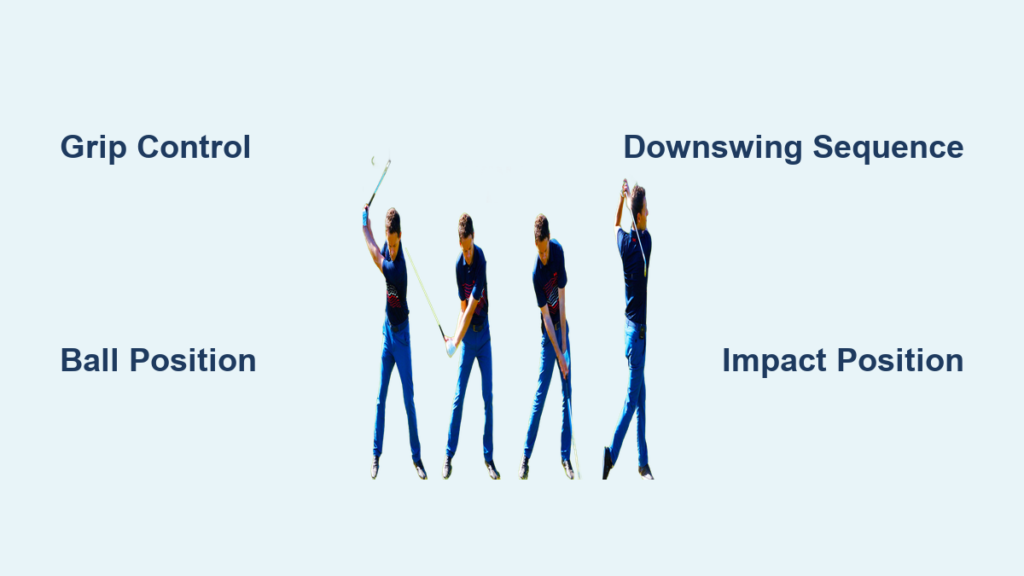
The downswing sequence separates skilled iron players from amateurs. The correct sequence starts with your lower body—shift your lead hip toward the target while maintaining flex in your trail knee. As your hips clear, your arms and club will naturally drop into the ideal “slot” position. Many golfers mistakenly start the downswing with their upper body, casting the club outside the proper swing plane and creating inconsistent contact.
How to build lag for solid iron strikes
Lag—the angle between your lead arm and the club shaft—is crucial for compressing irons properly. At the top of your backswing, pause briefly, then initiate the downswing by rotating your hips while keeping your hands high. Feel like your trail elbow moves toward your trail hip pocket as you start down. This movement maintains wrist angle longer, storing energy for release at impact. Practice hitting shots with just your trail hand to develop this sensation, then gradually incorporate your lead hand while maintaining the lag.
Strike Irons Cleanly with Proper Impact Position

Impact position determines ball flight more than any other factor in your iron swing. At contact, your lead hand should be ahead of the ball with the shaft leaning forward. Your weight should be predominantly on your lead foot, with your trail heel lifting naturally. Most golfers hit fat shots because they stand up during the swing, raising the low point of the arc behind the ball. Conversely, thin shots often result from excessive lateral movement toward the target.
The divot check for perfect iron contact
After hitting an iron shot, examine your divot. It should begin just after the ball position and point toward your target. A divot starting before the ball indicates fat contact, while no divot suggests thin contact. Practice hitting shots off a slightly inclined lie to encourage a downward strike. Place a second ball two inches behind your target ball—if you consistently hit the front ball without touching the rear one, you’ve mastered the descending strike essential for clean iron contact.
Eliminate Common Iron Mistakes
Slices with irons typically stem from an open clubface combined with an out-to-in swing path. Fix this by strengthening your grip as mentioned earlier and visualizing your swing path moving more from inside-to-out. Place an alignment stick on the ground pointing at your target, then position another stick parallel to it about six inches inside the target line. Swing along this inside path while focusing on releasing the club through impact.
Stop hitting fat iron shots with this quick fix
When you hit behind the ball, your weight hasn’t shifted forward properly. Try this adjustment: position your lead foot slightly back from your trail foot at address. This closed stance encourages your weight to move forward during the downswing. Alternatively, practice hitting shots with your trail foot lifted off the ground—this forces proper weight transfer and prevents you from hanging back on your trail side.
Practice Drills That Build Iron Consistency
The “impact bag” drill develops proper weight shift and body rotation. Without a ball, practice swinging into an impact bag or pillow, focusing on transferring your weight to your lead side while maintaining forward shaft lean. You should feel your lead hip clear and your chest face the target at impact. This sensation translates directly to solid iron contact when you add the ball.
The towel drill for connected arms
Place a small towel under your trail armpit and hold it in place throughout your swing. This prevents “flying elbows” that disconnect your arms from your body, a common cause of inconsistent iron contact. Make slow-motion swings while keeping the towel secure. When you feel your arms working with your body rotation rather than independently, you’ve achieved the connection necessary for reliable iron play.
Mastering your iron swing doesn’t require a complete overhaul—just targeted adjustments to specific elements that directly impact contact quality. Focus on one fundamental at a time, using the drills provided to build muscle memory. Record your swing periodically to track progress and identify areas needing refinement. Remember that consistent iron play stems from clean contact more than raw power, so prioritize strike quality over distance in your practice sessions. Implement these tips systematically, and you’ll soon find yourself hitting more greens, saving more pars, and watching your scores drop with every round. The path to better iron play starts with your next practice session—grab your 7-iron and begin building the consistent strike that separates good golfers from great ones.