Have you ever finished a beautiful knitting project only to find it curling at the edges, with uneven stitches that won’t lie flat? Steam blocking with an iron transforms your handcrafted knits from homemade to professionally finished in a fraction of the time of traditional wet blocking. This essential finishing technique relaxes yarn fibers, evens out tension inconsistencies, and gives your projects that polished look that makes people ask, “Where did you buy that?” Understanding how to block knitting with an iron properly can mean the difference between a project that looks amateurish and one that showcases your true skill.
Unlike wet blocking that requires overnight drying, steam blocking works quickly while still delivering professional results. The heat and moisture penetrate the fibers, allowing them to be shaped and set into their final configuration. However, this technique demands careful attention to fiber types and temperature settings—too much heat can permanently damage delicate yarns. Whether you’re finishing a lace shawl, a cable-knit sweater, or a simple scarf, mastering this technique elevates your finished projects and ensures they maintain their shape through wear and washing.
Essential Tools for Iron Blocking Your Knitting Projects

Before you begin blocking knitting with an iron, gather these critical tools to prevent frustration and ensure professional results. Your iron must have adjustable temperature settings and consistent steam capability—cheap irons that drip water will leave unsightly spots on your finished piece. Look for one with a stainless steel soleplate that glides smoothly without snagging delicate stitches. Fill it with distilled water to prevent mineral buildup that could stain your project during the blocking process.
Your blocking surface matters just as much as the iron itself. Lay a thick, clean towel over a flat, stable surface like a table or ironing board for smaller projects. For larger items like shawls or blankets, use a dedicated blocking mat with measurement grids. Never block directly on your ironing board cover as moisture can damage it. You’ll need stainless steel T-pins that won’t rust when exposed to steam—regular pins can corrode and stain your work. For lace projects, consider adding blocking combs that help maintain consistent tension across intricate patterns without distorting the design.
Fiber-Specific Temperature Settings for Safe Blocking
Wool responds exceptionally well to steam blocking due to its natural elasticity and scaly fiber structure. Set your iron to the “wool” setting (approximately 300°F/150°C) with maximum steam for most wool projects. Superwash wool can handle slightly higher temperatures, but always test a swatch first. When blocking alpaca or mohair, reduce the heat to the “silk” setting and hold the iron further from the fabric—these fibers are more delicate and can easily lose their characteristic halo if exposed to excessive heat.
Cotton and linen require different treatment despite being natural fibers. Set your iron to the “cotton” setting (around 400°F/200°C) but use minimal steam—these plant-based fibers respond better to moisture than heat. For silk projects, always use the lowest possible heat setting with a pressing cloth between the iron and fabric. Never apply direct steam to silk as it can cause permanent water spots and weaken the delicate fibers. Acrylic and other synthetics present the greatest risk—most cannot withstand steam blocking at all. If you must block acrylic, use the “nylon” setting with no steam and always employ a pressing cloth, but be aware that results may be inconsistent and fibers could flatten permanently.
Prepare Your Knitting Project for Successful Iron Blocking
Lay your finished project flat on a clean surface and gently smooth out major wrinkles without stretching the fabric. For garments, complete all seaming before blocking—this allows you to shape each piece to exact measurements. Weave in all loose ends securely, as steam can cause them to work loose or create bumps in your finished fabric. If your project has visible stains, wash it first as steam can set stains permanently into the fibers.
Take precise measurements of your project before blocking, especially for lace or garments where exact sizing matters. Use pins to mark key points on your blocking surface corresponding to your target dimensions. For shawls with symmetrical patterns, fold the piece in half to ensure both sides match before pinning. If your knitting has significant curling edges, pin them down gently but don’t force them completely flat—steam blocking will relax the tension naturally without distorting the fabric structure. Allow the project to rest for five minutes before pinning to identify any areas needing extra attention.
Step-by-Step Steam Blocking Technique with an Iron
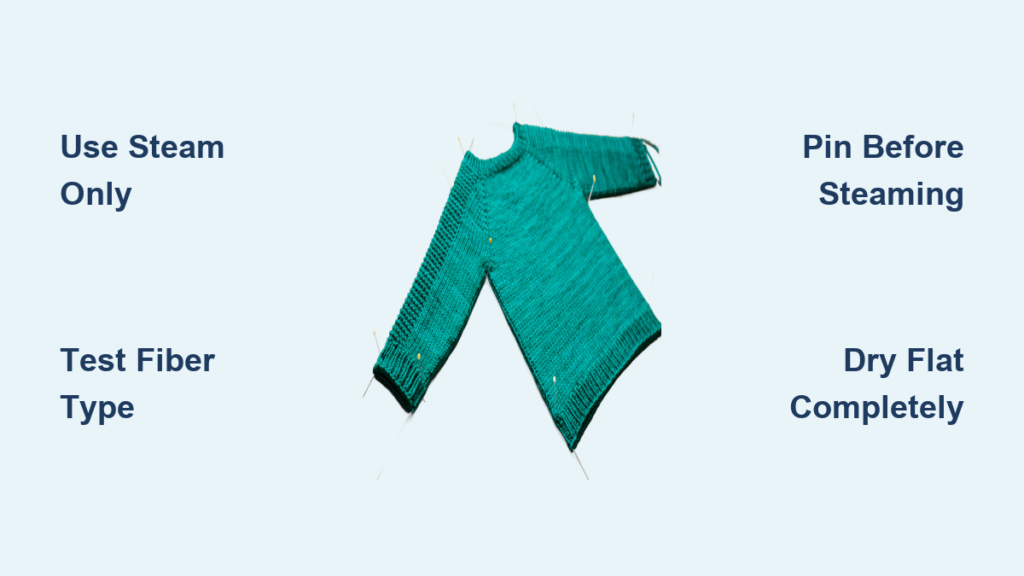
Pin your project to your blocking surface using stainless steel T-pins placed every 4-6 inches along edges and curves. For lace projects, add pins at pattern repeats to maintain design integrity. Fill your iron with distilled water and set to the appropriate temperature for your fiber type, allowing it to fully heat before starting. Hold the iron 1-2 inches above the pinned fabric—never let the soleplate touch the knitting directly. Move the iron in slow, steady passes across the project, overlapping each pass by about half to ensure even coverage.
Watch for the fabric to darken slightly as steam penetrates the fibers—that’s your signal that moisture has been absorbed. For stubborn curling edges, hold the iron slightly closer (but still not touching) and apply steam for a few extra seconds. Immediately after steaming each section, smooth the fabric with your fingers to encourage fibers to relax into position. For delicate areas, place a clean cotton pressing cloth between the iron and your project—this diffuses the steam while protecting vulnerable fibers. Work systematically from one end of the project to the other to avoid missing sections or applying uneven moisture.
Setting Your Blocked Knitting and Proper Drying Techniques
The cooling phase is as crucial as the steaming process for permanent results. Allow your project to dry completely undisturbed—rushing this step causes fibers to shift and lose their new shape. Thin lace projects typically need 30-60 minutes to dry completely, while dense cable-knit sweaters may require 2-4 hours. In humid environments, add an extra hour to drying times to ensure no residual moisture remains trapped in the fibers.
To test if your project is fully dry, gently touch a corner with the back of your hand—it should feel completely cool and dry to the touch. Remove pins starting from the outer edges and working inward to prevent distortion. Lift the project carefully and give it a light shake to release any residual tension before laying it flat for final settling. For garments, blocking while slightly damp (not wet) helps the fabric mold to your body shape when worn. Never hang steam-blocked items to dry as gravity will stretch the wet fibers out of shape—always lay flat until completely dry.
Common Iron Blocking Mistakes That Ruin Knitting Projects

Applying excessive heat ranks as the most damaging mistake when learning how to block knitting with an iron. Many crafters assume more heat means better blocking, but this can melt synthetic fibers or permanently felt wool beyond repair. Always start with lower temperatures and increase only if necessary—once fibers are damaged, they cannot be restored. Another critical error involves touching the iron directly to the knitting, which leaves shine marks on wool or melts synthetic fibers instantly.
Removing pins too soon creates subtle distortions that only become apparent after the project is finished. Many crafters mistakenly believe the fabric is dry when it’s merely cool to the touch, but fibers need complete moisture evaporation to set properly. Inadequate pinning causes edges to curl back during drying, defeating the entire purpose of blocking. Finally, blocking heavily soiled projects without washing first sets stains permanently into the fibers—always clean your project before blocking for professional results.
Professional Tips for Perfect Steam Blocking Results Every Time
Test your iron’s steam output on a spare towel before starting—this helps you gauge how much moisture to expect and adjust your technique accordingly. For stubborn curling edges, apply steam then immediately press with a cool, dry cloth to set the fibers more firmly in their new position. Blocking a test swatch with your project yarn reveals exactly how your specific fiber responds to steam, preventing disasters on your finished piece.
For large projects like afghans, block in sections rather than attempting the entire piece at once. Roll a dry towel beneath edges to create slight elevation that prevents moisture from wicking onto your blocking surface. When blocking garments, take your body measurements into account and block with slight negative ease for fitted pieces—knitting stretches when worn. Document your successful blocking parameters (temperature, steam duration, drying time) for future reference with the same yarn. This systematic approach ensures consistent, professional results across all your projects.
Iron Blocking vs. Alternative Blocking Methods for Knitters
Steam blocking offers significant advantages over wet blocking for many projects. While wet blocking requires submerging your entire project and waiting 12-24 hours for drying, steam blocking achieves similar results in under an hour with less moisture exposure. This makes it ideal for delicate fibers that might felt during prolonged water exposure or for last-minute finishing before gifting. However, wet blocking creates more dramatic shape changes for heavily distorted pieces that steam alone can’t correct.
Spray blocking provides a middle ground—misting the project with water rather than full immersion reduces drying time while offering more moisture penetration than steam. This works well for plant fibers like cotton that respond better to water than heat. Cold blocking (pinning without heat) suits heat-sensitive fibers but requires significantly longer setting times. For acrylic projects, “killing” with low heat and a pressing cloth permanently flattens the fabric, though this fundamentally changes the drape and texture. Steam blocking strikes the perfect balance of effectiveness, speed, and safety for most natural fiber projects, making it an indispensable technique for serious knitters.