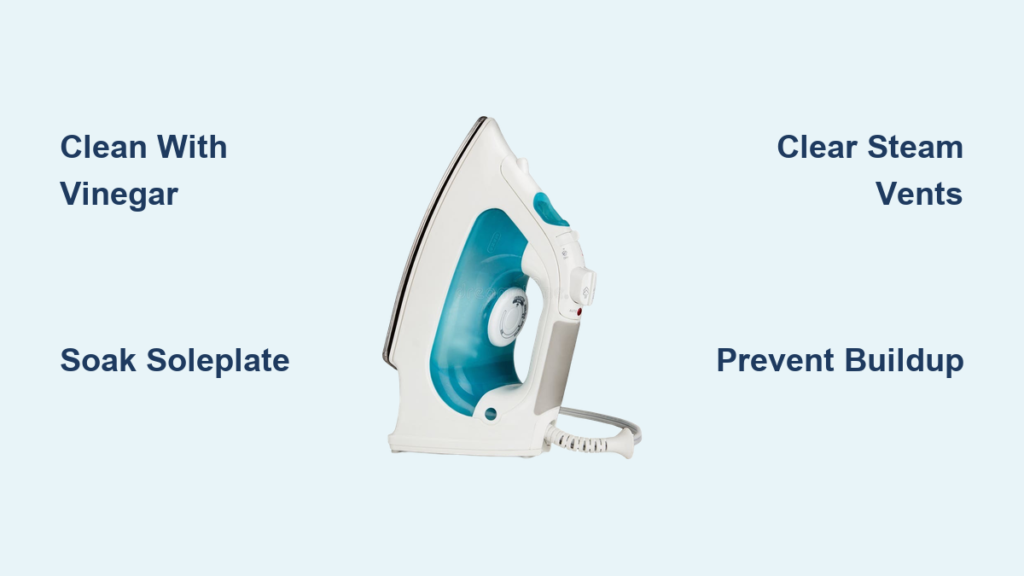
Your iron’s soleplate is covered in stubborn white mineral deposits, brown starch residue transfers to your freshly laundered clothes, and steam vents have clogged to the point of sputtering instead of steaming. When your iron stops performing like new, white vinegar offers the most effective, affordable solution to restore its functionality. The acetic acid in vinegar effortlessly dissolves mineral buildup from hard water, breaks down burnt starch residues, and clears clogged steam vents without damaging non-stick coatings. This guide reveals five professional cleaning techniques using only vinegar and common household items—no expensive commercial cleaners required. You’ll learn exactly how to revive your iron’s performance in as little as 15 minutes, prevent future buildup, and extend your appliance’s lifespan through proper maintenance.
Why Mineral Deposits Ruin Your Iron’s Performance

Mineral deposits from hard water create three distinct problems that degrade iron performance over time. White, chalky residue forms around steam vents and across the soleplate as evaporated water leaves behind calcium and magnesium ions. These deposits gradually restrict steam output until your iron sputters instead of producing consistent steam. Starch and fabric residue from ironing treated garments appears as brown or yellowish stains with a sticky texture that transfers to your clothes during ironing. Most frustrating are the dark, carbonized burns that occur when synthetic fabrics melt onto the hot soleplate, leaving permanent-looking marks. Understanding which type of buildup you’re facing determines the most effective vinegar cleaning approach—mineral deposits respond quickly to vinegar’s acid, while carbonized burns may require multiple treatments.
Gather These 7 Supplies Before Cleaning Your Iron
Before starting any vinegar cleaning method, prepare these essential supplies to ensure a smooth process:
- White distilled vinegar (5% acidity): Plan for 1-2 cups per session (apple cider vinegar works in a pinch but may leave odors)
- Pure cotton or microfiber cloths: Must withstand heat without melting or shedding fibers
- Cotton swabs: For detailed cleaning around steam vents and edge crevices
- Soft-bristled brush: An old toothbrush works perfectly for textured soleplates
- Wooden toothpicks: For clearing stubborn steam vent clogs without scratching
- Rubber gloves: Protects skin from prolonged vinegar exposure
- Old towels or newspapers: Creates a protective surface for cleaning
Critical preparation step: Unplug your iron and let it cool completely before starting. Empty any remaining water from the reservoir to prevent dilution of your cleaning solution. Set up in a well-ventilated area since vinegar vapors can irritate enclosed spaces during heating phases.
Fix Clogged Steam Vents With the 5-Minute Steam Cleaning Method
This internal cleaning technique targets mineral deposits in water tanks and steam passages that external cleaning can’t reach. For moderate buildup, you’ll need just 5 minutes of active cleaning time plus rinsing.
Step 1: Mix equal parts white vinegar and distilled water in a measuring cup (for severe buildup, use undiluted vinegar but expect more rinsing).
Step 2: Fill the iron’s reservoir to the maximum line with your solution.
Step 3: Set the iron to its highest temperature and let it fully heat (indicator light turns off).
Step 4: Hold the steam burst button over an old towel for 30-60 seconds to expel vinegar solution through clogged vents.
Step 5: Empty the reservoir, refill with plain distilled water, and repeat steam bursts until expelled steam runs clear (typically 2-3 rinse cycles).
Pro tip: For stubborn internal buildup, add one tablespoon of baking soda per cup of vinegar solution—the fizzing action helps dislodge deposits. Difficulty: Easy | Time: 15 minutes total
Remove Burnt Residue With the Soleplate Soaking Technique

When starch burns onto your soleplate creating brown or black stains, this soaking method softens the residue without aggressive scrubbing that could damage coatings.
Step 1: Pour undiluted white vinegar into a container deep enough to submerge the soleplate (use a plastic bin or baking dish lined with a towel to prevent scratching).
Step 2: Submerge the soleplate for 30-60 minutes (light stains need 30 minutes; heavy burns require 60).
Step 3: Remove and immediately scrub with a soft-bristled brush using circular motions—vinegar-softened residue should wipe away easily.
Step 4: Use cotton swabs dipped in vinegar to clean inside steam vents.
Step 5: Neutralize remaining acid with a baking soda solution (1 tbsp per cup of water), then wipe with plain water.
Warning: Never soak irons with non-stick coatings for more than 30 minutes—prolonged vinegar exposure can damage the surface. Difficulty: Moderate | Time: 45 minutes
Spot-Treat Stains Without Damaging Non-Stick Coatings

For quick maintenance between deep cleanings, this spot treatment removes fresh stains before they become embedded.
Step 1: Saturate a cotton ball with vinegar (squeeze out excess so it’s damp, not dripping).
Step 2: Press firmly against stained areas for 30-60 seconds to allow penetration.
Step 3: Gently scrub in circular motions—renew the cotton ball as it picks up residue.
Step 4: Clean steam vents using vinegar-dampened cotton swabs.
Step 5: Immediately wipe the entire soleplate with a water-dampened cloth to prevent vinegar drying.
Pro tip: For irons with non-stick coatings, dilute vinegar 50/50 with water and reduce contact time to 15 minutes maximum. This prevents coating degradation while still removing light buildup. Difficulty: Easy | Time: 10 minutes
Prevent Future Buildup With These 3 Simple Habits
Implement these maintenance habits to dramatically reduce how often you need deep cleaning:
-
Always use distilled water in your iron’s reservoir—tap water contains minerals that create deposits during steam generation. If your manufacturer prohibits distilled water, use a 50/50 mix of distilled and tap water.
-
Wipe the soleplate after each use with a damp cloth while still warm (not hot)—this prevents residue from hardening between cleanings.
-
Store upright with the reservoir empty—this prevents remaining water from evaporating and leaving mineral deposits inside the iron.
Critical mistake to avoid: Never use tap water exclusively if you have hard water (over 120 ppm calcium carbonate). Monthly internal cleaning becomes necessary instead of quarterly, and severe buildup can permanently damage steam mechanisms.
Troubleshoot When Vinegar Cleaning Doesn’t Work
If your iron still shows problems after vinegar cleaning, try these targeted solutions:
Vinegar odor remains on fabrics: Perform additional rinse cycles—fill the reservoir with plain water, heat the iron, and steam over an old towel until no vinegar smell transfers (typically 3-5 cycles).
Steam vents still clogged: Create a paste of baking soda and water, apply around vent holes, let sit 15 minutes, then heat the iron to medium and activate steam bursts—the pressure often dislodges remaining blockages.
Rainbow discoloration on chrome soleplates: This temporary reaction occurs on some metals—buff gently with olive oil on a soft cloth to restore shine. For future cleanings, reduce vinegar concentration and contact time.
Stubborn carbonized burns: Apply undiluted vinegar directly to the stain, cover with a vinegar-soaked cloth, and let the iron warm to low heat for 30 minutes (wrapped in a towel to retain heat)—this heat-enhanced method often succeeds where room-temperature treatments fail.
Essential Safety Guidelines You Must Follow
Electrical safety: Always unplug and cool your iron completely before cleaning—never immerse the iron body in liquid.
Chemical safety: Wear gloves during extended cleaning sessions and work in ventilated areas—never mix vinegar with bleach or ammonia (creates dangerous gases).
Surface protection: Vinegar can damage marble, granite, and laminate surfaces—always protect your work area with towels.
Coating caution: Non-stick and ceramic coatings require diluted vinegar (50/50) and reduced soak times—undiluted vinegar can degrade these surfaces over time.
Following these vinegar cleaning methods properly restores your iron’s performance while extending its lifespan significantly. For hard water households, implement monthly internal cleaning and spot treatments as needed; soft water areas require cleaning only quarterly. The simple investment of 15-45 minutes prevents costly iron replacements and ensures your clothes come out perfectly pressed without stains or residue. When performed regularly, these vinegar cleaning techniques keep your iron functioning like new for years beyond its expected lifespan.