That stubborn black residue in your Le Creuset skillet after a cooking mishap doesn’t mean your $200 investment is ruined. Thousands of home cooks face this frustrating scenario each year—food left unattended on high heat transforms into a carbonized layer fused to the enamel surface. The good news is that properly addressing burnt residue on your Le Creuset cast iron skillet can restore it to near-original condition without damaging the valuable enamel coating. Unlike traditional cast iron, Le Creuset’s enameled surface requires specific cleaning approaches that balance effectiveness with enamel protection.
Most burnt residue responds well to home treatment methods when addressed promptly. This guide delivers precise techniques for removing burns at any severity level while preserving your skillet’s cooking performance and appearance. You’ll discover which common household items work best, which tools could permanently damage your cookware, and how to build that prized natural non-stick surface that makes Le Creuset skillets so valuable. With proper care, your restored skillet can continue delivering exceptional cooking results for decades—many Le Creuset pieces remain in service for 50+ years.
Immediate Action for Fresh Burn Spots
When you notice food burning in your Le Creuset skillet, immediate action prevents minor scorching from becoming a major cleaning challenge. The key is addressing residue while the skillet is still warm but safe to handle, as heat significantly softens carbonized material. Never dump cold water into a hot skillet—this thermal shock can cause enamel cracking that compromises both appearance and functionality.
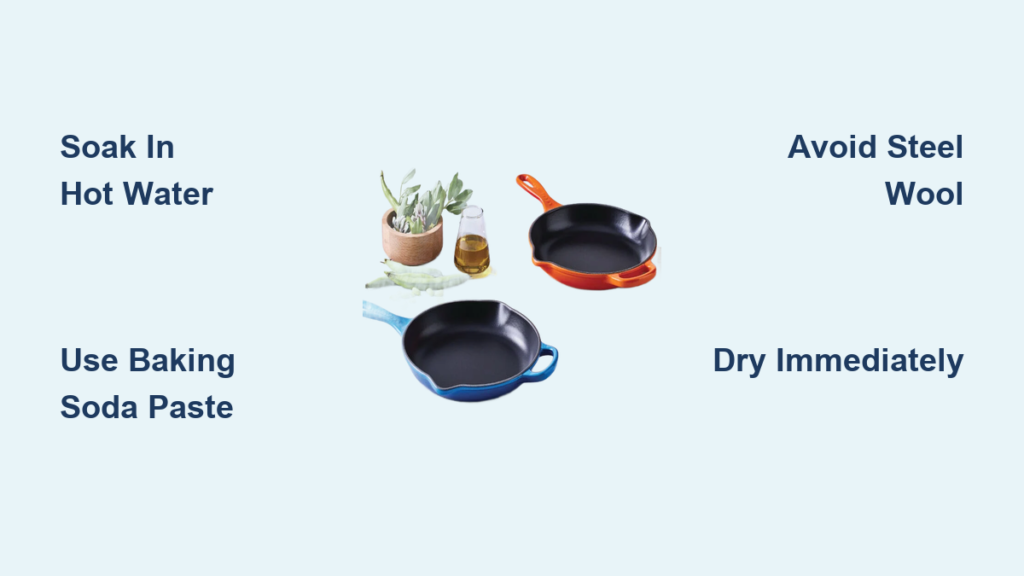
Start by removing the skillet from heat and allowing it to cool slightly until comfortable to touch (approximately 10-15 minutes). Add hot tap water (not boiling) to cover the burned area and one tablespoon of mild dish soap per gallon. The heat retained in the cast iron continues working on the residue while the soap cuts through grease. Let the water cool naturally in the skillet for 30-60 minutes—this gentle approach often loosens fresh burns without aggressive scrubbing.
After soaking, use a silicone scraper or wooden spatula to gently lift residue that has softened. For stubborn spots, create a paste with baking soda and a few drops of water, applying it directly to problem areas. The mild abrasiveness of baking soda effectively removes carbonized food without scratching enamel. Never use steel wool or metal scrubbers—these will permanently damage the smooth cooking surface, creating microscopic grooves where future burns will anchor more firmly.
Hydrogen Peroxide Deep Clean for Stubborn Carbonization
When standard soaking fails to remove thick, cratered burn deposits that have formed over multiple cooking sessions, the hydrogen peroxide and baking soda method delivers superior results. This chemical reaction creates oxygen bubbles that physically lift carbonized material from the enamel surface while providing gentle mechanical cleaning action.
Combine equal parts 3% hydrogen peroxide (pharmacy-grade) and baking soda in a small bowl, mixing until achieving a thick paste consistency. Apply this paste generously to all burned areas, ensuring complete coverage of the affected surface. The paste should be thick enough to adhere vertically without dripping—add more baking soda if needed. Allow the mixture to work for 45-60 minutes, misting with additional hydrogen peroxide if the paste begins to dry.
After the dwell time, scrub vigorously with a medium-soft nylon pad using circular motions. Reapply fresh paste to particularly stubborn areas and allow additional soaking time before repeating the scrubbing process. For severe burns, repeat this treatment two or three times over consecutive days. Many users report dramatic improvement after the second application as the chemical reaction gradually breaks down deeply bonded carbonization. Always rinse thoroughly with hot water and dry immediately with a clean towel to prevent water spots or rust on metal edges.
Essential Tools That Won’t Damage Enamel

Your choice of cleaning tools matters as much as the cleaning agents themselves when restoring a burnt Le Creuset skillet. The wrong implements can permanently scratch the enamel surface, compromising both appearance and cooking performance. Invest in these specific tools that provide effective cleaning without risking damage:
- Silicone scrapers: Heat-resistant and flexible, they conform to the cooking surface while lifting residue
- Nylon scrubbing pads: Available in soft, medium, and firm varieties—use medium for moderate burns
- Natural bristle brushes: Reach into corners without scratching like metal brushes would
- Wooden utensils: Perfect for scraping while the skillet is still warm after cooking
Critical mistake to avoid: Never use steel wool, metal scouring pads, or abrasive cleaners like Comet. These create microscopic scratches that become permanent damage points where food sticks and burns more easily in future use. Even seemingly gentle metal pads can compromise the enamel’s integrity over time. If your current cleaning routine involves metal tools, switch immediately to protect your investment.
Boiling Water Restoration for All Burn Levels
The boiling water method works effectively for burns at any severity level and deserves special attention as one of the most thorough restoration techniques. This approach leverages sustained heat penetration that softens even heavily carbonized material more effectively than passive soaking alone.
Fill your burnt skillet with water to just below the rim (never to the very top) and bring to a rolling boil over medium-high heat. Reduce heat to maintain a gentle simmer for 20-30 minutes, adding more hot water as needed to prevent the skillet from boiling dry. The prolonged heat exposure causes carbonized material to expand and release from the enamel surface.
After simmering, carefully pour out the hot water (avoiding splashes) and immediately scrub the softened residue with a silicone scraper or wooden spatula. The burned material should lift easily under gentle pressure. For stubborn areas, apply baking soda paste and allow 15 minutes of dwell time before light scrubbing. This method often transforms a seemingly ruined skillet into one that looks nearly new after just one treatment. For severe burns, repeating the process two or three times with fresh water between sessions produces optimal results.
Preventing Future Burns Through Proper Cooking Technique
Prevention remains your most effective strategy for maintaining your Le Creuset skillet in pristine condition. Establish these cooking habits to minimize burn occurrences:
Always preheat your skillet gradually over medium heat rather than jumping immediately to high settings. Add oil within the first minute of heating to create a buffer between the bare enamel and food. Most foods release naturally from a properly heated, oiled surface, eliminating the temptation to crank up the heat excessively.
Establish a cleaning routine that addresses the skillet within hours of each use. While the skillet is still warm (but safe to handle), add hot water and a small amount of dish soap, using a wooden spatula to loosen any food particles. This immediate attention prevents residue from hardening and bonding firmly to the surface. A burn cleaned promptly often requires minimal effort, while the same residue allowed to remain through multiple uses becomes nearly impossible to remove.
Avoid cooking highly acidic foods in a newly cleaned or freshly seasoned skillet. Acidic ingredients like tomatoes or wine-based sauces can break down accumulated oils and interrupt the seasoning process. Once your skillet develops a robust non-stick surface through regular use, occasional acidic cooking won’t significantly impact performance.
Seasoning Maintenance After Burn Removal

Unlike traditional raw cast iron, Le Creuset’s black enamel interior develops natural non-stick properties through polymerization during normal cooking with fatty foods. After cleaning a burnt skillet, proper seasoning maintenance accelerates the restoration of this prized cooking surface.
While the skillet is still warm (not hot) from drying, apply a thin layer of neutral oil like vegetable or canola oil to the entire cooking surface using a paper towel. The residual heat helps the oil penetrate and bond to the enamel. Wipe away excess oil until only a barely-visible sheen remains—too much oil creates a sticky residue rather than a smooth non-stick surface.
Cooking foods with natural fats accelerates seasoning development. Bacon, sausage, and fatty cuts of meat deposit small amounts of oil onto the cooking surface during each use, building up the non-stick layer over time. Avoid harsh cleaning methods between uses that strip away this accumulated seasoning. Many experienced Le Creuset owners report that keeping the skillet lightly oiled between uses dramatically reduces future burn problems and speeds the return to optimal cooking performance.
Common Mistakes That Worsen Burn Damage
These frequent errors transform manageable burns into severe restoration challenges:
Over-soaking: While soaking helps loosen residue, exceeding eight hours of continuous immersion can damage the enamel coating and promote rust on metal edges. Limit soaking sessions to 1-3 hours with intervening scrubbing, repeating as needed rather than continuous immersion.
Cold water shock: Adding cold water to a hot skillet or placing a hot skillet in cold water creates thermal stress that can cause enamel to crack. Always allow the skillet to cool completely or use lukewarm water for temperature transitions.
Neglecting metal edges: Rust often starts on the rim where enamel meets bare metal. After cleaning, thoroughly dry these areas and apply a thin oil coating to prevent oxidation. Check these edges regularly during cleaning to catch rust early.
Air drying: Leaving your Le Creuset to air dry promotes water spot formation and creates conditions favorable for rust development. Always towel-dry immediately after washing, paying special attention to the rim and any areas where water might pool. For extra protection, heat the dried skillet briefly on the stovetop to evaporate any remaining moisture before storing.
By following these precise techniques for cleaning burnt Le Creuset cast iron skillets, you’ll preserve both the cooking performance and considerable value of your investment. The immediate action steps for fresh burns, hydrogen peroxide deep cleaning for stubborn carbonization, and proper seasoning maintenance after restoration form a complete system for addressing any burn severity level. Remember that prevention through proper cooking technique and prompt cleaning after each use represents your most effective strategy for maintaining that prized non-stick surface. With these methods, your Le Creuset skillet can continue delivering exceptional cooking results for decades to come—many pieces remain in service for 50+ years with proper care.