That frustrating moment when your iron starts dragging on fabric, leaving mysterious brown streaks on freshly pressed shirts, signals a neglected soleplate. Learning how to clean the sole of an iron properly transforms your ironing experience from a chore into a satisfying task. Mineral deposits from tap water, burned starch residues, and fabric fibers accumulate over time, destroying glide efficiency and potentially damaging your wardrobe. A clean soleplate glides effortlessly, distributes heat evenly, and delivers consistent steam—essential for professional-looking results without the stress. This guide provides practical, material-specific methods to restore your iron’s performance using household items you already own.
When residue builds up on your iron’s soleplate, it creates friction that snags delicate fabrics and leaves permanent stains. The problem worsens with each use as heat bakes new layers onto existing buildup. Ignoring this issue leads to inconsistent heat distribution that creates shiny spots on dark garments and scorched areas that ruin clothing permanently. The good news? Most soleplate problems can be solved with simple techniques that take less than 15 minutes. Whether you’re dealing with light discoloration or heavy burned-on residue, the right cleaning approach for your specific iron type will have it performing like new again.
Why Your Iron’s Soleplate Needs Regular Cleaning
A dirty soleplate isn’t just an aesthetic issue—it directly impacts your iron’s functionality and your clothes’ safety. When minerals from tap water accumulate, they clog steam vents and create uneven heating that damages fabrics. Burned starch and synthetic residues form a barrier that prevents smooth gliding, forcing you to apply more pressure and increasing the risk of scorch marks on delicate materials.
Recognizing Warning Signs of Soleplate Problems
Watch for these clear indicators that your iron needs immediate cleaning: Brown or white streaks appearing on freshly pressed clothes signal residue transfer, while reduced steam output despite a full water tank points to clogged vents. If your iron starts pulling at fabric instead of gliding smoothly, visible buildup is already disrupting performance. Unusual burning smells during ironing indicate residue is baking onto the hot surface, and inconsistent heat distribution creates shiny patches on dark garments that cannot be removed through normal washing.
Daily Cleaning Methods for Immediate Results
Spending thirty seconds after each ironing session prevents the vast majority of soleplate problems before they develop into stubborn buildup that requires intensive cleaning.
The 30-Second Warm Soleplate Wipe Technique
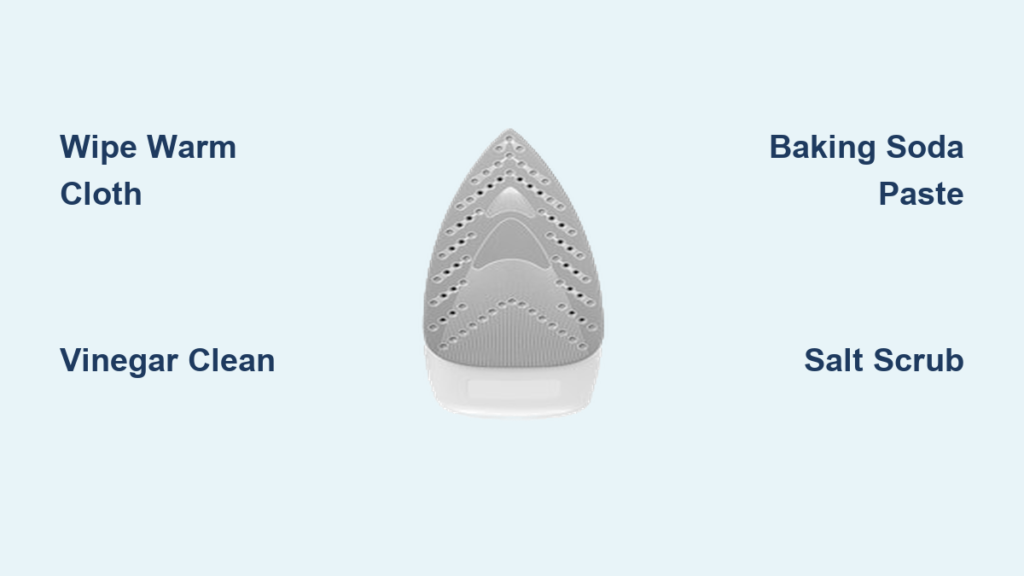
While the soleplate is still warm (not hot enough to burn your hand), wipe it thoroughly with a clean, damp cotton cloth using long, smooth strokes. The residual warmth softens light residue for easy removal without scrubbing. This simple habit prevents daily accumulation that hardens into difficult stains. Never use paper towels, as they can leave fibers behind and may scratch delicate surfaces. For non-stick coated soleplates, this gentle approach preserves the protective layer that ensures smooth gliding.
Weekly Vinegar Cleaning Routine for Steam Irons
Once weekly, or after ironing heavily starched fabrics, mix equal parts distilled white vinegar and distilled water. Dip a soft cloth into the solution and wipe the cooled soleplate completely, focusing on edges and problem areas. For stubborn spots, apply the solution directly and let it sit for 5-10 minutes before wiping clean. This routine dissolves light mineral deposits before they accumulate and keeps steam vents clear. Always use distilled water in your iron to prevent introducing new minerals that cause buildup.
Deep Cleaning Stubborn Residue in 4 Steps
When daily wiping isn’t enough, these proven methods tackle even the most stubborn burned-on residue without damaging your soleplate.
Baking Soda Paste Method for Burned-on Stains
Create a paste with two tablespoons baking soda and one tablespoon water. Apply it directly to the cooled soleplate, focusing on discolored areas. Using a soft cloth, gently rub in circular motions—the mild abrasiveness lifts residue while neutralizing acidic burns. This method works excellently for stainless steel soleplates and is safe for most materials when used gently. After scrubbing, wipe completely clean with a damp cloth and dry thoroughly to prevent water spots.
Salt Cleaning Technique for Heavy Buildup
Turn your iron to its lowest heat setting and let it warm slightly. Sprinkle table salt onto a clean cotton cloth, then gently glide the warm soleplate across the salt with light pressure. The salt absorbs burned residue effectively, especially on stainless steel plates. After cleaning, wipe the soleplate thoroughly with a damp cloth to remove all salt residue, as remaining particles could cause corrosion. This technique transforms heavily crusted soleplates in minutes without harsh chemicals.
Cleaning Steam Vents Without Damaging Your Iron
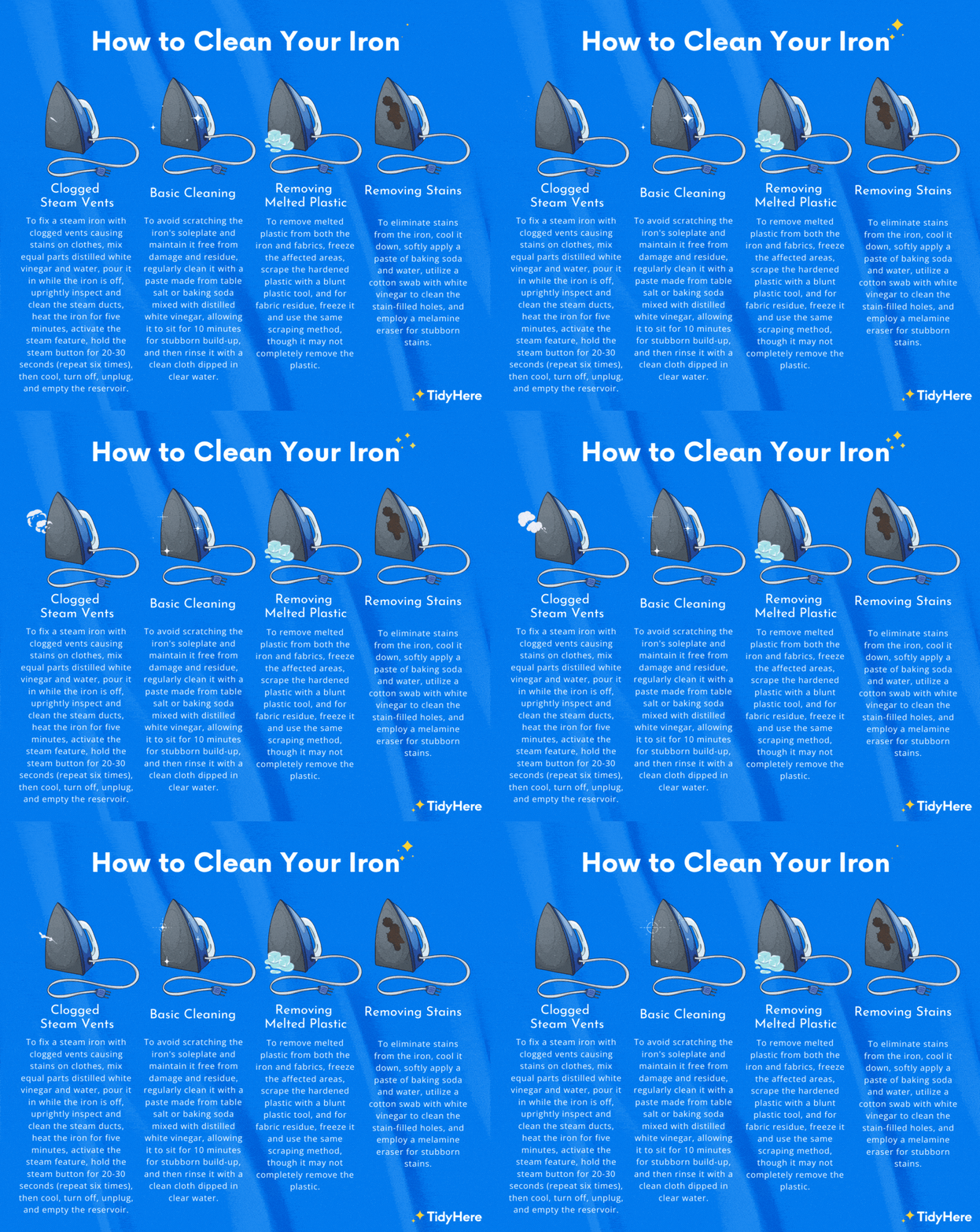
Clogged steam vents reduce performance and cause inconsistent steam that ruins clothes. Proper vent cleaning restores your iron’s steam power.
Cotton Swab Method for Individual Vent Cleaning
Inspect each steam vent for blockage, then dip cotton swabs in distilled white vinegar. Gently insert them into each vent, moving in and out to dislodge mineral deposits. For stubborn clogs, soak swabs in vinegar for several minutes before cleaning. An old toothbrush with soft bristles works well for dislodging debris around vents without scratching. Work methodically through all vents, replacing dirty swabs as needed—this simple maintenance takes just a few minutes but dramatically improves steam performance.
Internal System Flush to Restore Steam Power
Fill the water reservoir with a 50/50 vinegar-water mixture. Turn the iron to highest steam setting and heat completely. Place it on an old towel and activate steam repeatedly for 5-10 minutes, holding the iron in different positions. This flushes mineral deposits from internal passages that cotton swabs cannot reach. Empty the reservoir completely and rinse thoroughly with distilled water, flushing two or three times to remove all vinegar traces.
Material-Specific Cleaning for Different Soleplates
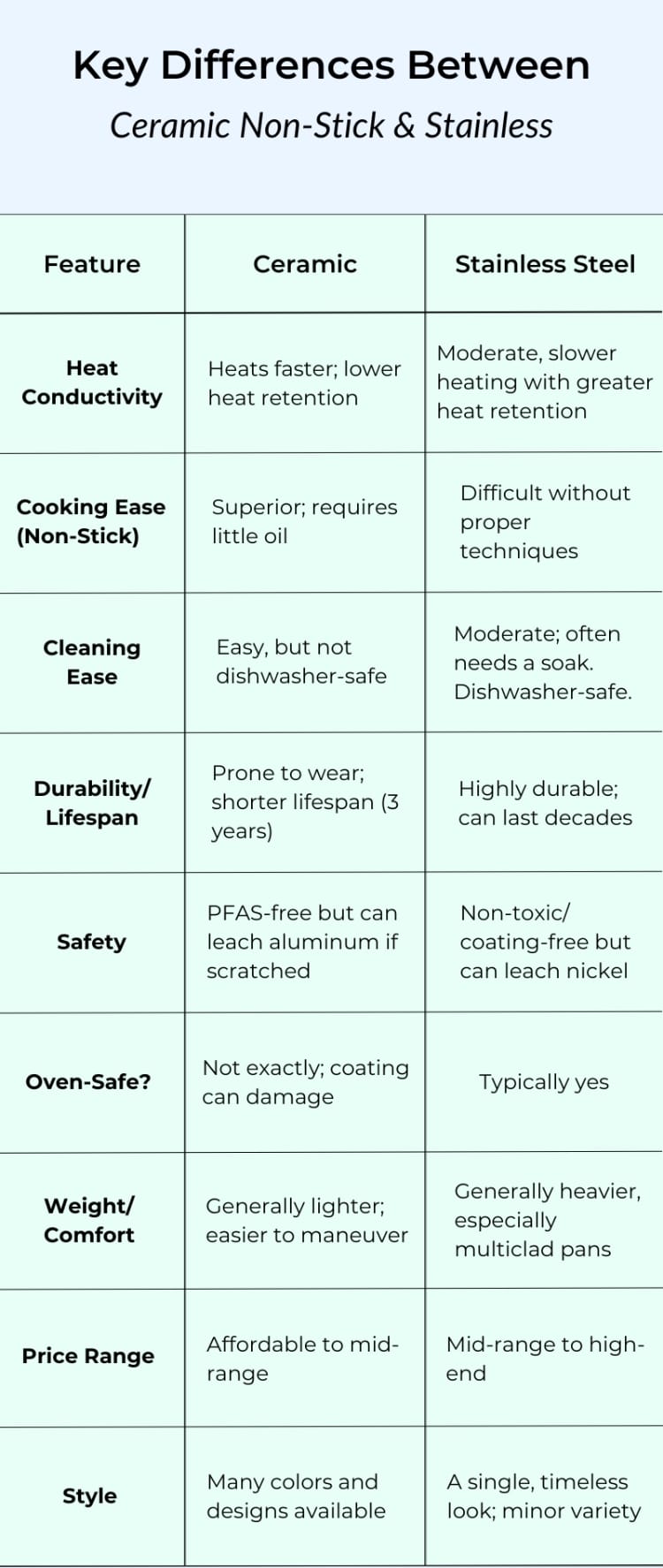
Different soleplate materials require tailored approaches to avoid damage while effectively removing residue.
Stainless Steel Soleplate Care
Stainless steel tolerates more aggressive cleaning methods. Wipe daily with a damp cloth, scrub weekly with baking soda paste, and use salt for heavy buildup. Clean vents with vinegar-soaked cotton swabs. Avoid leaving acidic cleaners like vinegar on the surface for extended periods, as this can cause discoloration. Always wipe completely clean and dry after cleaning.
Non-Stick Coating Cleaning Do’s and Don’ts
Never use baking soda, salt, or abrasive materials on non-stick coatings. Clean with a damp cloth and mild dish soap while warm. For stubborn residue, use vinegar carefully without scrubbing. Avoid high-heat cleaning methods and never use metal utensils. With proper care, non-stick coatings maintain their glide properties for years.
Ceramic Soleplate Maintenance
Clean ceramic surfaces with a soft, damp cloth while warm. For stuck-on residue, use mild dish soap rather than abrasive cleaners. Avoid vinegar and acidic solutions, as these can dull the finish over time. Some manufacturers offer specific ceramic soleplate cleaners that outperform household alternatives. Always use gentle pressure to preserve the ceramic surface.
Natural Cleaning Solutions You Already Have at Home

Household staples work effectively for soleplate cleaning, saving money while reducing chemical exposure.
White Vinegar Applications for Mineral Deposits
Mix equal parts vinegar and water in a spray bottle for light residue. For heavier buildup, apply undiluted vinegar directly and let sit 5-15 minutes before wiping. Vinegar dissolves mineral deposits safely on most soleplate materials. The strong smell dissipates quickly and poses no risk to fabrics once cleaned away. Always rinse thoroughly after using vinegar.
Emergency Toothpaste Fix for Spot Cleaning
Apply plain white toothpaste to cooled soleplate areas with burned-on residue. Using a soft cloth, gently rub in circular motions. The mild abrasives lift burned material without scratching most surfaces. Works especially well for small, concentrated burns. After scrubbing, wipe completely clean with a damp cloth.
Preventing Future Buildup with Smart Habits
Preventive measures dramatically reduce cleaning frequency and keep your iron performing optimally.
Why Distilled Water is Your Iron’s Best Friend
Using distilled water exclusively prevents mineral deposits from tap water. These minerals accumulate inside reservoirs and steam vents during heating, causing clogs and residue transfer. Distilled water has had minerals removed through distillation, leaving pure water that won’t leave deposits. Manufacturers specifically recommend distilled water, and consistent users report significantly fewer maintenance issues.
Proper Storage Techniques to Extend Iron Life
Always allow your iron to cool completely before storing. Most irons feature a heel rest to keep the soleplate elevated—use it. Store in a dry location, as moisture promotes corrosion. Never wrap the cord tightly around the iron, as this damages the cord. Empty the water reservoir before storage to prevent mineral buildup from stagnant water.
Troubleshooting Common Iron Problems
Understanding these issues helps you diagnose and address problems quickly without professional service.
Fixing Poor Glide on Fabrics
If your iron drags instead of gliding, residue buildup is likely the culprit. Clean thoroughly using the baking soda method for stainless steel or vinegar for coated surfaces. Verify you’re using distilled water and check your ironing board cover for rough spots. Ensure you’re using the appropriate temperature setting—too low heat causes dragging.
Stopping Residue Transfer to Clothes
Brown or white residue on clothes indicates significant soleplate contamination. Stop ironing immediately to prevent further staining. Clean the soleplate thoroughly using the appropriate method for your material. Treat stained garments with fabric-appropriate stain remover before residue sets with additional heat.
A clean soleplate transforms ironing from frustrating to satisfying. Implement the daily wipe habit, use distilled water exclusively, and address problems immediately. These simple practices prevent stubborn buildup that leads to damaged clothes and poor iron performance. With the right cleaning method for your specific iron type, you’ll enjoy smooth gliding, consistent steam, and perfectly pressed garments every time.