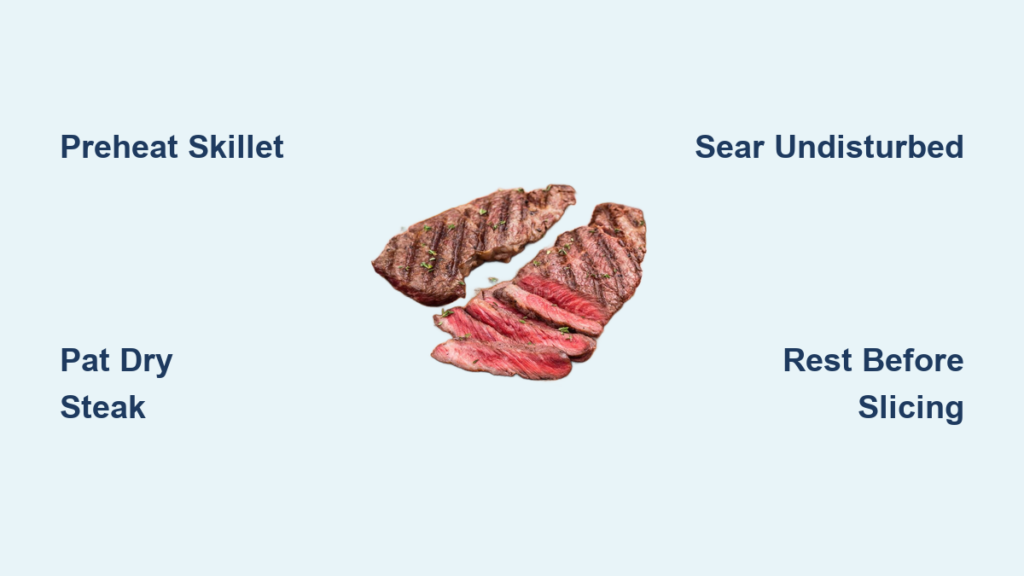
When that craving for a juicy, flavorful steak hits but you don’t want to fire up the grill, your cast iron skillet becomes your secret weapon. Flat iron steak has quickly become a weeknight dinner hero—tender enough to rival filet mignon but priced like a workhorse cut. This shoulder cut delivers incredible beefy flavor with just the right amount of marbling, making it ideal for high-heat skillet cooking. Unlike tougher steaks that need slow cooking, flat iron responds brilliantly to the intense sear only a properly preheated skillet can provide. Whether you’re cooking for one on a Tuesday or impressing guests on Saturday, mastering how to cook flat iron steak in a skillet means restaurant-quality results without leaving your kitchen.
The beauty of skillet cooking lies in its precision—no wind affecting your grill temperature, no guesswork about when to flip. Your stovetop gives you complete control to develop that perfect crust while hitting your exact doneness target. And the bonus? Those incredible fond left in the pan transform into a simple, elegant sauce that elevates your steak from basic to breathtaking. Follow this guide to consistently cook flat iron steak in a skillet that’s tender, juicy, and packed with flavor from edge to edge.
Select Your Flat Iron Steak with Confidence
Choosing the right cut makes all the difference in your skillet cooking success. At the grocery store, look for flat iron steaks with a vibrant cherry-red color—not dull, brownish, or grayish tones that indicate age. The marbling should be fine and evenly distributed throughout the meat, not in large chunks. This intramuscular fat melts during cooking, basting the steak from within for maximum juiciness without making it greasy.
Thickness is your next critical factor. Aim for steaks between 1 and 1.5 inches thick—this sweet spot ensures you can develop a proper crust without overcooking the interior. Steaks thinner than 1 inch cook too quickly, often resulting in well-done meat before a good sear develops. If you only find thinner cuts, reduce your heat slightly and monitor constantly, as they may need just 2-3 minutes per side.
Weight matters too for portion control and cooking consistency. An ideal flat iron steak weighs 8-12 ounces, providing a satisfying serving without overwhelming your skillet. When buying multiple steaks, select pieces of similar thickness so they cook evenly together. Avoid any steaks with excessive connective tissue running through the center, as flat iron should be uniformly tender.
Perfect Your Steak Preparation Technique
Taking five minutes to prepare your steak properly transforms good results into extraordinary ones. Remove your flat iron steak from the refrigerator 30-45 minutes before cooking—this critical step brings the meat to room temperature for even cooking. A cold steak placed directly in a hot pan will cook unevenly, with an overdone exterior and undercooked center.
While your steak rests, thoroughly pat both sides dry with paper towels. Surface moisture is the enemy of browning—water must evaporate before the Maillard reaction (that delicious crust-forming process) can occur. A completely dry surface ensures immediate, aggressive sizzling when the steak hits the pan, rather than steaming.
Season simply but generously. Apply about 1 teaspoon of kosher salt per pound to both sides, which seasons the interior as it reabsorbs moisture and promotes crust formation. Add freshly cracked black pepper just before cooking to prevent burning—its compounds break down at high heat, creating bitterness. For extra flavor without compromising texture, consider a light rub of garlic powder or smoked paprika, but avoid wet marinades that reintroduce surface moisture.
Master Skillet Selection and Preheating
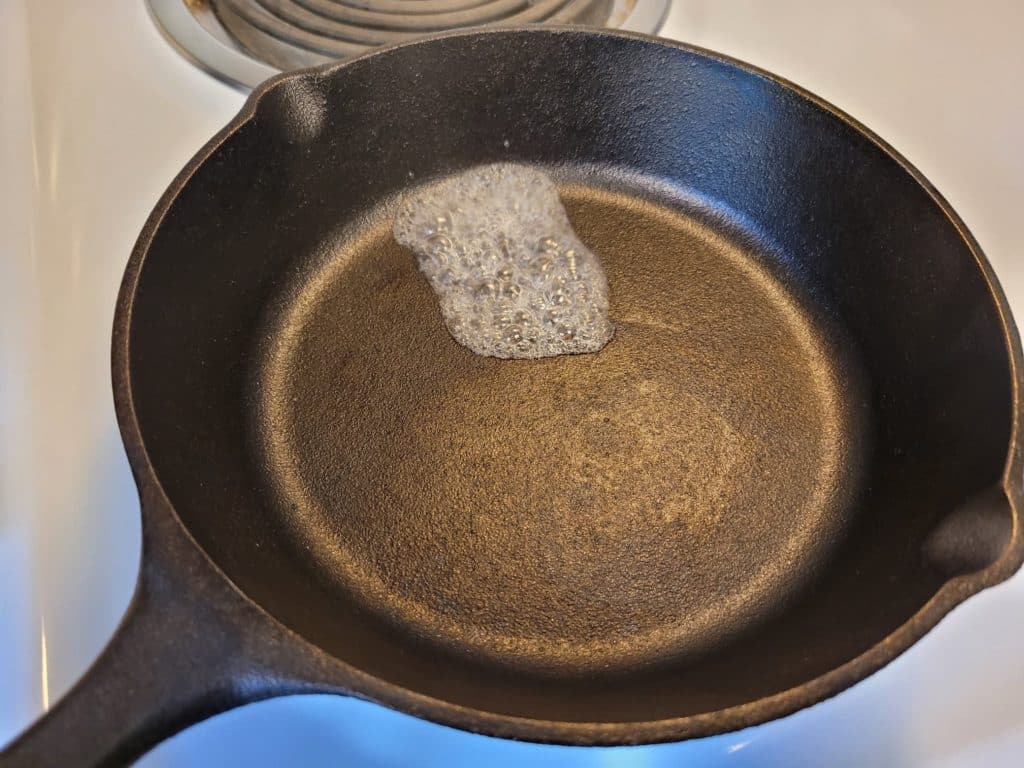
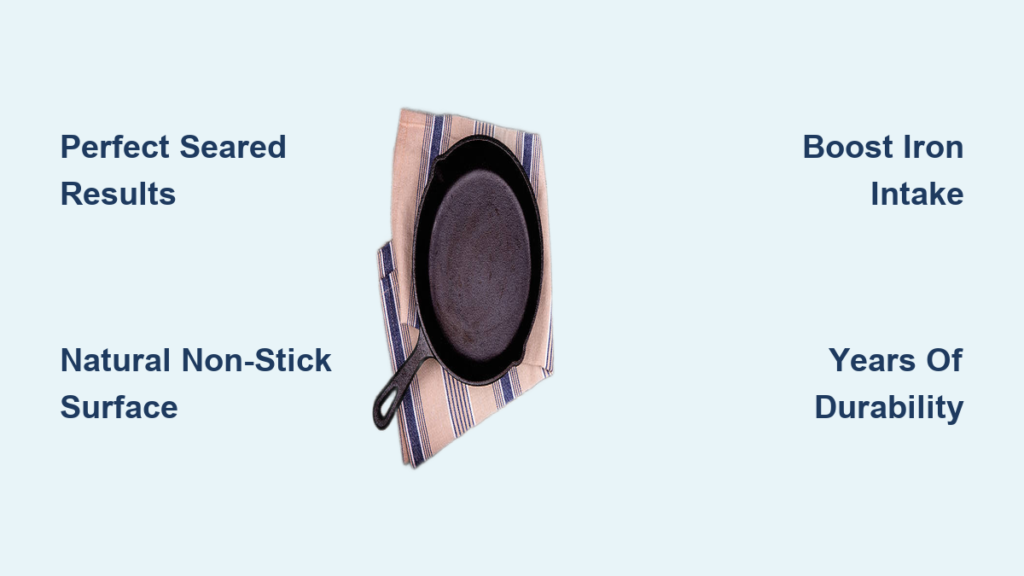
Your cookware choice directly determines your crust quality. A well-seasoned cast iron skillet reigns supreme for steak cooking—its exceptional heat retention maintains temperature when cold meat hits the surface, preventing the dreaded “steam instead of sear” scenario. Carbon steel works nearly as well, while stainless steel requires more technique to prevent sticking.
Preheat your empty skillet over medium-high heat for 3-5 minutes until properly hot. Test readiness by flicking a few water droplets into the pan—they should dance and evaporate instantly. Alternatively, hold your palm 6 inches above the surface; you should feel intense heat that forces you to pull away after 2-3 seconds.
Add 1-2 tablespoons of high smoke point oil like avocado (520°F smoke point), refined peanut, or canola oil. Wait until the oil shimmers and flows like water across the pan surface—this visual cue confirms it’s reached optimal temperature. Never add steak to cold or barely warm oil, as this causes sticking and prevents proper browning.
Execute the Perfect Skillet Sear
Place your steak in the hot skillet using tongs, laying it away from you to avoid oil splatter. Listen for that immediate, aggressive sizzle—if it’s quiet, remove the steak and continue heating your pan. For a 1-inch thick steak, cook undisturbed for 4-5 minutes to develop a deep brown crust before flipping once.
Resist the urge to constantly check or move your steak—this disrupts crust formation. Instead, watch for visual cues: juices will begin pooling on the top surface as the interior heats, and the edges will turn from raw red to opaque. For medium-rare, the steak should feel like the fleshy part of your palm below your thumb when relaxed; medium feels firmer, like when your thumb touches your index finger.
Flip only once using tongs, never a fork that pierces the meat and releases precious juices. For extra flavor, add a tablespoon of butter, a couple smashed garlic cloves, and fresh thyme or rosemary during the last 2 minutes of cooking. Tilt the pan and spoon the melted butter continuously over the steak—a technique called basting that adds incredible flavor.
Hit Your Exact Doneness Target

An instant-read thermometer eliminates guesswork for perfect doneness. Insert it horizontally into the thickest part of the steak, avoiding bone or the pan surface. Target temperatures include: 125°F for rare (cool red center), 130-135°F for medium-rare (warm red center), 140-145°F for medium (warm pink center), and 150°F+ for well-done.
Remember carryover cooking continues raising the temperature 5-10°F after removal from heat. For medium-rare at 135°F serving temperature, pull the steak at 125-130°F. Visual indicators complement thermometer readings: rare steak remains mostly red, medium-rare shows a pink ring with red center, medium has a faint pink center with clear juices, and well-done appears brown throughout.
If you don’t have a thermometer, use the touch test: rare feels soft like your cheek, medium-rare like your chin, medium like the tip of your nose, and well-done like your forehead. However, thermometers remain the most reliable method, especially for beginners.
Rest Your Steak for Maximum Juiciness
Resting isn’t optional—it’s essential for juicy results. Transfer your cooked steak to a clean cutting board and let it rest 5-10 minutes before slicing. During cooking, heat forces juices toward the surface; cutting too soon releases them onto your board rather than keeping them in the meat.
The resting period allows muscle fibers to relax and reabsorb displaced moisture. Cover loosely with foil to retain heat without trapping steam that would soften your beautiful crust. This brief wait transforms a potentially dry steak into one that’s consistently juicy from first bite to last.
Slice and Serve for Optimal Tenderness
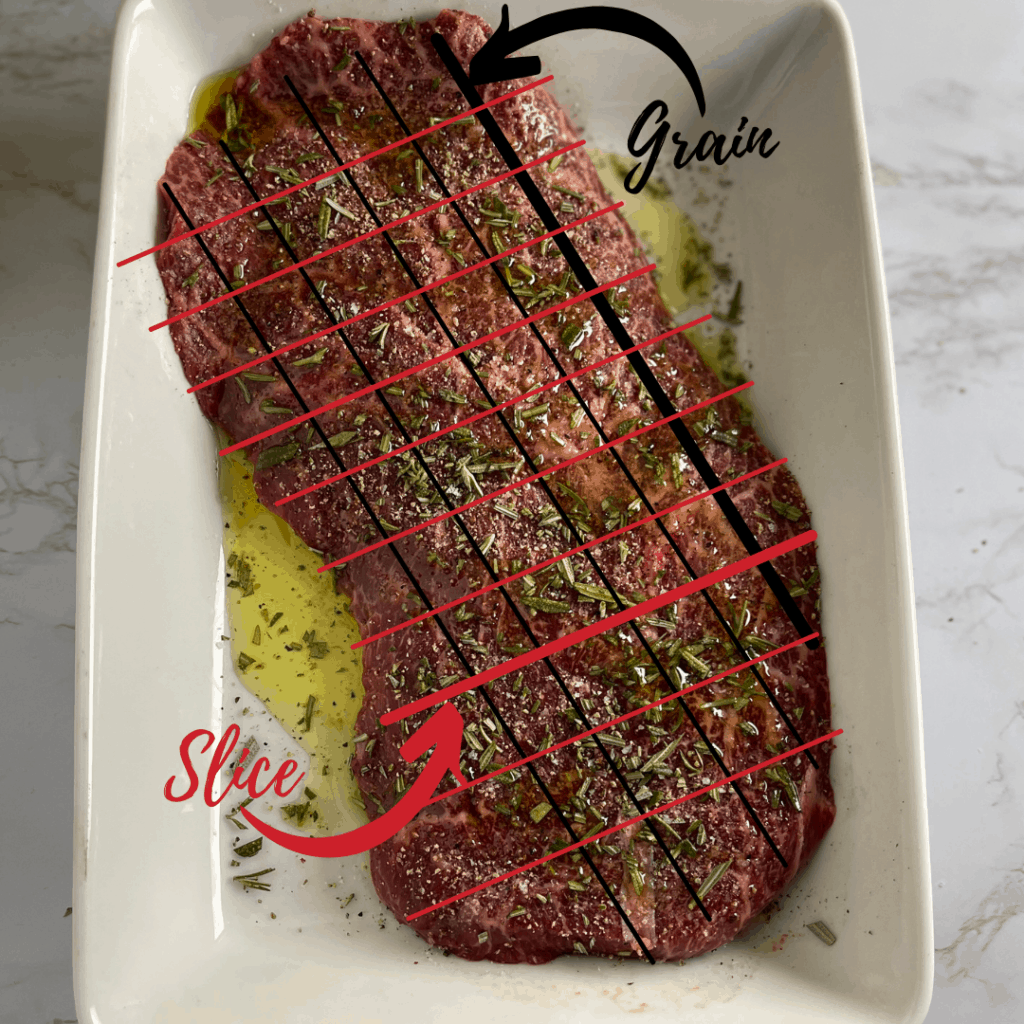
Flat iron steak has a distinctive grain that runs lengthwise—always slice perpendicular to this grain to shorten muscle fibers and maximize tenderness. Use a sharp chef’s knife to cut 1/4 to 1/2 inch thick slices against the grain. Thinner slices emphasize tenderness, while thicker cuts provide more substantial texture.
Arrange slices on a warmed plate to maintain temperature, and drizzle with any accumulated pan juices. Classic accompaniments include roasted garlic butter, chimichurri, or a simple sprinkle of flaky sea salt and fresh herbs. Pair with roasted vegetables, garlic mashed potatoes, or a crisp arugula salad with lemon vinaigrette.
For a restaurant-worthy finish, deglaze your skillet with 1/4 cup red wine or beef broth, scraping up browned bits, then swirl in 2 tablespoons cold butter for a quick pan sauce that elevates your steak from simple to spectacular.
Mastering how to cook flat iron steak in a skillet means never settling for dry, tough meat again. By selecting quality cuts, preparing properly, controlling your heat, and respecting the resting process, you’ll consistently create steakhouse-quality results at home. The beauty of this method lies in its simplicity—just quality ingredients, proper technique, and attention to detail. Once you’ve perfected these steps, you’ll find yourself reaching for flat iron steak more often, knowing you can transform this affordable cut into a meal worthy of special occasions. Start with these fundamentals, and soon you’ll develop the intuition to adjust timing and temperature instinctively for perfect results every single time.