Nothing ruins dinner plans faster than salmon that sticks to the pan, falls apart, or lacks that coveted crispy skin. When you pull out your cast iron skillet expecting golden-brown perfection only to end up with fish that tears apart during flipping, you’re not alone. Thousands of home cooks struggle with this exact problem every week. The good news? How to cook salmon in a cast iron skillet successfully comes down to mastering three critical elements: surface preparation, temperature control, and timing. This guide delivers the precise techniques you need to achieve restaurant-quality salmon with crackling skin and moist flesh in under 15 minutes—no special equipment required.
Forget complicated recipes or fancy gadgets. The secret lies in understanding how cast iron’s unique thermal properties interact with salmon’s delicate structure. By the time you finish this guide, you’ll know exactly how to prevent sticking, achieve perfect searing without overcooking, and maintain your skillet’s seasoning through the process. Let’s transform your next salmon dinner from frustrating to flawless.
Why Your Cast Iron Skillet Beats Every Other Pan for Salmon

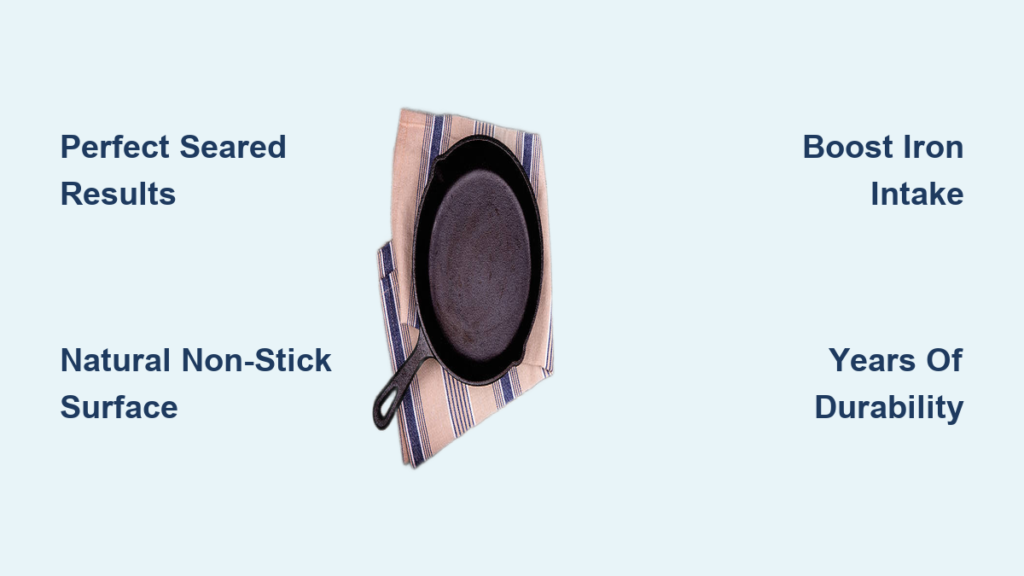
Cast iron’s superior heat retention creates an instant sear that locks in moisture while developing complex flavors through the Maillard reaction. Unlike non-stick pans that struggle with high-heat searing, properly seasoned cast iron develops a natural non-stick surface when hot enough. This is crucial for salmon skin, which contains collagen that bonds to cool surfaces but releases cleanly when the pan reaches 375°F (190°C). The heavy metal base also prevents hot spots that cause uneven cooking—a common problem with thin stainless steel pans. For best results, use a 10-12 inch skillet that comfortably holds two 6-ounce fillets without crowding.
The Critical Preheating Test You Must Perform
Before adding oil, heat your empty skillet over medium-high heat for 3-4 minutes. Test readiness by sprinkling 2-3 drops of water across the surface. If they instantly vaporize with a sharp sizzle (the Leidenfrost effect), your pan has reached the ideal 375-400°F range. If water beads and rolls, continue heating. If water explodes violently, reduce heat slightly—this indicates overheating that could burn oil.
Why Room Temperature Salmon Matters More Than You Think
Chilled salmon causes thermal shock when hitting the hot pan, making skin contract and stick. Remove fillets from the refrigerator 20 minutes before cooking. Pat skin aggressively dry with paper towels—any surface moisture creates steam that prevents crisping. Run your palm over the skin; if it feels tacky rather than wet, you’ve achieved the necessary dryness.
Oil Selection and Application: The Non-Stick Secret
Choosing Between Avocado Oil and Grapeseed Oil
Select oils with smoke points above 400°F to prevent burning during searing. Avocado oil (smoke point 520°F) provides neutral flavor, while refined grapeseed oil (420°F) offers better affordability. Avoid olive oil—it smokes at 375°F and imparts bitter flavors. Never use butter alone for initial searing; its milk solids burn below salmon-cooking temperatures.
The Two-Step Oil Technique for Guaranteed Release
- Add 1½ teaspoons oil to the preheated skillet and swirl to coat
- Wait 30 seconds until oil shimmers but doesn’t smoke
- Place salmon skin-side down with firm downward pressure for 5 seconds
- Immediately reduce heat to medium
This sequence creates a protective barrier that prevents proteins from bonding to the metal. The initial high heat jump-starts the sear, while reducing to medium prevents oil degradation.
Flawless Skin-Side Down Cooking Method
How to Position Salmon for Maximum Crispiness
Place fillets skin-side down at a 45-degree angle to the skillet handle. This orientation prevents curling and ensures even contact. Press gently with a fish spatula for 10 seconds—just enough to eliminate air pockets between skin and pan. Never move the salmon for the first 4 minutes; premature lifting causes tearing.
Recognizing the Visual Cues That Signal Proper Searing
After 3 minutes, check for these signs:
– Skin turns opaque and golden (not pale white)
– A thin line of cooked flesh appears along the edges
– No visible moisture between skin and pan
– The fillet releases easily when nudged with a spatula
If skin sticks, continue cooking 30-60 seconds longer. For thick fillets (over 1.5 inches), add 1 minute to cooking time.
When and How to Flip Without Disaster
Flip only once using a thin, flexible fish spatula. Slide under the center of the fillet, not the edge. Lift gently while pressing the top with a paper towel to prevent bending. For skinless salmon, cook 2 minutes skin-side down, then flip and cook 1-2 minutes flesh-side down. Skin-on fillets need 6-8 minutes skin-side down before flipping.
Temperature Control for Perfect Doneness

The Exact Timing for Your Fillet Thickness
| Fillet Thickness | Skin-Side Down Time | Total Cooking Time |
|---|---|---|
| ¾ inch | 4-5 minutes | 6-7 minutes |
| 1 inch | 5-6 minutes | 7-8 minutes |
| 1½ inches | 7-8 minutes | 9-10 minutes |
Cook until the internal temperature reaches 120°F at the thickest part. Carryover cooking will raise it to 125°F (medium-rare) or 135°F (medium) during resting. Never exceed 140°F—salmon becomes dry and chalky.
How to Check Doneness Without a Thermometer
Insert a cake tester horizontally into the thickest part for 15 seconds. Touch it to your lip: warm (not hot) indicates medium-rare. Alternatively, gently press the top: it should feel slightly firm with springback, not mushy.
Three Fatal Mistakes That Ruin Cast Iron Salmon
Overcrowding the Skillet
Cooking more than two fillets in a standard 10-inch skillet drops the pan temperature 100°F within seconds. This causes steaming instead of searing, resulting in soggy skin. Cook in batches if needed, keeping finished salmon warm in a 200°F oven.
Moving Salmon Too Soon
Lifting to check adherence before the 4-minute mark breaks the protein-skin bond. Wait for natural release—this takes 30-60 seconds longer for frozen-thawed salmon. If stuck, add ½ teaspoon oil around edges and wait 1 minute.
Skipping the Resting Period
Cutting immediately releases precious juices. Rest skin-side up for 3 minutes tented with foil. This allows residual heat to finish cooking the center while redistributing moisture.
Post-Cooking Skillet Care for Longevity
Safe Cleaning Without Damaging Seasoning
While skillet is warm (not scalding), add ¼ cup coarse salt and 1 tablespoon oil. Scrub with chainmail scrubber using circular motions—this removes residue without harming seasoning. Rinse with hot water only; never use soap. Dry thoroughly over low heat for 2 minutes.
Re-Seasoning After Fish Cooking
Fish oils can leave odors. After cleaning, apply thin layer of refined avocado oil inside the skillet. Heat over medium for 5 minutes until smoking lightly, then cool completely. Wipe excess oil with paper towel.
Pro Enhancements for Gourmet Results
Flavor Boosters That Won’t Stick
Add minced garlic or fresh herbs (thyme, rosemary) during the last 2 minutes of cooking. The residual heat infuses flavors without burning. For citrus notes, squeeze lemon juice over salmon after flipping—acid before cooking breaks down proteins.
The Butter Baste Technique for Richness
After flipping, add 1 tablespoon cold butter, 2 garlic cloves, and lemon slices to the pan. Tilt skillet and spoon melted butter continuously over the fillet for 60 seconds. This creates a glossy finish without risking skin adhesion.
Why This Method Beats Oven or Grill Cooking
Cast iron delivers superior crust development in half the time of oven methods while avoiding the flare-ups common with grilling. The enclosed environment prevents moisture loss that occurs in dry-heat ovens, yielding 20% juicier results than baking. Unlike grills where skin sticks to grates, the controlled surface ensures perfect presentation every time.
Mastering how to cook salmon in a cast iron skillet transforms weeknight dinners into gourmet experiences with minimal effort. Remember the core principles: pat skin bone-dry, preheat until water droplets dance, never rush the initial sear, and respect carryover cooking. Within two attempts, you’ll develop the instinct to recognize visual doneness cues without thermometers. For your next dinner, try this method with wild-caught sockeye salmon—it has firmer flesh that holds together better during flipping. Pair your perfectly cooked fillet with roasted asparagus and lemon-dill sauce for a restaurant-worthy meal that costs less than takeout. Most importantly, don’t fear the sticking phase—trust the process, and you’ll pull up that first perfectly intact fillet with crispy skin that shatters under your fork. That moment makes every previous salmon disaster worth it.