There’s a common misconception that flat irons only straighten hair, but professional stylists know these versatile tools create stunning curls that outlast traditional curling iron styles. Your Lange flat iron—with its precision engineering and advanced ceramic plates—can transform your hair into perfectly defined waves with remarkable longevity. Unlike single-barrel curling irons that create uniform ringlets, flat irons give you complete control over curl size, direction, and texture, allowing you to craft everything from tight spirals to loose, beachy bends.
Learning how to curl hair with Lange flat iron unlocks a world of styling possibilities without cluttering your vanity with multiple hot tools. The professional-grade heating system maintains consistent temperature across the entire plate surface, eliminating the frustrating hot spots that ruin curl patterns. When you master this technique, you’ll discover how the floating plate technology gently grips each section while distributing heat evenly, resulting in shiny, frizz-free curls that hold their shape for days. This guide reveals the exact methods top stylists use to create camera-ready curls with nothing but their trusty Lange flat iron.
Why Your Lange Flat Iron Outperforms Traditional Curling Tools

Lange’s floating plate technology provides superior curl formation by automatically adjusting to your hair’s thickness as you glide through each section. Unlike rigid curling irons that pinch and pull, Lange’s plates maintain even pressure from root to tip, preventing the uneven results where some strands curl while others remain straight. The professional-grade ceramic and tourmaline-infused plates emit negative ions that seal the hair cuticle during styling, which not only enhances shine but also fights humidity for longer-lasting curls that resist frizz throughout the day.
How Plate Width Affects Your Curl Pattern
The width of your Lange flat iron’s plates directly determines your curl style—narrow one-inch plates create defined ringlets ideal for shoulder-length hair, while wider 1.5-inch plates produce loose, voluminous waves perfect for longer locks. For fine or thin hair, use smaller sections with a standard one-inch plate to create the illusion of thickness through tighter curls. Those with thick or coarse hair should work with slightly wider sections to prevent overwhelming volume while maintaining definition. Experiment with different plate widths if your model offers interchangeable plates to discover which creates your ideal curl pattern.
Perfect Hair Preparation for Long-Lasting Curls
Start with clean, clarified hair free from product buildup that creates a barrier against heat. Apply a lightweight heat protectant spray from mid-lengths to ends—this critical step prevents damage while allowing the heat to properly set your curl pattern. Your hair should be 80% dry before styling; completely dry hair won’t hold the curl shape, while overly wet hair creates damaging steam when contacted by the hot plates. For fine hair, add a volumizing mousse at the roots before heat protectant to create lift that makes curls appear fuller and more dynamic.
Sectioning Secrets for Uniform Results
Divide your hair into four quadrants using clips: two front sections (above and behind each ear) and two back sections (crown to nape). Work systematically from the bottom up, releasing only one quadrant at a time to prevent already-styled sections from becoming tangled. Within each quadrant, create subsections matching your plate width—approximately one inch for tight curls, two inches for loose waves. Thinner sections create more defined curls but take longer, while wider sections produce softer waves more quickly. This precise sectioning ensures every strand receives equal heat exposure for consistent, professional results.
Optimal Temperature Settings by Hair Type
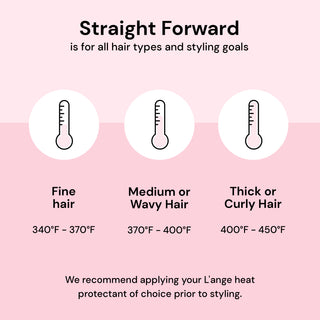
Fine or damaged hair requires lower temperatures between 250°F-300°F to prevent further breakage while still setting the curl. Medium texture hair responds best to 300°F-375°F, providing enough heat to create lasting shape without overwhelming the hair shaft. Thick, coarse, or resistant hair needs 375°F-450°F to effectively alter the hair’s structure for long-lasting curls. Always start with the lowest effective temperature and test on a small section near your neck first—this less visible area shows how your hair responds to heat without ruining your entire style.
Why One Pass Beats Multiple Repassings
Making multiple passes over the same section dramatically increases heat damage—using slightly higher heat for one precise pass creates better results than repeated lower-heat attempts. Your Lange flat iron’s digital temperature control allows fine-tuning in five-degree increments for optimal customization. Wait for the audible beep signaling full preheat before beginning; styling with an underheated iron stretches hair without properly setting the curl. Remember that humidity requires slightly higher temperatures to combat moisture’s relaxing effect on curls.
Step-by-Step Curl Creation Technique
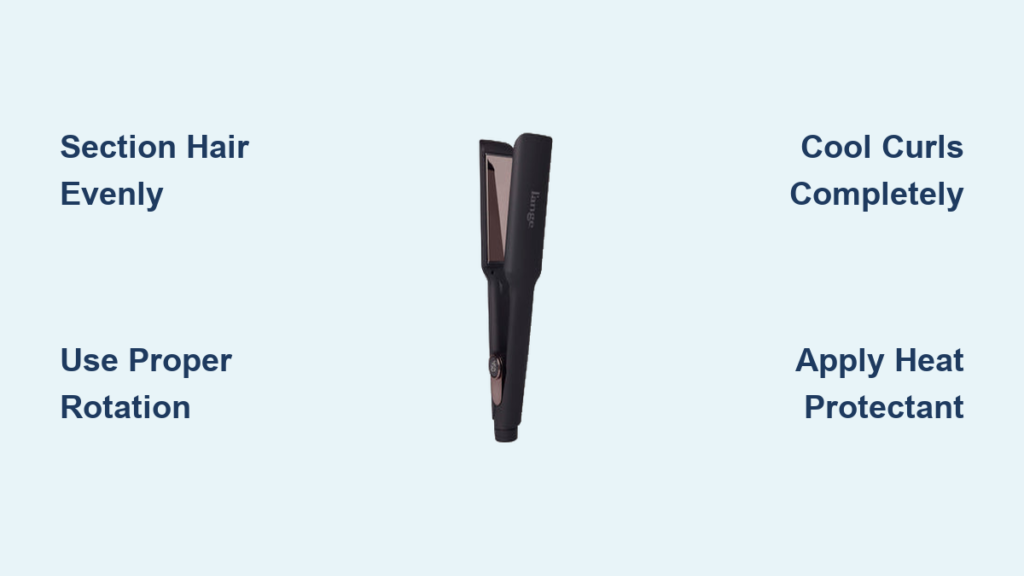
Begin with a subsection clamped two inches from roots, ensuring all strands are captured between plates. For face-framing inward curls, rotate the iron downward and inward as you glide toward ends; for voluminous outward curls, rotate upward and outward. Move slowly—five to eight seconds total per section—maintaining consistent rotation angle throughout. Release at the ends and allow the curl to cool completely before touching; premature handling destroys definition. Alternate rotation directions throughout your hair for natural-looking volume rather than artificial uniformity.
Troubleshooting Common Curling Issues
Flattened or dented curls usually result from holding the iron stationary too long—recreate these sections with a fluid clamp-rotate-glide-release motion. Curls that fall flat quickly need more heat or longer processing time; revisit with slightly higher temperature for four to six seconds. For overly tight or kinky results, gently stretch warm curls with your fingers to loosen the pattern into softer waves. Frizz around curls indicates insufficient heat protectant—smooth with anti-frizz serum and a cool-air blast from your blow dryer. Avoid repeatedly reworking problem sections, which compounds damage; instead, dampen, reapply mousse, and restart with lower heat.
Essential Maintenance for Peak Performance
:max_bytes(150000):strip_icc()/SPR-how-to-clean-flat-irons-7486888-Step-03-53cbdc5e9d144772ada6282f7340ce25.jpg)
Clean your Lange flat iron plates after each use with a damp microfiber cloth while cool to remove product buildup that affects heat distribution. For stubborn residue, use isopropyl alcohol on a cotton ball—never submerge in water or use abrasive cleaners that damage ceramic coating. Store in a heat-resistant case with cord loosely wrapped to prevent wire damage. Allow complete cooling before storage and never store while plugged in. Check power cords regularly for fraying, and familiarize yourself with automatic shutoff timing to avoid mid-styling interruptions.
Proven Methods to Extend Curl Longevity
Allow all curls to cool completely (5-10 minutes) before touching—this critical cooling phase sets the curl structure for all-day hold. Never brush through set curls; use fingers to gently separate for definition without creating frizz. Apply light-hold hairspray once cooled to lock shape and combat humidity. Protect curls while sleeping with silk pillowcases or bonnets that prevent friction damage. On humid days, finish with anti-frizz products containing silicone to repel moisture. Refresh second-day curls with light water mist and low-heat reactivation rather than starting over.
Mastering how to curl hair with Lange flat iron transforms your styling routine, delivering versatile, long-lasting results that outperform single-purpose tools. With proper preparation, precise technique, and consistent maintenance, you’ll create salon-quality curls that maintain their shape for days. Remember that perfect curls come from working with your hair’s natural texture rather than fighting it—adjust temperatures, section sizes, and rotation techniques to suit your unique hair. The more you practice, the more intuitive the process becomes, until creating stunning waves feels as effortless as straightening. Your Lange flat iron isn’t just for sleek styles anymore—it’s your ticket to endless curl possibilities.