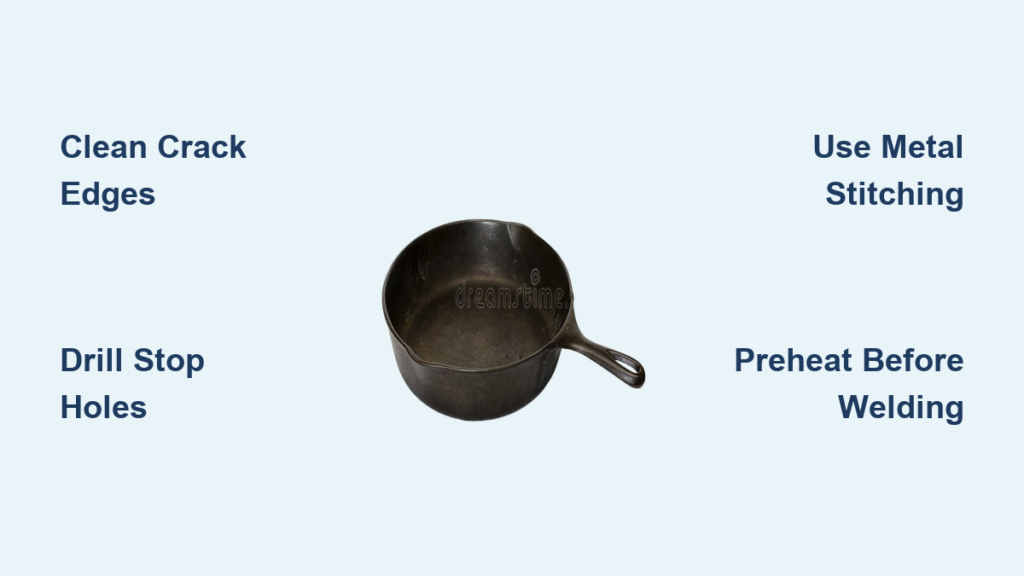
When your cast iron cookware, engine block, or industrial component develops a crack or break, panic sets in. Cast iron’s brittle nature makes it particularly vulnerable to damage from thermal shock, physical impact, or age-related stress. Unlike many metals, you can’t simply toss it in the scrap bin—properly repaired cast iron can regain structural integrity and continue serving for decades. Understanding how to fix broken cast iron correctly separates temporary patches from permanent solutions that withstand heat, pressure, and daily use. This guide walks you through proven repair methods that professionals use to restore cast iron components to full functionality.
Evaluating Your Cast Iron Damage Before Repair
Before attempting any fix, properly assess the damage to determine the most appropriate repair method for your broken cast iron piece. Small hairline cracks in cookware require different treatment than major fractures in engine blocks or industrial machinery components.
Identifying Crack Type and Severity
Examine your broken cast iron under good lighting, preferably with a magnifying glass for subtle cracks. Look for these critical indicators:
– Hairline cracks (less than 0.5mm wide): Often repairable with epoxy methods
– Through-cracks that penetrate entire thickness: Require welding or metal stitching
– Crack propagation paths: Curved cracks indicate thermal stress; straight cracks suggest impact damage
– Corrosion around fracture: Indicates long-term exposure that may compromise surrounding material
Determining Repair Feasibility
Not all broken cast iron can or should be repaired. Consider these factors:
– Location of damage: Cracks near critical stress points may compromise structural integrity even after repair
– Thickness of material: Repairs on cast iron thinner than 1/4 inch often lack sufficient material for proper bonding
– Previous repair attempts: Multiple repairs in same area reduce success rate of additional fixes
– Component function: Safety-critical parts like engine blocks may require replacement rather than repair
Preparing Broken Cast Iron for Successful Repair
Proper preparation significantly impacts repair longevity. Rushing this stage causes most DIY cast iron repair failures.
Cleaning and Surface Preparation Process
Thorough cleaning removes contaminants that prevent proper bonding of repair materials:
- Remove all grease, oil, and food residue using degreaser and stiff wire brush
- Eliminate rust with 80-grit sandpaper or angle grinder with wire wheel attachment
- Create a “V” groove along crack edges using rotary tool with grinding bit (2-3mm deep)
- Wipe clean with acetone-soaked rag to remove all dust and oils
- Heat cast iron to 200°F (93°C) to drive out moisture from pores
Preventing Further Crack Propagation
Stop cracks from spreading during repair preparation:
– Drill 1/8-inch stop holes at both ends of crack using cobalt drill bits
– Maintain drilling speed below 300 RPM to prevent additional thermal stress
– Apply gentle pressure—excessive force creates microfractures around drill site
– Clean hole thoroughly with compressed air to remove metal particles
Choosing the Right Repair Method for Your Cast Iron
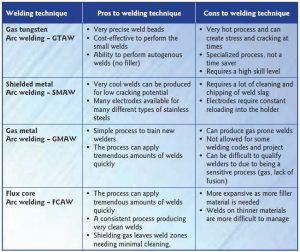
Different break scenarios demand specific repair approaches with varying skill requirements and equipment needs.
When to Use Metal Stitching for Cast Iron Repairs
Metal stitching provides mechanical reinforcement without heat, making it ideal for:
– Large cracks in thin cast iron sections
– Repairs near heat-sensitive components
– Situations where welding equipment isn’t available
– Historical restoration projects requiring non-invasive techniques
The process involves drilling closely spaced holes along both sides of the crack, then inserting specialized metal locks that bridge the fracture. Each lock interlocks with adjacent pieces, creating a continuous mechanical bond that withstands significant stress.
Epoxy Repair Methods for Non-Structural Cast Iron Damage
For cosmetic cracks or non-load-bearing areas, high-temperature epoxy offers a practical solution:
– Select ceramic-reinforced epoxy rated for 600°F+ continuous exposure
– Mix components thoroughly following manufacturer’s ratio (typically 1:1)
– Apply with toothpick for precise placement into cleaned crack
– Allow 24 hours initial cure before light handling
– Complete full cure requires 72 hours at room temperature
Pro Tip: For cookware repairs, never use epoxy on surfaces that contact food—reserve this method for exterior damage only.
Professional Welding Techniques for Critical Cast Iron Repairs
Welding cast iron requires specialized knowledge to prevent further cracking from thermal stress.
Preheating Requirements for Cast Iron Welding

Skip proper preheating and your weld will likely fail:
– Heat entire casting gradually to 500-1200°F depending on thickness
– Use infrared thermometer to verify even temperature distribution
– Maintain temperature during welding with ceramic heating pads
– Cool slowly at 70°F per hour rate to prevent thermal shock
Choosing Between Nickel and Iron Welding Rods
Select rod type based on application requirements:
– Nickel-based rods: Create ductile welds that accommodate cast iron’s brittleness (ideal for cookware and non-structural parts)
– Iron-based rods: Match base metal properties better for structural repairs but require more skill
– Copper-coated rods: Reduce heat transfer for delicate repairs on thin sections
Post-Repair Treatment for Maximum Durability
The repair process doesn’t end when the crack is filled—proper finishing ensures longevity.
Stress Relief Techniques After Cast Iron Repair
Eliminate residual stresses that cause future cracking:
– Maintain elevated temperature (500°F) for 3-4 hours after welding
– Cover repaired area with insulating blanket for slow cooling
– Avoid rapid temperature changes during initial use period
– Gradually increase operating temperature over first 5 uses
Finishing and Sealing Repaired Cast Iron Surfaces
Restore functionality and appearance:
– Grind weld flush using 120-grit flap disc for smooth transition
– Apply high-temperature black oxide coating to match original finish
– Season repaired cookware with 3-5 oil layers before first use
– Test under low-stress conditions before returning to full operation
Preventing Future Cast Iron Failures
Understanding why cast iron breaks helps prevent repeat damage after successful repair.
Thermal Shock Prevention Strategies
Cast iron’s enemy is rapid temperature change:
– Never add cold liquid to hot cast iron (allow gradual cooling first)
– Preheat cookware slowly before searing foods
– Avoid placing hot cast iron on cold surfaces or in water
– For engine blocks, maintain proper coolant mixture to prevent freezing
Proper Handling and Storage Techniques
Physical impacts cause most avoidable cast iron damage:
– Store cast iron with protective cloth between pieces
– Use silicone trivets instead of direct metal-to-metal contact
– Lift rather than slide cast iron across surfaces
– Keep cookware away from extreme humidity to prevent corrosion
When to Replace Rather Than Repair Broken Cast Iron
Some damage scenarios warrant replacement instead of repair attempts:
Irreparable Cast Iron Damage Signs
Recognize when repair isn’t viable:
– Multiple intersecting cracks forming a “spiderweb” pattern
– Material loss exceeding 25% of cross-sectional thickness
– Cracks extending into critical structural zones
– Previous unsuccessful repair attempts in same area
Cost-Benefit Analysis of Repair vs. Replacement
Consider these factors before investing in complex repairs:
– Labor costs for professional repair vs. replacement price
– Historical or sentimental value of the piece
– Availability of replacement parts for machinery
– Long-term reliability expectations for the application
Final Note: Successfully fixing broken cast iron requires matching the repair method to the specific damage type and application requirements. While small cracks in cookware might yield to epoxy solutions, structural components demand professional welding or metal stitching techniques. Always prioritize safety—when in doubt about a critical component’s integrity, consult a professional metalworker with cast iron specialization. Properly executed cast iron repairs can restore functionality for years, but only when the right technique meets thorough preparation and appropriate post-repair treatment. For ongoing maintenance, regular seasoning of cookware and controlled temperature changes prevent most common failure modes that lead to broken cast iron in the first place.