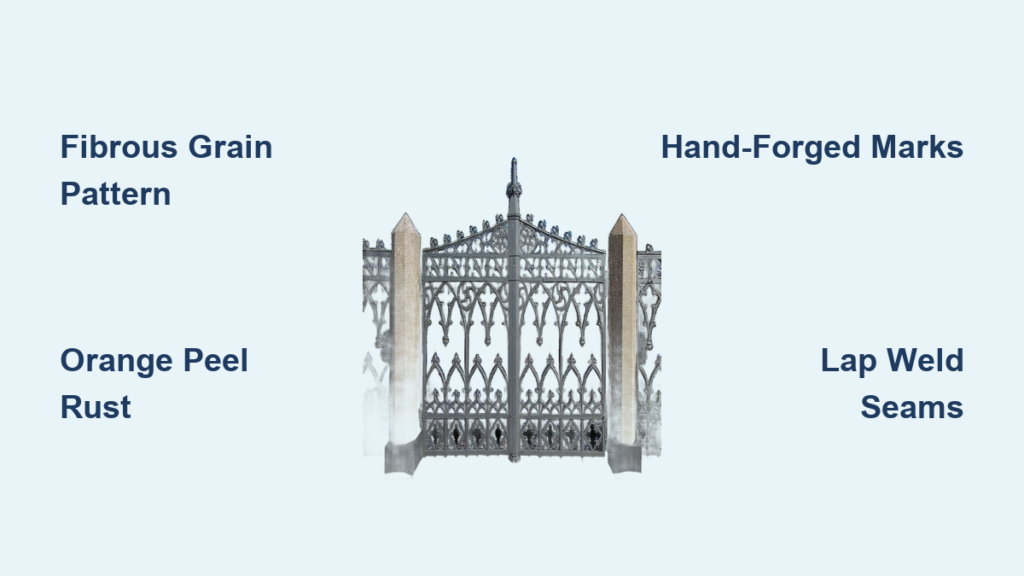
You’ve discovered an old metal gate, railing, or furniture piece and wonder if it’s valuable wrought iron. Many homeowners and antique collectors struggle to distinguish genuine wrought iron from modern imitations like cast iron or steel. With wrought iron pieces from the 18th and 19th centuries becoming increasingly rare and valuable, knowing how to properly identify this historic material prevents costly mistakes when purchasing, restoring, or preserving antique metalwork. This guide provides reliable, hands-on methods to identify wrought iron using simple visual inspection and non-destructive testing techniques that anyone can perform.
Visual Examination: Spotting Wrought Iron’s Distinctive Grain Pattern

Wrought iron’s most reliable identifying feature is its fibrous grain structure, visible when examining the metal’s surface or broken edge. Unlike homogeneous modern steel, wrought iron contains silicate slag inclusions that create a distinctive wood-like grain pattern running parallel to the direction of forging.
How to Locate and Examine the Grain Pattern
- Find an uncoated area or section where the metal has been cut or broken
- Clean the surface thoroughly with a wire brush to remove rust and paint
- Look for thin, parallel lines resembling wood grain running through the metal
- Examine the pattern under good lighting, preferably with a 10x magnifying glass
- Confirm the grain runs consistently in one direction throughout the piece
Why Modern Steel Lacks This Characteristic
When comparing suspected wrought iron to modern steel, note that steel has a uniform, crystalline structure without visible grain lines. If you see consistent parallel fibers rather than a uniform metallic appearance, you’re likely looking at genuine wrought iron. This grain pattern results from the traditional manufacturing process where iron was repeatedly heated and hammered, working slag inclusions into elongated fibers.
Physical Characteristics: Weight, Texture, and Surface Features
Wrought iron has distinctive physical properties that differentiate it from similar metals. Understanding these characteristics helps identify the material without specialized equipment.
Key Physical Properties to Check
- Weight comparison: Wrought iron is noticeably lighter than cast iron but heavier than aluminum
- Surface texture: Genuine wrought iron has a slightly rougher, more fibrous surface than smooth modern steel
- Rust formation: Wrought iron develops a distinctive “orange peel” textured rust rather than the flaky rust of cast iron
- Malleability signs: Look for evidence of hand-forging like hammer marks or inconsistent bending
How to Perform a Simple Bend Test (On Small Samples Only)
While not recommended for valuable pieces, a small sample can reveal wrought iron’s famous malleability:
1. Take a small, inconspicuous piece if available
2. Attempt to bend it slowly with pliers
3. Genuine wrought iron will bend without breaking and may show visible grain separation
4. Cast iron would snap cleanly, while steel would bend but lack the fibrous appearance
Historical Markers and Manufacturing Evidence
Authentic wrought iron pieces often contain telltale signs of their manufacturing era and process that modern reproductions typically lack.
Look for These Historical Indicators
- Hand-forged details: Irregular hammer marks, inconsistent bends, and varied thickness
- Lap welds: Visible seam lines where pieces were forge-welded together
- Bloomery slag inclusions: Small, dark linear impurities running with the grain
- Patina development: Even, deep rust patterns rather than spotty corrosion
Common Period Markings to Identify
Many wrought iron pieces from the 18th-19th centuries include maker’s marks, date stamps, or manufacturer identifiers:
– Look for stamped letters or numbers near joints or inconspicuous areas
– Check for distinctive regional styles (Georgian, Victorian, Art Nouveau)
– Note that early pieces (pre-1850) often have more pronounced hand-forging evidence
Distinguishing Wrought Iron from Common Imposters

Many metal pieces are mistakenly identified as wrought iron when they’re actually cast iron, steel, or modern alloys. Knowing the differences prevents costly misidentification.
Wrought Iron vs. Cast Iron: Critical Differences
| Feature | Wrought Iron | Cast Iron |
|---|---|---|
| Structure | Fibrous grain pattern | Uniform, crystalline |
| Weight | Lighter for same size | Heavier |
| Break pattern | Fibrous separation | Clean, sharp break |
| Common uses | Railings, gates, scrollwork | Stoves, machinery, structural supports |
| Corrosion | Orange-peel textured rust | Flaky, powdery rust |
Why Modern Steel Is Often Mistaken for Wrought Iron
Many reproduction pieces use mild steel that’s been artificially aged to mimic wrought iron. Key differences include:
– Steel lacks the distinctive fibrous grain pattern
– Steel typically has uniform composition throughout
– Modern welds (visible as smooth seams) replace traditional forge welding
– Steel often shows more uniform corrosion patterns
Non-Destructive Testing Methods for Home Identification
You don’t need specialized equipment to identify wrought iron. Several simple tests can confirm your findings without damaging valuable pieces.
The Magnet Test: What It Reveals (and Doesn’t)
Both wrought iron and steel are magnetic, so a magnet alone won’t distinguish between them. However:
– Wrought iron may show slightly weaker magnetic attraction than modern steel
– Cast iron is also magnetic but has different physical properties
– Use the magnet test in conjunction with visual examination for best results
Rust Pattern Analysis Technique
Examine how corrosion has developed on the piece:
1. Genuine wrought iron develops a textured, “orange peel” rust pattern
2. The rust follows the grain pattern of the metal
3. Cast iron rust tends to be flakier and more powdery
4. Steel often shows more uniform pitting corrosion
Common Mistakes to Avoid When Identifying Wrought Iron
Many well-intentioned collectors and homeowners make critical errors when trying to identify wrought iron, leading to misidentification and potential damage to valuable pieces.
Don’t Rely Solely on Age or Style
Just because a piece looks antique doesn’t mean it’s wrought iron. Many reproductions mimic historical styles using modern materials. Always verify through physical examination rather than style alone.
Avoid Destructive Testing on Valuable Pieces
Never perform break tests or significant cutting on potentially valuable wrought iron pieces. Non-destructive visual examination and surface testing are sufficient for identification in most cases.
Preservation Tips for Confirmed Wrought Iron Pieces
Once you’ve identified genuine wrought iron, proper preservation prevents further deterioration while maintaining historical integrity.
Safe Cleaning Methods for Wrought Iron
- Use gentle wire brushing (never sandblasting) to remove loose rust
- Apply a mild vinegar solution to stubborn rust spots
- Never use harsh chemical rust removers that damage the metal surface
- After cleaning, apply a light coat of linseed oil for temporary protection
Long-Term Protection Strategies
- Maintain regular inspection for new rust development
- Apply appropriate wax coatings for indoor pieces
- Use specialized metal primers and paints for outdoor installations
- Control environmental factors like moisture and salt exposure
When to Consult a Professional Metal Conservator
Certain situations require expert assessment to properly identify and preserve wrought iron pieces.
Signs You Need Professional Help
- The piece has significant historical value
- You’re planning a major restoration project
- The metal shows unusual corrosion patterns
- You’re uncertain after performing basic identification tests
Professional conservators have access to advanced testing methods like metallography that can definitively identify wrought iron without damaging the piece.
Final Note: Identifying genuine wrought iron requires careful examination of multiple characteristics rather than relying on a single test. The distinctive fibrous grain pattern remains the most reliable indicator, but should be considered alongside physical properties, historical evidence, and corrosion patterns. Proper identification protects you from purchasing expensive reproductions while ensuring authentic pieces receive appropriate preservation. When in doubt, consult a professional metal conservator before attempting any restoration work on potentially valuable wrought iron pieces.