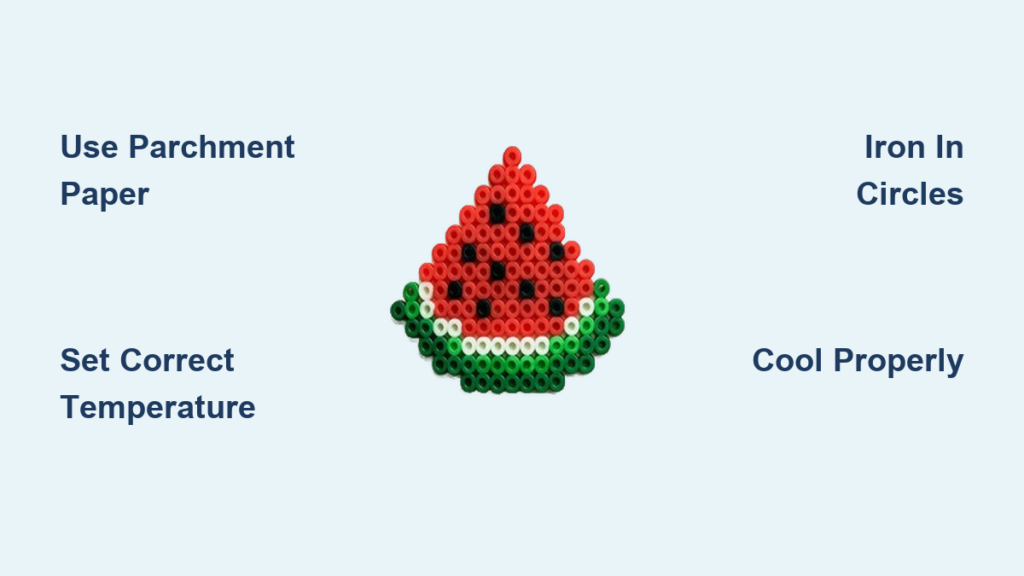
The satisfying transformation of loose plastic beads into a permanent, colorful creation happens during the ironing process—where your carefully arranged design becomes a sturdy finished piece. Whether you’re working with Perler beads, Hama beads, or any other brand of fuse beads, mastering the ironing technique separates amateur attempts from professional-looking results. Getting this step wrong means your project might crumble apart or warp beyond recognition, while perfect execution creates vibrant art that holds together for years.
Most crafters struggle with inconsistent melting, warping designs, or beads sticking to the iron—frustrating problems that often lead to abandoned projects. This guide eliminates those issues by revealing the precise temperature settings, pressure techniques, and timing that produce flawless results every time. You’ll learn exactly how to protect your iron, recognize when beads are properly fused, and rescue projects that didn’t turn out right the first time.
Gather Essential Materials and Tools
Before heating your iron, ensure you have these critical supplies within reach for a smooth ironing experience. Your standard household iron works perfectly—no special equipment needed—but models with adjustable temperature settings give you superior control over the melting process. Avoid steam irons with automatic steam bursts that can dislodge your bead arrangement during the delicate fusing stage.
Choose the Right Protective Barrier
Parchment paper provides the ideal non-stick surface that withstands heat while allowing proper melting—simply tear off sheets slightly larger than your pegboard. Many crafters mistakenly use wax paper (which melts) or aluminum foil (which conducts too much heat), so verify your material can handle 300°F without degrading. For textured designs or intricate patterns, professional crafters recommend using a thin cotton pressing cloth over the parchment paper to distribute heat evenly across uneven bead surfaces.
Prepare Your Workspace Properly
Create a dedicated ironing station with these three essentials: a heat-resistant surface like a silicone mat or folded towel, your pegboard with completed design, and easy access to your iron’s power cord. Position everything so you won’t need to stretch or reposition your hot iron mid-process—a common cause of accidental bumps that ruin bead arrangements. Keep tweezers nearby to correct misplaced beads before ironing, but remember that any adjustments become impossible once melting begins.
Set the Correct Iron Temperature

Temperature precision makes or breaks your melty bead project—too hot and your design melts into a blob, too cool and beads won’t fuse properly. Most standard irons require the “synthetic” or “nylon” setting (approximately 270°F), which corresponds to position #2 on a 1-6 numbered dial. Cotton or linen settings will destroy your project, while wool settings often provide insufficient heat for complete fusion.
Test Heat Settings Before Committing
Always perform a temperature test on a small practice piece before ironing your actual project—this 30-second precaution saves hours of recreation. Create a 5×5 bead square on spare pegboard, cover with parchment paper, and iron for 10 seconds. Properly fused beads should show slight shine but maintain their cylindrical shape; shiny, flattened beads indicate excessive heat while dull, separate beads mean insufficient temperature. Adjust accordingly before proceeding to your main design.
Recognize Warning Signs of Incorrect Temperature
Watch for these visual cues during test runs: beads developing a cloudy appearance signal overheating that weakens structural integrity, while persistent gaps between beads after ironing reveal inadequate melting. If you detect a burning plastic smell—immediately stop and lower the temperature, as this indicates dangerous decomposition of the plastic that compromises both safety and project quality. Remember that darker colored beads absorb heat faster than light ones, so you may need to reduce temperature slightly when working with black, blue, or red designs.
Master the Ironing Technique for Perfect Results
The circular motion technique delivers even heat distribution that prevents hot spots and warping—press firmly while moving the iron in slow, overlapping circles across the entire surface. Maintain consistent pressure equivalent to about two pounds of force (similar to pressing a button on a keyboard), as uneven pressure creates thin spots in your finished piece. Spend exactly 10-15 seconds per 2×2 inch section, watching for the critical visual cue that fusion is complete.
Identify the Perfect Fusion Point
Your beads have reached optimal fusion when they develop a subtle sheen while still maintaining approximately 70% of their original cylindrical shape—this preserves design details while ensuring structural integrity. Ironing beyond this point causes beads to collapse completely, losing their distinctive texture and creating fragile, flat pieces prone to breaking. The transformation happens quickly, so check your progress every 30 seconds by carefully lifting a corner of the parchment paper with heat-resistant tweezers.
Double-Side Ironing for Professional Results
Flip your project and repeat the ironing process on the reverse side for projects thicker than 10×10 beads—this ensures complete fusion through the entire structure. Place fresh parchment paper over the back side and use 25% less pressure than the front pass since the beads have already partially melted. This technique prevents the common problem of top beads fusing while bottom beads remain loose, which causes pieces to separate when handled. For multi-layered projects, iron each layer separately before assembling for strongest bonds.
Troubleshoot Common Ironing Problems Immediately

When beads stick to your parchment paper, the solution depends on how far fusion has progressed. If caught during initial ironing, gently press the stuck areas with increased heat for 5 seconds—this often re-melts the connection point without damaging the design. For fully cooled projects with stuck beads, place the entire piece between two fresh parchment sheets and re-iron at slightly higher temperature until the stuck section releases. Never peel stubborn beads forcefully, as this typically pulls half the design off with the paper.
Fix Warped or Uneven Projects
Warping occurs when one section receives more heat than others—correct this by placing the warped piece between two clean parchment sheets and applying firm, even pressure with your cooled iron for 30 seconds. For severe warping, position the piece on your pegboard with the convex side facing down, cover with parchment, and iron the concave side with extra pressure for 15 seconds. Prevent future warping by maintaining consistent circular motion and avoiding lingering in any one spot for more than 15 seconds.
Rescue Under-Fused Designs
Partially fused projects that crumble when removed from the pegboard need strategic re-ironing—not complete restarts. Place the piece back on the pegboard with parchment covering, then focus exclusively on the problem areas using 5-second bursts at slightly higher temperature. Insert toothpicks between loose beads to create channels for heat penetration, and press with extra pressure over weak spots. For stubborn sections, try placing a damp cloth over the parchment paper before ironing—the controlled steam injection often completes fusion without damaging surrounding areas.
Follow Essential Safety Precautions
Ventilation is non-negotiable when ironing plastic beads—always work near an open window or with a fan directing fumes away from your breathing zone. The melting process releases minimal fumes at proper temperatures, but inadequate ventilation in small spaces can cause headaches or dizziness in sensitive individuals. Never leave your hot iron unattended, and keep children and pets at least six feet from your workspace—melting beads reach temperatures that cause serious burns instantly.
Protect Your Iron from Permanent Damage
Prevent bead residue buildup that ruins future ironing projects by using fresh parchment paper for each side of every project. If residue does accumulate on your iron plate, clean it immediately after cooling using a vinegar-soaked paper towel—never use abrasive cleaners that damage the non-stick coating. Store your iron upright with the cord neatly wrapped to prevent accidental tipping, and always unplug it completely after use rather than relying on the power switch alone.
Create Durable Finished Projects
Cool your ironed piece properly to maximize strength—leave it sandwiched between parchment paper on a flat surface for at least 15 minutes before handling. Rushing this step causes stress fractures as different sections cool at varying rates. For display pieces, mount your finished design on foam board using craft glue applied to the back side, which prevents warping that occurs when gluing directly to flat surfaces.
Prevent Long-Term Damage to Your Creations
Protect your finished projects from environmental damage by avoiding prolonged direct sunlight exposure, which causes colors to fade within months. Store three-dimensional creations upright rather than flat to maintain their shape, and never place heavy objects on top of ironed bead pieces—even fully cooled projects can develop permanent indentations under sustained pressure. When gifting your creations, include care instructions noting they should never be washed or exposed to temperatures above 120°F.
Advance Your Melty Bead Skills
Once you’ve mastered basic ironing, experiment with advanced techniques that create professional results. Try the “partial melt” method where you iron only specific sections to create dimensional effects—perfect for making 3D elements pop from flat backgrounds. For jewelry makers, iron small bead sections between parchment and thin fabric to create durable, washable accessories that maintain flexibility.
Combine ironed bead pieces with other crafts by embedding them in resin coasters or attaching them to wooden frames for wall art. The key to successful combinations is ensuring all materials can withstand the 270°F ironing temperature—test any new material combinations on small samples first. Most importantly, document your temperature settings and results for each project to build your personal reference guide for different bead brands and project types.
Final Note: Perfect melty bead ironing combines precise temperature control, consistent pressure, and knowing exactly when to stop. By following these techniques, you’ll transform frustrating attempts into stunning creations that showcase your design skills without technical flaws. Remember the golden rule: when in doubt, use less heat and more time—this approach saves more projects than cranking up the temperature. With practice, you’ll develop an instinct for that perfect fusion point where beads connect firmly while maintaining their vibrant shape and color.