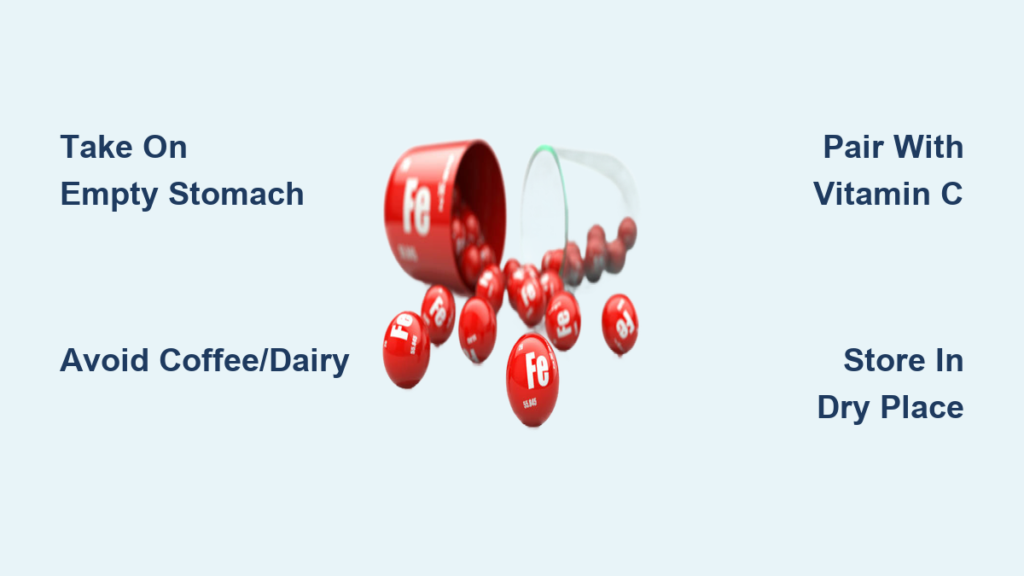
Iron deficiency affects millions globally, yet many people waste months taking supplements without seeing results simply because they don’t know how to take iron pills correctly. You could be faithfully swallowing your iron tablets every day while unknowingly blocking up to 50% of absorption with your morning coffee or calcium-fortified cereal. The timing, formulation, and food combinations around your iron dose dramatically impact whether your body actually benefits from supplementation. Many patients continue feeling fatigued for months after starting treatment because they’re making preventable errors that undermine their recovery. This guide reveals exactly how to take iron pills correctly to maximize absorption, minimize uncomfortable side effects, and rebuild your iron stores efficiently.
Taking iron supplements properly involves far more than just swallowing a pill with water. From choosing the right formulation for your digestive system to understanding why vitamin C is your absorption ally, every detail matters in effective iron therapy. The difference between following these evidence-based strategies versus guessing on your own could mean resolving your deficiency in weeks rather than months. Whether you’re treating diagnosed anemia or preventing deficiency, mastering these techniques ensures you get the most from your supplementation.
Select the Best Iron Supplement for Your Body

Ferrous sulfate remains the most common iron supplement, delivering 65mg of elemental iron per 325mg tablet—the actual amount your body can absorb. However, if you experience stomach cramps or nausea with this standard formulation, ferrous gluconate offers a gentler alternative with less elemental iron per dose. Ferrous fumarate provides the highest concentration of elemental iron, allowing smaller doses for the same therapeutic effect. Your digestive tolerance should guide your choice more than cost or availability.
Liquid vs. Tablet Formulations Compared
Liquid iron supplements like Ironorm Drops contain 125mg of ferrous sulfate per milliliter and come with a precise measuring syringe—making them ideal for children or adults needing exact dosing adjustments. If you struggle with swallowing pills, never crush or chew iron tablets as this increases side effects and risks permanent tooth staining. Instead, request the liquid formulation from your pharmacist, which you can mix with juice and take through a straw to protect your teeth.
Precise Iron Dosing Based on Your Specific Needs
Treating existing iron deficiency requires higher doses than preventative supplementation. Adults typically need one 200mg ferrous sulfate tablet daily for anemia treatment, though your doctor might recommend taking it two or three times daily depending on deficiency severity. If gastrointestinal side effects become problematic, alternate-day dosing often works better than reducing your daily dose, as recent research shows this approach improves absorption while reducing discomfort.
Age-Specific Dosing Guidelines
Children under 12 require weight-based dosing calculations that make liquid formulations essential for accuracy. Never give adult iron supplements to children—overdose risks are serious and potentially fatal. For preventative supplementation in adults without diagnosed deficiency, one 200mg tablet daily (or 2.4ml-4.8ml of liquid drops) suffices. Your healthcare provider should determine duration based on ongoing risk factors like heavy menstrual periods, vegan diets, or gastrointestinal conditions affecting absorption.
Timing Your Iron Dose for Maximum Absorption
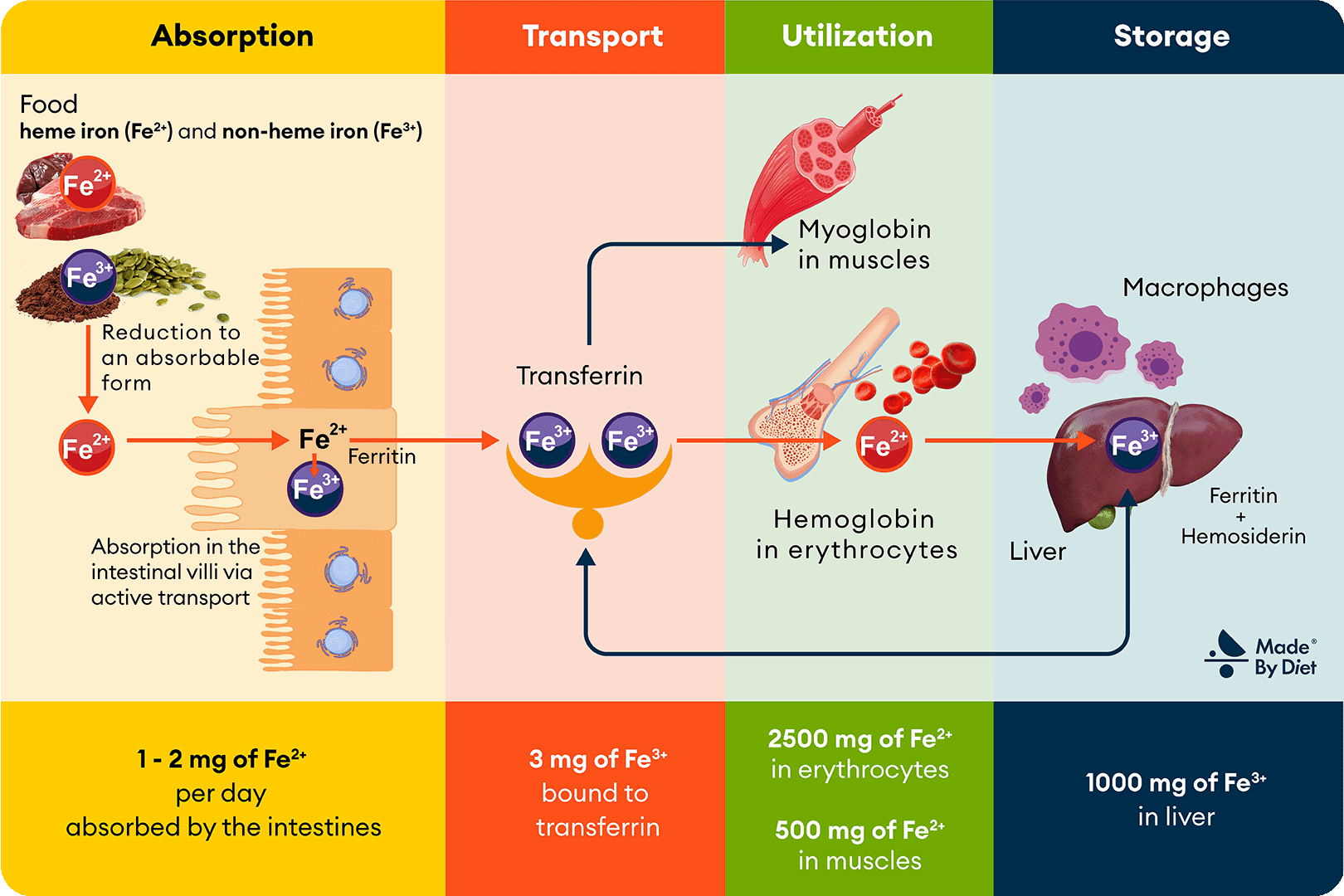
Take iron supplements 30 minutes before breakfast or at least 2 hours after dinner for optimal absorption—food components like calcium and fiber can reduce uptake by 50% or more. If stomach upset occurs with empty-stomach dosing, try a small amount of plain crackers first rather than a full meal, as this compromise reduces side effects without blocking absorption as completely. Many patients find taking iron right before bed works best, allowing them to sleep through initial gastrointestinal discomfort.
Critical Administration Techniques
Always swallow tablets whole with a full glass of water—never suck, chew, or let them dissolve in your mouth, as this causes painful mouth ulcers and permanent tooth staining. If you use liquid iron, mix it with orange juice and drink through a straw positioned at the back of your mouth to minimize contact with teeth. This simple technique prevents staining while simultaneously boosting absorption through vitamin C.
Foods That Sabotage Iron Absorption (And When to Eat Them)
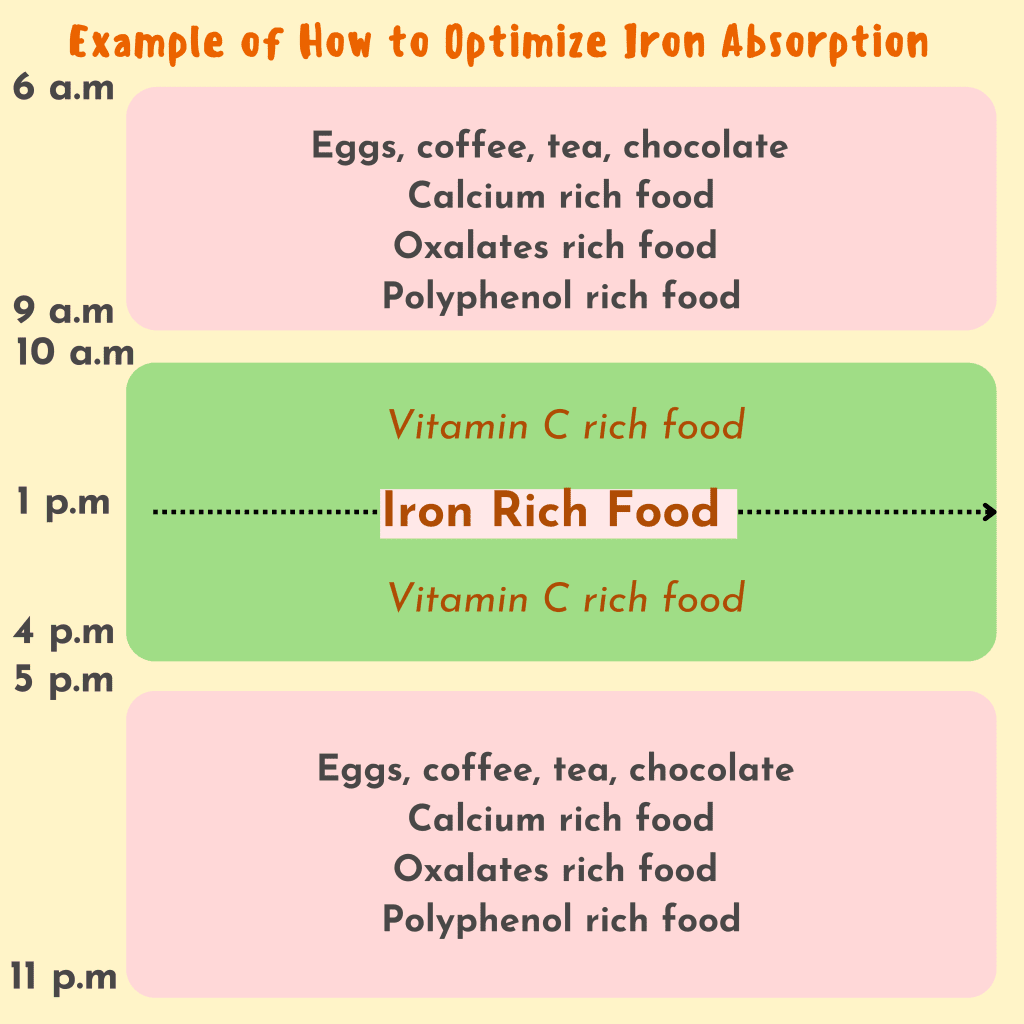
Tea and coffee contain tannins that bind tightly to iron, reducing absorption by up to 60%. Wait at least 2 hours after your iron dose before enjoying your morning coffee—this single change can dramatically improve your results. Dairy products pose an equally significant problem; calcium blocks iron uptake so effectively that even small amounts consumed near your supplement time substantially reduce benefits.
Strategic Meal Planning for Iron Therapy
Eggs and high-fiber foods like whole grains and bran cereals also interfere with iron absorption. Instead of eliminating these nutritious foods, time your meals strategically: take iron first thing in the morning, wait 2 hours, then enjoy your calcium-fortified cereal. Lunch can include iron-rich foods like lean meats and leafy greens, followed by another 2-hour wait before your next iron dose if prescribed multiple times daily.
Dangerous Medication Interactions to Avoid
Calcium supplements and antacids require the same 2-hour separation rule as dairy products—taking them too close to iron supplements can negate your therapy. Never take iron simultaneously with thyroid medication, as this common combination significantly reduces absorption of both substances. Antibiotics like tetracycline and ciprofloxacin bind to iron, making both ineffective, while medications for osteoporosis, epilepsy, and Parkinson’s disease may all interact problematically.
Creating a Safe Medication Schedule
Work with your pharmacist to design a medication timetable that minimizes interactions. This might mean taking iron at 7 AM, thyroid medication at 9 AM, and calcium supplements at noon. Always disclose every medication and supplement you take to your healthcare provider before starting iron therapy—this simple step prevents dangerous interactions and ensures your treatment works as intended.
Triple Your Iron Absorption with Vitamin C
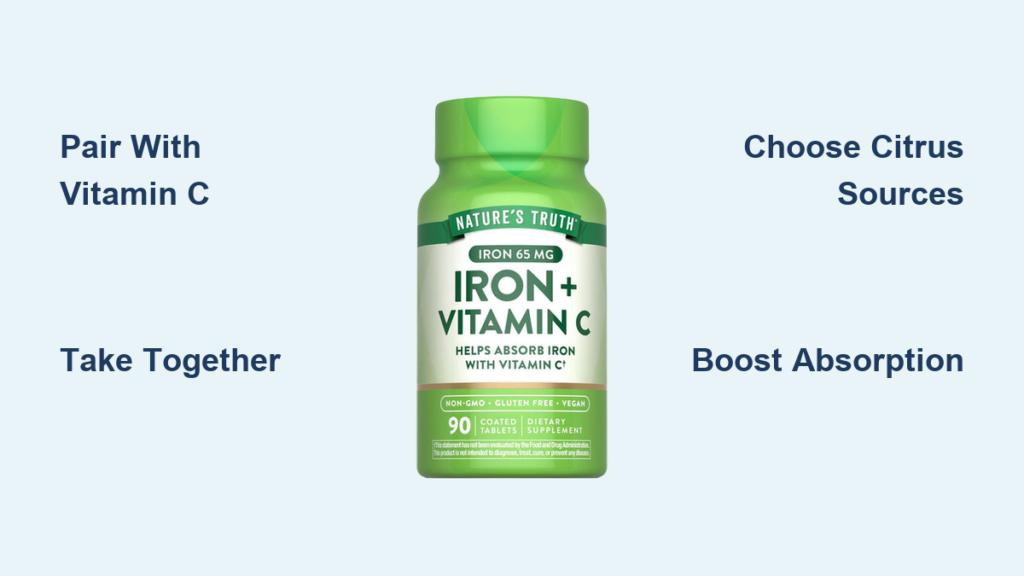
A single glass of orange juice with your iron pill can increase absorption by 300%—vitamin C creates an acidic environment that keeps iron in its most absorbable form. Take your iron supplement with 500mg of vitamin C or an 8-ounce glass of citrus juice for maximum benefit. Other excellent vitamin C sources include strawberries, bell peppers, and tomatoes—perfect for mixing with liquid iron formulations to prevent staining while enhancing uptake.
Managing Common Side Effects Without Quitting Treatment
Constipation affects up to 50% of iron supplement users, but stool softeners like docusate sodium provide immediate relief without stopping your therapy. If diarrhea or nausea persists beyond the first week, ask your doctor about switching to ferrous gluconate, which many patients tolerate better than ferrous sulfate. Never reduce your dose or stop taking iron without medical guidance—this delays recovery and often leads to recurring deficiency.
Preventing and Treating Tooth Staining
Liquid iron can stain teeth permanently, but mixing with juice and using a straw prevents 90% of discoloration. If staining occurs, brush with baking soda or hydrogen peroxide to remove it safely. Dark stools are normal and expected during iron therapy—this harmless side effect indicates proper metabolism, not gastrointestinal bleeding.
Complete Treatment Duration for Lasting Results
Blood counts typically normalize after 2 months of consistent iron therapy, but stopping supplementation then guarantees relapse—your bone marrow stores remain depleted. Continue treatment for 3-6 months after blood tests normalize to fully rebuild reserves. Preventative supplementation duration depends entirely on ongoing risk factors; those with permanent risks like chronic blood loss or vegan diets may need indefinite supplementation with periodic monitoring.
Handling Missed Doses Without Risking Overdose
If you forget a dose, take it as soon as you remember unless it’s nearly time for your next dose—in which case, skip the missed one entirely. Never double up on doses, as this dramatically increases side effect risks. Set phone alarms or use a pill organizer with AM/PM compartments to maintain consistency—this simple habit prevents missed doses and ensures steady progress.
Recognizing and Responding to Iron Overdose
Symptoms like severe vomiting, stomach pain, and bloody stools require immediate emergency care—iron overdose can be fatal, especially in children. Keep supplements in a locked cabinet out of children’s reach, as even a few tablets can poison a small child. If overdose is suspected, bring the medication packaging to the hospital and never drive yourself—call emergency services immediately.
Proper Storage to Maintain Effectiveness
Store iron supplements in a cool, dry place away from bathroom humidity—medicine cabinets often expose pills to damaging moisture from showers. Keep them in original containers with child-resistant caps, and check expiration dates regularly. Discard any supplements showing discoloration or unusual odors to ensure you’re taking effective medication.
Essential Iron Supplementation Checklist
To take iron pills correctly: choose the right formulation for your digestive system, take doses on an empty stomach with vitamin C, avoid coffee/dairy/calcium for 2 hours before and after, continue treatment for 3-6 months after blood tests normalize, and store supplements safely away from children. The difference between effective and ineffective iron therapy often comes down to these specific timing and combination details—master them to rebuild your iron stores efficiently and restore your energy levels. Consistent proper supplementation typically resolves deficiency in 3-6 months, but guessing on your own can extend your recovery to a year or more.