Excessive hair shedding and thinning can be deeply frustrating, especially when you can’t identify the cause. For millions experiencing unexplained hair loss, iron deficiency—often undetected by standard blood tests—may be the hidden culprit preventing healthy regrowth. Research shows that when your body lacks sufficient iron stores, hair follicles struggle to receive the oxygen needed to maintain normal growth cycles, triggering premature shedding and slowed regrowth. The critical factor isn’t just circulating iron but your ferritin levels—the body’s iron storage protein—which must reach at least 70 ng/mL to support proper hair production. This guide reveals exactly how iron supplements can restore your hair’s growth cycle and when they’ll deliver visible results.
Why Iron Deficiency Triggers Sudden Hair Shedding
Your hair follicles rank among the body’s most metabolically active tissues, requiring substantial oxygen and nutrients to sustain continuous hair production. Each strand progresses through four distinct phases: anagen (growth), catagen (transition), telogen (resting), and exogen (shedding). Iron-dependent processes regulate gene expression and cell division throughout this cycle, making adequate iron essential for maintaining healthy follicle function. When iron stores deplete, your body prioritizes vital organs over hair production, forcing more follicles into premature resting and shedding phases.
This biological triage manifests as telogen effluvium—sudden, diffuse thinning across your scalp rather than gradual recession at the temples. Unlike genetic hair loss, telogen effluvium produces noticeable shedding within weeks or months of developing iron insufficiency, with clumps of hair appearing in your brush or shower drain. Women especially frequently discover low ferritin levels contribute significantly to their thinning, even when standard blood counts appear normal. The scalp’s compromised ability to maintain healthy skin cell turnover further exacerbates the problem, creating a visible connection between iron status and hair health.
The 70 ng/mL Ferritin Threshold Every Hair Loss Patient Must Know
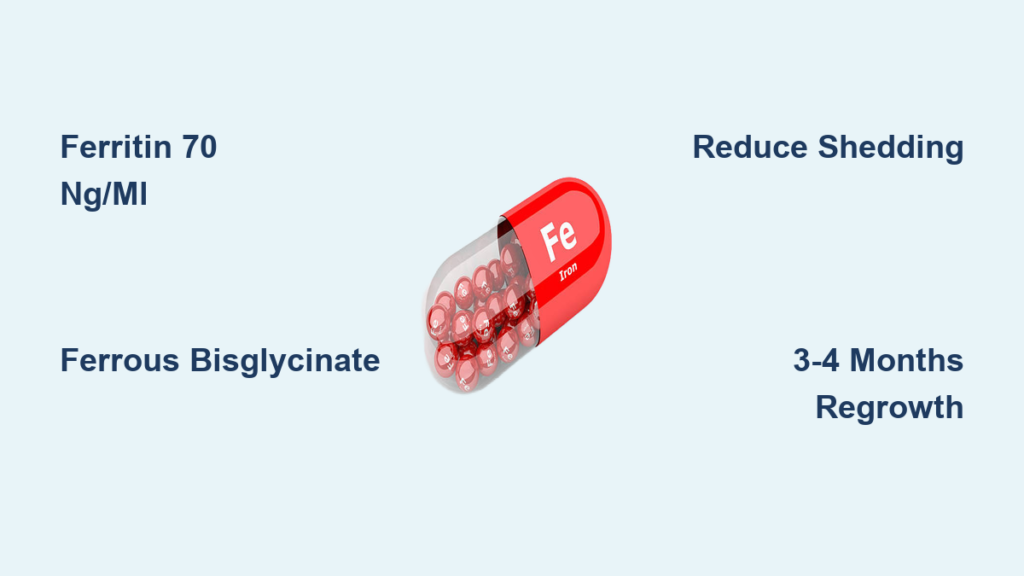
Serum ferritin levels provide the most accurate window into your available iron reserves, far more revealing than standard iron tests that only measure circulating iron. Unlike momentary iron availability, ferritin reflects your cumulative iron storage—critical information for hair growth since follicles require substantial reserves to maintain continuous production. Clinical research has established that ferritin levels must reach approximately 70 ng/mL to support proper hair growth, a threshold significantly higher than laboratory “normal” ranges (typically 15-30 ng/mL).
This gap explains why doctors may dismiss iron as a hair loss factor when bloodwork appears acceptable, while trichologists routinely test ferritin and recommend supplementation at levels general practitioners consider unnecessary. When ferritin drops below 70 ng/mL, your scalp enters functional iron deficiency for hair purposes—even if other organs remain adequately supplied. Your body simply won’t allocate precious iron stores to non-essential hair production when reserves run low, making this specific threshold the critical benchmark for determining if iron supplements could revive your hair regrowth.
Proven Science: How Iron Supplementation Reverses Hair Loss

Multiple peer-reviewed studies confirm the direct connection between iron deficiency and hair loss, with research demonstrating that addressing iron insufficiency can reverse shedding patterns. One significant study examining telogen effluvium found participants receiving iron supplements showed significantly decreased hair loss and increased serum ferritin levels compared to untreated controls. The improvement in shedding directly correlated with rising ferritin levels, proving that achieving optimal iron storage—not merely avoiding clinical deficiency—produces meaningful hair improvements.
Additional research evaluating serum ferritin and vitamin D levels in women with hair loss found iron insufficiency present in a significant proportion of cases, leading specialists to recommend routine ferritin testing as part of comprehensive hair loss evaluations. Studies comparing iron-deficient hair loss patients to control groups consistently identify lower ferritin levels among those experiencing active shedding. This robust scientific foundation confirms that iron supplementation serves as a foundational element in hair restoration protocols when deficiency exists.
Why Ferrous Bisglycinate Chelate Outperforms Standard Iron Supplements

Not all iron supplements deliver equal results for hair regrowth. The form of iron matters enormously for both effectiveness and tolerability. Ferrous bisglycinate chelate binds iron to the amino acid glycine, creating a complex that your digestive system absorbs more readily while causing significantly fewer side effects than traditional iron salts like ferrous sulfate. Research comparing this advanced formulation to conventional options demonstrates superior absorption characteristics and dramatically better gastrointestinal tolerance.
This improved tolerability translates directly to better adherence—determining whether you achieve therapeutic ferritin levels. Standard iron supplements frequently cause nausea, constipation, and stomach irritation that lead users to discontinue treatment prematurely. With ferrous bisglycinate chelate, you’re more likely to maintain consistent supplementation long enough to see results. Vitamin C inclusion further enhances absorption by creating the acidic digestive environment needed for optimal iron release and uptake.
Your Realistic Timeline for Visible Hair Regrowth
Understanding the hair growth cycle explains why visible improvements necessarily lag behind physiological changes. New hair strands must progress through months of active growth before becoming visible at the scalp surface. During the first 4-8 weeks of consistent supplementation, the primary change involves stopping additional follicles from entering the shedding phase rather than producing new visible growth. Most users begin noticing decreased daily shedding within this initial period as existing follicles complete their current cycles under improved iron status.
Visible regrowth typically becomes apparent after 3-4 months of sustained supplementation, with fine new hairs appearing along the hairline or increased density in thinning areas. Continued improvement occurs through months six and beyond as multiple follicle cohorts complete full growth cycles under optimal iron conditions. Achieving maximum benefits generally requires maintaining ferritin levels above 70 ng/mL for at least six months—setting realistic expectations prevents premature discontinuation of effective treatment.
What Real Users Report About Iron Supplement Results
Customer experiences consistently validate the scientific research, with users reporting meaningful improvements when bloodwork confirms suboptimal ferritin levels. The cessation of excessive shedding emerges as the most consistently reported early benefit, with many describing this as the first sign that supplementation is working. One user experiencing significant hair loss while taking GLP-1 medications discovered bloodwork revealed low iron saturation and elevated iron-binding capacity. After starting iron supplementation, shedding stopped within three weeks—though visible regrowth took longer.
Users frequently report additional systemic benefits beyond hair improvements, including increased energy levels and better overall wellbeing—logical given iron’s fundamental role in oxygen transport throughout the body. Many specifically mention the importance of choosing a gentle iron formulation, noting previous attempts with traditional supplements caused digestive side effects that led to discontinuation before benefits could manifest. These real-world experiences confirm that finding a tolerable formulation often determines whether individuals achieve hair regrowth success.
Expert Protocol: Maximizing Your Iron Supplement Results

Trichology specialists recommend specific protocols to maximize hair regrowth outcomes from iron supplementation. First, request serum ferritin testing specifically—standard complete blood counts won’t reveal the storage levels critical for hair growth. The optimal range for hair purposes is 70-100 ng/mL, with levels below this threshold suggesting potential benefit from supplementation even if your doctor considers your iron “normal.”
Take your iron supplement with vitamin C to enhance absorption, while avoiding calcium, zinc, coffee, or tea within two hours as these interfere with uptake. Menstruating women typically require higher doses (25-65 mg elemental iron daily) than men or postmenopausal women due to monthly iron losses. For comprehensive results, combine iron supplementation with other hair-supporting approaches: DHT blockers for hormonal factors and essential fatty acids for scalp inflammation control often produce superior outcomes compared to single-intervention strategies.
When to Expect Your Hair Regrowth Breakthrough
Iron supplementation delivers predictable results when deficiency exists, but requires patience aligned with hair biology. Within 4-8 weeks, expect reduced shedding as follicles stop prematurely entering the resting phase. By 3-4 months, look for fine new growth along your hairline and increased density in thinning areas. Maximum improvement typically appears around 6 months as multiple follicle cohorts complete full growth cycles under optimal iron conditions.
If you haven’t seen decreased shedding by week 8, consult your healthcare provider to verify absorption and dosage adequacy. Remember that iron supplementation only addresses hair loss when deficiency exists—other causes require different approaches. For best results, maintain ferritin levels above 70 ng/mL for at least six months, as hair growth improvements directly correlate with sustained iron status. Consistent supplementation combined with realistic expectations transforms iron deficiency from a hidden hair loss trigger into your most powerful regrowth ally.