Lamb loin chops deliver an exceptional dining experience when prepared correctly, with their tender texture and rich flavor making them a favorite among meat enthusiasts. Cooking these premium cuts in a cast iron skillet creates restaurant-quality results in your own kitchen, producing a beautifully caramelized crust while locking in juices. The superior heat retention of cast iron ensures even cooking and that perfect sear you’ve been searching for. Whether you’re preparing a special date night dinner or looking to elevate your weeknight cooking routine, mastering this technique will transform your culinary repertoire.
The magic happens because cast iron maintains consistent high heat throughout the cooking process, essential for developing the Maillard reaction that creates complex flavors. Unlike other cookware, cast iron continues to cook the meat even after removal from heat, which is crucial for achieving that perfect medium-rare center with a golden-brown exterior. This comprehensive guide provides everything you need to know to consistently produce perfectly cooked lamb loin chops that will impress even the most discerning palates.
Choosing Quality Lamb Loin Chops
Selecting the right lamb loin chops makes all the difference in your final dish. When shopping, look for chops with a vibrant pink to cherry-red color that indicates freshness, avoiding any with grayish tones or excessive liquid in the packaging. The fat should appear white to cream-colored and feel firm to the touch, not slimy or discolored.
Thickness is critical—aim for chops between 1 to 1.5 inches thick. Thinner cuts cook too quickly, often resulting in overcooked meat before a proper crust develops. For best results, seek out uniform-sized chops to ensure even cooking across all pieces. If possible, select American Lamb Board certified products or source from a reputable local farm where you can inquire about the animal’s diet and upbringing, as these factors significantly impact flavor.
Understanding quality grades helps you make informed choices. Prime grade offers the most marbling and produces exceptionally tender results, making it ideal for special occasions. Choice grade delivers excellent quality at a more accessible price point for regular cooking. Select grade is leaner and may benefit from additional preparation techniques to enhance tenderness. Always check the sell-by date and rely on your senses—fresh lamb should have a mild, pleasant aroma rather than a strong, gamey smell.
Proper Preparation Before Cooking
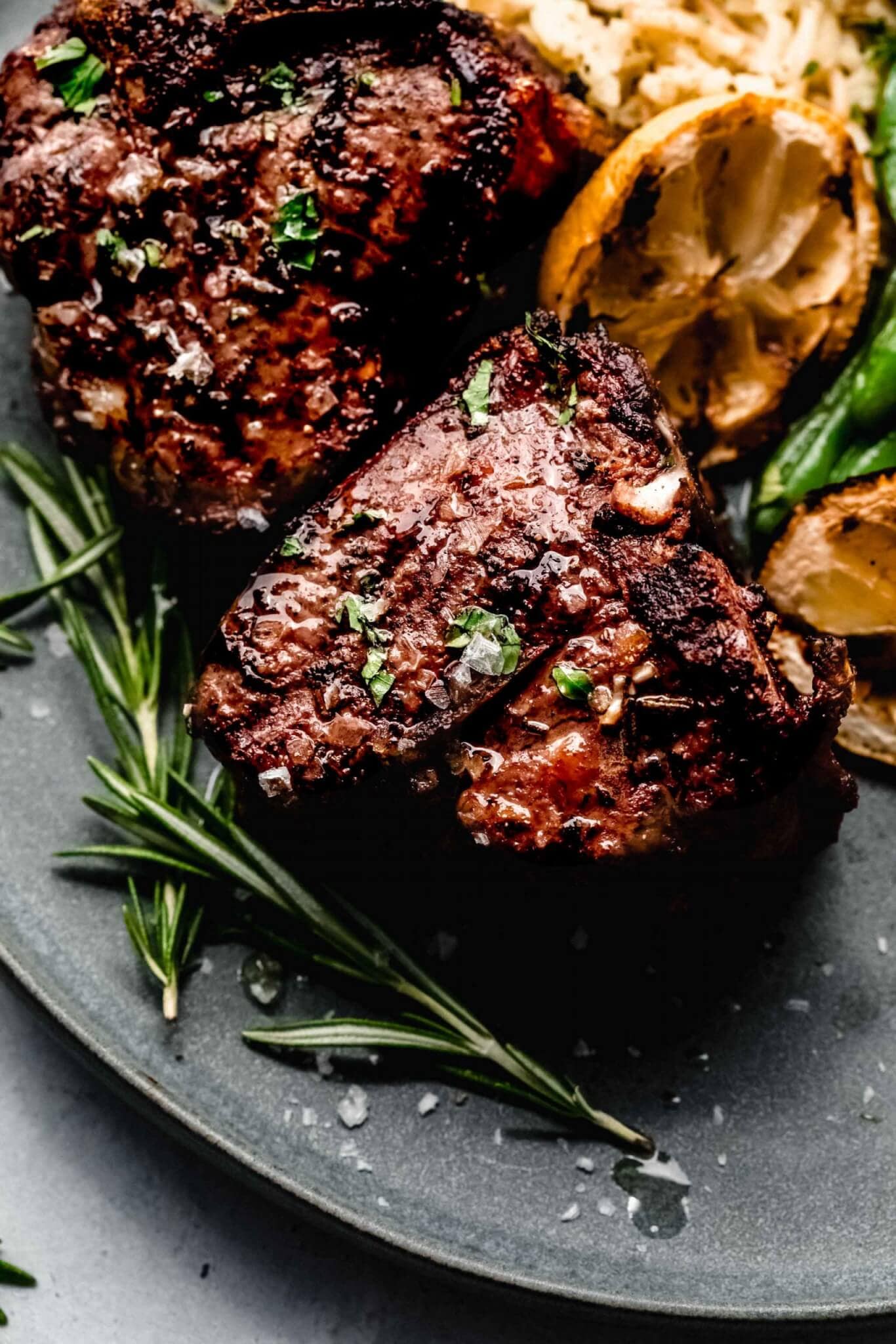
Correct preparation transforms good lamb loin chops into extraordinary ones. Remove the chops from refrigeration 30-45 minutes before cooking to bring them to room temperature. This crucial step ensures even cooking throughout rather than an overcooked exterior with a cold center. Never leave meat at room temperature longer than two hours to prevent bacterial growth.
Seasoning requires balancing simplicity with flavor depth. Generously apply kosher salt and freshly cracked black pepper to all sides at minimum. The salt draws out surface moisture, which then evaporates during searing to promote better browning. For additional flavor complexity, consider incorporating minced garlic, fresh rosemary, or thyme before cooking. Some cooks prefer a simple marinade of olive oil, lemon juice, and herbs applied 2-4 hours in advance, which adds subtle flavor notes while helping tenderize the meat.
Patting the lamb chops thoroughly dry with paper towels before cooking is non-negotiable for achieving a proper sear. Surface moisture prevents browning and causes steaming instead of searing. After drying, let the chops sit uncovered in the refrigerator for a few hours if possible—this further dries the surface and enhances the Maillard reaction that creates those complex, savory flavors during cooking.
Cast Iron Pan Preparation Essentials
Your cast iron pan must be properly preheated before adding the lamb chops. Place the skillet on the stovetop over medium-high to high heat and allow it to heat for 5-10 minutes. The pan is ready when it begins to shimmer slightly and a drop of water evaporates instantly upon contact. A properly heated cast iron pan should make a thin layer of oil smoke within 30 seconds.
Choosing the right oil prevents flavor issues and safety concerns. Avocado oil, grapeseed oil, and refined vegetable oils have high smoke points and neutral flavors that let the lamb’s natural flavor shine. Olive oil has a lower smoke point and can become bitter if overheated. Add enough oil to coat the bottom of the pan generously—about a tablespoon—to create a thin layer that shimmers and flows easily when tilted.
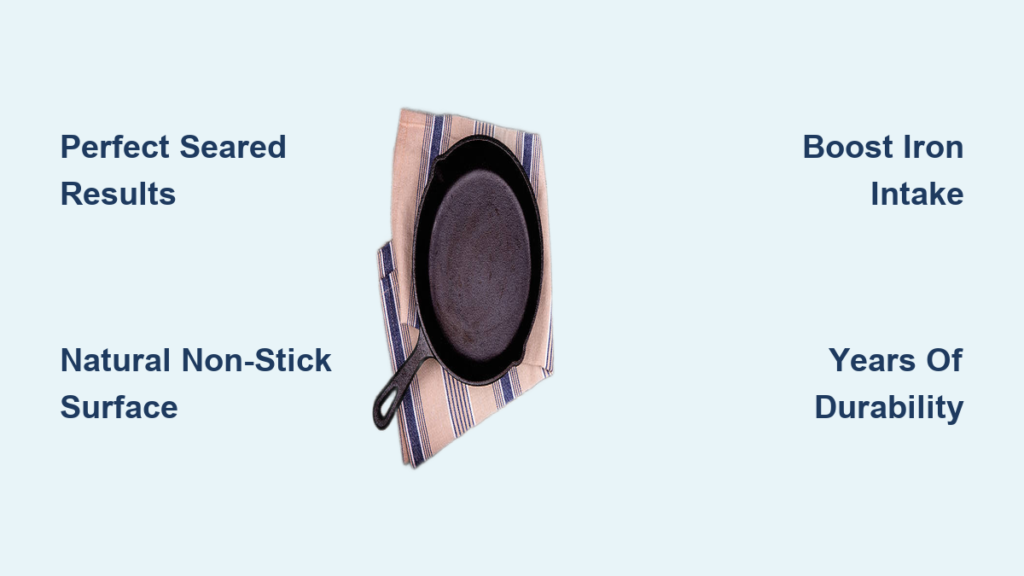
A well-seasoned cast iron pan provides a naturally non-stick surface that allows for easy flipping and clean-up. Test your seasoning by heating the dry pan, adding a small amount of oil, and seeing if it flows evenly across the surface. If it pools or beads up, your pan may need additional seasoning. A properly seasoned cast iron develops a dark, glossy patina that improves with use and creates the ideal cooking surface for achieving that restaurant-quality sear.
Perfect Searing Technique for Lamb Loin Chops
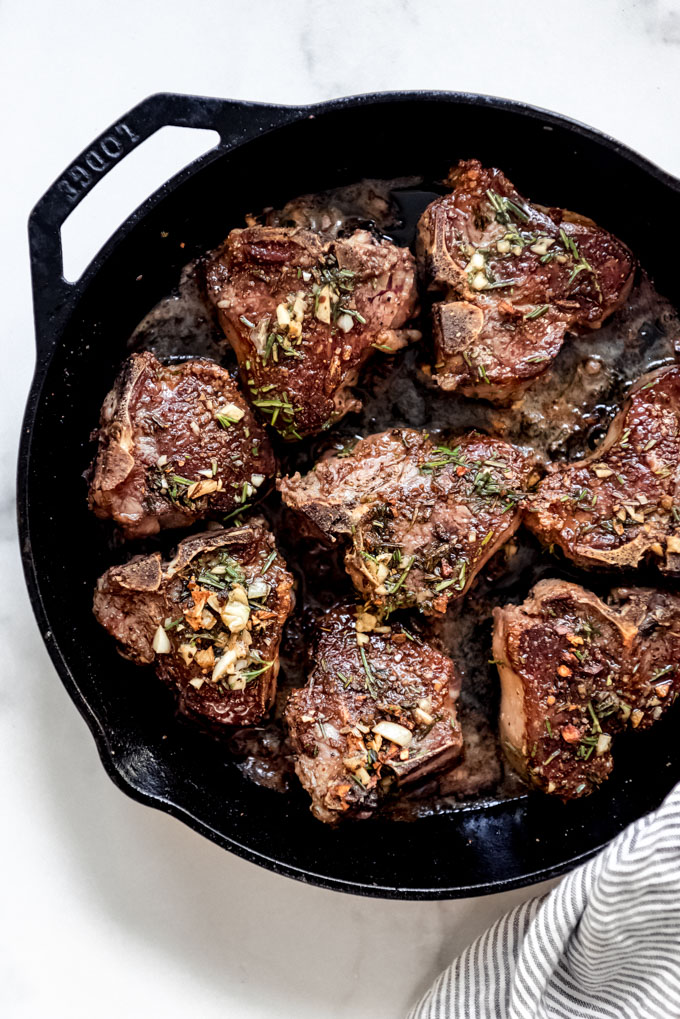
Place the lamb chops in the preheated cast iron pan using tongs—never pierce the meat with a fork, as this releases precious juices. Listen for the immediate sizzle that indicates proper heat transfer. Arrange the chops with space between each piece for steam to escape and heat to circulate. Overcrowding the pan lowers the temperature and causes the chops to steam rather than sear.
Timing your sear correctly depends on chop thickness and desired doneness. For 1-inch thick lamb loin chops, sear approximately 3-4 minutes per side for medium-rare. Add about a minute per side for each subsequent level of doneness—medium requires 4-5 minutes per side, while medium-well needs 5-6 minutes per side. Avoid flipping frequently; each side needs uninterrupted contact with the hot pan to develop proper browning.
Elevate your chops by basting with aromatics during the final minute of cooking on each side. Add a pat of butter along with smashed garlic cloves and fresh herb sprigs to the pan. Tilt the pan and spoon the melted butter continuously over the chops as they finish cooking. This butter basting adds richness and creates a glossy, flavorful sauce that pairs perfectly with the lamb.
Temperature Control and Resting Period

Using an instant-read thermometer takes the guesswork out of determining doneness. Insert the thermometer horizontally into the thickest part of the chop, avoiding bone, and read the temperature immediately. For lamb loin chops, the recommended serving temperature ranges from 125°F for medium-rare to 145°F for medium-well, though many prefer the traditional medium-rare temperature for optimal tenderness.
Remember that carryover cooking means your lamb chops will continue heating for 5-10 minutes after leaving the pan. This residual heat can raise internal temperature by 5-10 degrees, so plan accordingly. Remove your lamb loin chops at 120°F while still in the pan, as they will reach approximately 125°F-130°F during resting—the perfect temperature for medium-rare.
Resting lamb loin chops is as critical as the cooking itself. Transfer the cooked chops to a clean plate or cutting board and tent loosely with aluminum foil. Allow them to rest for at least 5-10 minutes, during which time the juices redistribute throughout the meat rather than pooling on your cutting board. Skipping this step results in a beautiful crust with dry, flavorless meat.
Common Cooking Mistakes to Avoid
Overcooking remains the most frequent error when preparing lamb loin chops. The difference between perfectly pink medium-rare and dry, gray medium-well is only a few minutes. Lamb loin chops are naturally tender cuts that require only brief cooking to achieve ideal doneness. When in doubt, remove the chops from heat earlier than you think necessary.
Failing to preheat the cast iron pan adequately leads to steaming rather than searing. A properly heated pan creates an immediate seal when the meat contacts the surface. Test your pan’s readiness by adding a drop of water—it should dance and evaporate instantly. If the water simply sits there or slowly evaporates, the pan needs more time.
Moving the chops too frequently during cooking disrupts the searing process. Each time you lift or flip the meat, you break the contact between the meat and the hot pan surface, delaying browning and potentially causing the meat to stick. Place the chops confidently and resist the urge to check them for at least 2-3 minutes per side.
Serving Suggestions and Wine Pairings
Lamb loin chops pair beautifully with complementary sauces and accompaniments. A classic mint sauce provides bright, refreshing contrast that cuts through the richness of the meat. Alternatively, create a pan sauce from the fond (browned bits) in your cast iron pan, deglazed with red wine or stock and finished with butter.
Roasted Mediterranean vegetables like tomatoes, zucchini, and bell peppers bring sweetness and acidity that balance the rich meat. Root vegetables such as potatoes, carrots, and parsnips offer earthy flavors and substantial texture. Consider serving your lamb chops over creamy polenta or alongside a simple risotto.
For wine pairings, full-bodied reds like Cabernet Sauvignon, Malbec, or Rhône blends complement the robust flavor of lamb beautifully. If you prefer white wine, an oaked Chardonnay or Viognier offers enough body to stand up to the rich meat. During warmer months, a dry rosé works wonderfully for a more casual dining experience.
Properly maintained cast iron cookware will serve you for generations, consistently delivering those perfect sears that transform simple lamb loin chops into extraordinary meals. With practice, you’ll develop an intuitive understanding of your equipment and techniques, allowing you to consistently produce restaurant-quality results in your own kitchen.