Nothing tests a cast iron owner’s patience like discovering crusted, burned-on food stubbornly clinging to your prized skillet after cooking. Whether you accidentally walked away from searing bacon or let a stew simmer too long, that hardened residue doesn’t mean your cast iron is ruined forever. With the right techniques, you can rescue even the most neglected pan while preserving its valuable seasoning. This guide reveals proven methods for removing crusted food from cast iron—from gentle daily maintenance to intensive restoration processes—so you can keep your cookware performing beautifully for generations.
Why Your Cast Iron Is Holding Onto Burned Food
When food bonds to your cast iron, it’s not just stubborn—it’s chemistry in action. Properly seasoned cast iron develops a polymerized oil layer that creates natural non-stick properties, but when this protective barrier wears thin or never fully develops, food directly contacts the reactive iron surface. High-heat cooking accelerates this bonding process, especially with protein-rich foods and sugary ingredients that undergo Maillard reactions and eventually carbonize into stubborn deposits. The longer burned food sits on your pan, the more firmly it fuses to the surface through both mechanical interlocking in the cast iron’s microscopic texture and chemical reactions. Understanding this bonding process helps you choose the right cleaning approach and prevents future buildup.
What Makes Certain Residues Impossible to Rinse Off?
Carbonized sugars create some of the most challenging residues you’ll encounter in cast iron. When caramelized sugars exceed their smoke point, they transform into a hard, tar-like substance that bonds aggressively to the metal surface. Similarly, proteins undergo complex chemical changes at high temperatures, creating cross-linked compounds that resist simple cleaning methods. These reactions intensify when food remains in the pan after cooking ceases, allowing time for deeper bonding to occur. The good news? Each type of residue responds to specific cleaning techniques, so identifying what you’re dealing with determines your most effective approach.
How Seasoning Condition Affects Food Adhesion
Your pan’s seasoning quality directly impacts how easily food releases after cooking. Well-maintained seasoning forms a smooth, hydrophobic surface that prevents food molecules from bonding directly to the iron. When seasoning deteriorates—often from exposure to acidic foods, improper cleaning, or simple wear—you’ll notice increased food adhesion. Areas with patchy seasoning become hotspots for stubborn buildup, as exposed iron readily bonds with cooking residues. Regular seasoning maintenance prevents these problem areas from developing, making cleanup after each use significantly easier and reducing the need for intensive restoration later.
Immediate Action Steps for Fresh Food Buildup
When you notice food starting to burn or stick during cooking, immediate intervention prevents minor issues from becoming major restoration projects. Keep a spray bottle of water nearby when cooking at high temperatures—just a few spritzes can loosen developing crust without dramatically changing cooking temperature. For stuck-on bits during cooking, use a stiff spatula to gently dislodge food particles while liquid remains in the pan. The key is acting before the food fully carbonizes and bonds to the surface.
The 10-Minute Cleaning Window That Saves Hours of Work
The single most effective strategy for preventing crusted food is cleaning your cast iron within 10 minutes of finishing cooking, while the pan is still warm but not scalding hot. During this window, residual heat helps loosen food particles without requiring aggressive scrubbing. Simply add warm water to the warm pan and use a stiff brush to remove any remaining food. This quick routine preserves more of your seasoning than waiting until the pan cools completely, when food has time to fully bond to the surface. Make this immediate cleaning part of your standard cast iron care to avoid most serious crusting issues.
Salt Scrub Technique for Daily Maintenance
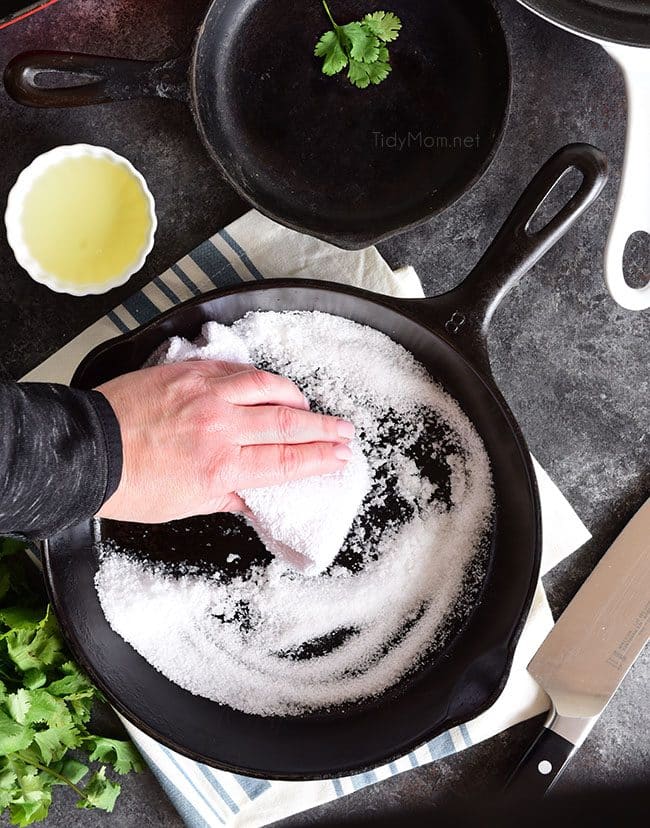
For everyday residue that hasn’t fully hardened, the salt scrub method preserves your seasoning while effectively removing stuck-on food. Fill your warm (not hot) pan with coarse kosher salt—about a quarter-inch layer across the cooking surface. Add just enough warm water to create a slurry, then use a stiff brush or non-metal scrub pad to work the salt into the affected areas. The salt crystals act as gentle abrasives that lift food particles without damaging the seasoning layer, while absorbing oils and greases. Apply firm, circular motions for two to three minutes, adding small amounts of water as needed to maintain the paste-like consistency.
When to Use the Overnight Salt Soak Method
For slightly more stubborn residue that resists immediate scrubbing, try the overnight salt soak. Cover the affected areas with a thick layer of coarse salt and add just enough water to saturate it without creating a pool. Allow the pan to sit undisturbed for 8-12 hours, giving the salt time to penetrate and break down the bonded food. The next day, scrub as usual with your stiff brush—the prolonged contact time significantly weakens even moderately crusted food. This method requires minimal effort while delivering impressive results, making it ideal for busy home cooks who can’t address buildup immediately.
Chain Mail Scrubber for Stubborn Residue
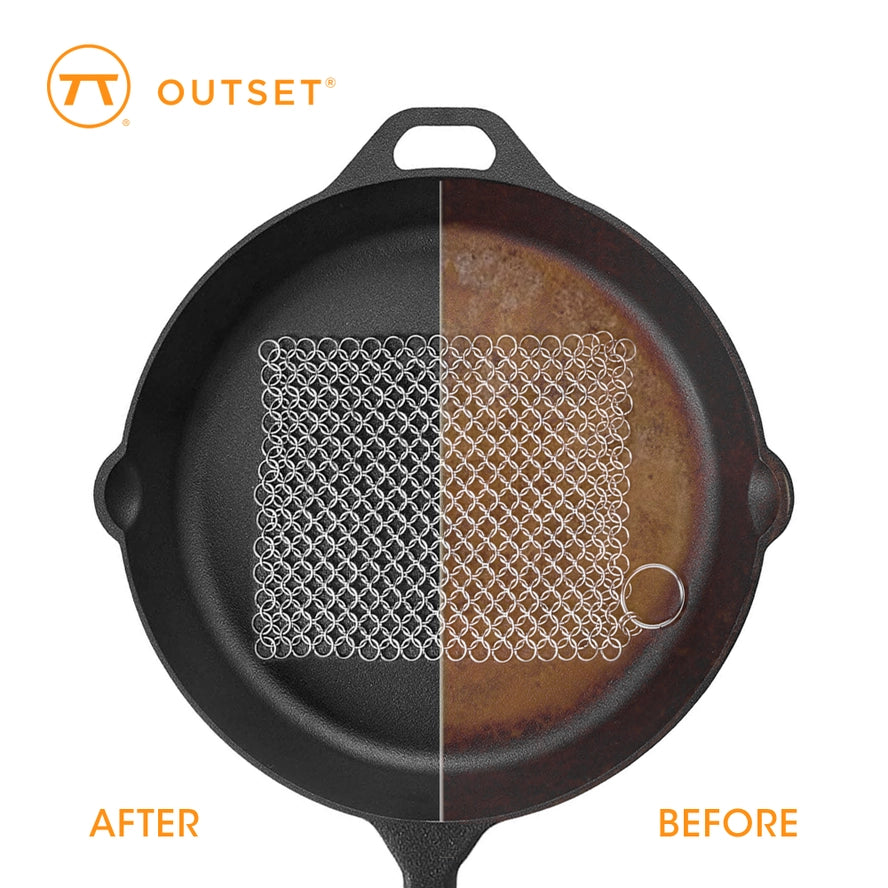
When gentle methods fail, a chain mail scrubber becomes your most effective tool for removing crusted food without damaging your pan’s seasoning. These stainless steel mesh scrubbers conform perfectly to your pan’s contours while providing aggressive cleaning power. Simply wet both the scrubber and your pan, then work in firm circular motions across the affected areas. The interlocking rings effectively scrape away carbonized residue that would take forever to remove with conventional scrubbers, yet remain gentle enough for regular use on well-seasoned cast iron.
Proper Technique for Maximum Effectiveness
The key to using a chain mail scrubber successfully lies in maintaining consistent pressure while working systematically across the surface. Start with the most heavily crusted areas, applying firmer pressure where needed, then move outward to ensure complete coverage. Rinse frequently to remove liberated food particles that would otherwise interfere with the scrubbing action. For particularly stubborn spots, alternate between scrubbing and brief soaking periods to give water time to penetrate between the food layer and pan surface. Most users find that chain mail scrubbers remove 90% of problematic buildup with minimal effort, making them worth the small investment for any cast iron owner.
Deep Restoration for Severely Crusted Pans
When food residue has hardened into a nearly impenetrable layer, more intensive methods become necessary. The oven self-cleaning cycle provides a chemical-free solution by reaching temperatures around 900°F that incinerate organic residue. Place your cast iron pan in a cold oven, close the door, and initiate the self-cleaning cycle. After the two to four hour process completes and everything has cooled completely, the burned food turns to ash that wipes away easily. This method effectively strips both food residue and old seasoning, requiring complete re-seasoning afterward but handling buildup that would take hours to remove manually.
Reseasoning Your Pan After Deep Cleaning
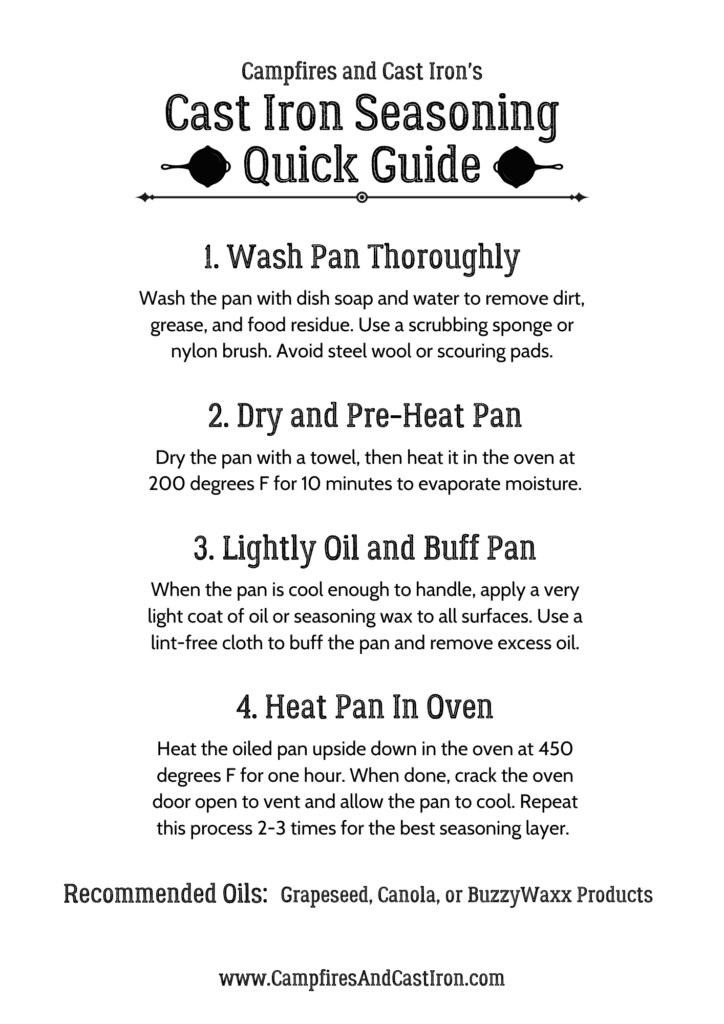
After any intensive cleaning process that strips your seasoning, proper re-seasoning becomes essential before returning your pan to regular use. Thoroughly clean and dry the bare metal surface, then apply an extremely thin layer of high-smoke-point oil like flaxseed, grapeseed, or vegetable oil. Wipe away all excess until no visible residue remains—thick layers create sticky, uneven seasoning. Place the oiled pan upside down in a 450-500°F oven for one hour, with a baking sheet below to catch drips. Allow to cool completely in the oven, then repeat the oiling and baking process two to three times for optimal results. This builds multiple thin polymerized layers that provide superior non-stick performance and protection against future crusting.
Preventing Future Buildup Through Smart Habits
The most effective cast iron care strategy involves preventing crusted food before it happens. Clean your pan promptly after each use—never let food dry completely on the surface. Regular seasoning maintenance through proper cooking techniques and occasional oil applications keeps the protective layer robust and non-stick. Avoid cooking highly acidic foods like tomato sauce for extended periods in well-seasoned cast iron, as acids break down the seasoning and create spots where food bonds more readily. Store your cast iron in a dry location with adequate air circulation to prevent moisture accumulation that promotes both rust and seasoning degradation.
Essential Tools for Ongoing Cast Iron Care
Maintain a dedicated cleaning kit for your cast iron to ensure you’re always prepared to handle food buildup. Keep a quality chain mail scrubber as your primary cleaning tool, along with several stiff-bristled brushes designated specifically for cast iron. Stock coarse kosher salt for regular salt scrubs, and maintain a selection of appropriate oils for seasoning maintenance. Designate specific towels or paper towels for drying cast iron immediately after cleaning to prevent rust formation. Having these materials readily available transforms cast iron maintenance from a dreaded chore into a quick, manageable task that preserves your cookware’s performance for generations.
Restoring crusted food from cast iron requires patience and the right techniques, but virtually any buildup can be conquered with the methods outlined here. Start with the gentlest approach that might work and progress to more intensive methods only as needed—preserving as much seasoning as possible saves re-seasoning time later. Remember that immediate cleaning after cooking prevents most serious crusting issues, making regular cast iron care far easier than intensive restoration. With these proven techniques in your arsenal, you’ll keep your cast iron cookware performing beautifully for years to come, enjoying the exceptional cooking results that only well-maintained cast iron provides.