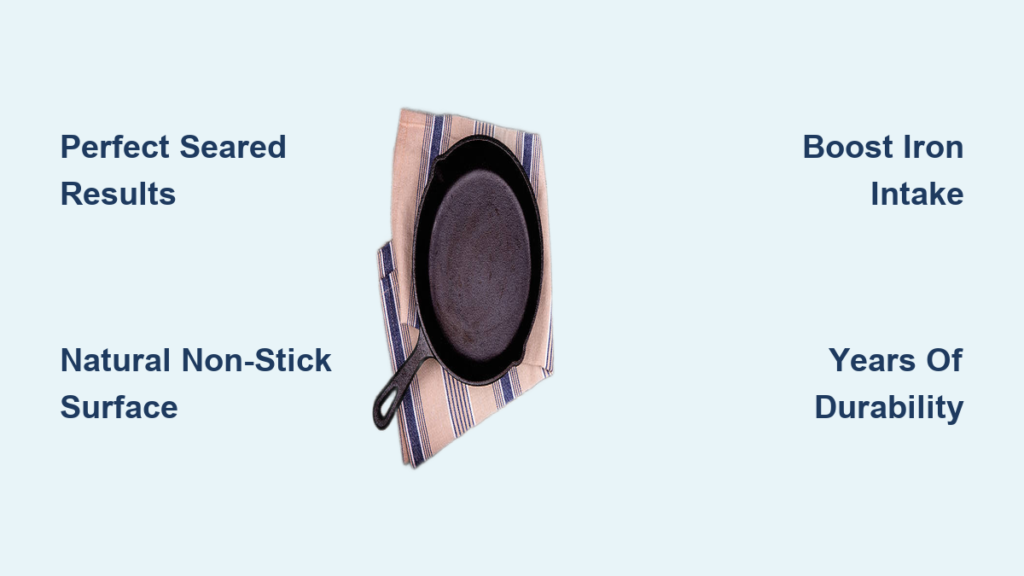

That rusty heirloom skillet you found at a garage sale or the family pan left neglected in the back of your cabinet doesn’t have to be destined for the trash. Sanding down a cast iron skillet properly can rescue even the most damaged cookware, eliminating deep rust, pitting, and stubborn carbon buildup that regular cleaning can’t fix. Whether you’re restoring a vintage Griswold or reviving your favorite cooking surface, this process creates a pristine foundation for new seasoning that performs like factory-fresh cast iron.
Cast iron’s legendary durability comes from its iron-carbon composition, but this same material develops surface issues over time that compromise cooking performance. When light maintenance fails to address severe rust, deep pitting from acidic foods, or uneven seasoning that causes food to stick, mechanical sanding becomes necessary. Unlike chemical stripping that only removes surface layers, proper sanding physically removes damaged metal to create a uniform cooking surface ready for professional-quality seasoning.
Don’t rush into sanding without understanding the process—aggressive techniques can damage your skillet’s structural integrity or create surfaces too smooth for proper seasoning adhesion. This guide walks you through every critical step with specific grit recommendations, safety precautions, and seasoning techniques to transform your damaged cast iron into a reliable cooking tool that will serve you for decades.
Why Your Cast Iron Skillet Needs Sanding
Eliminate Deep Rust That Steel Wool Can’t Fix
Light surface rust responds well to steel wool and vinegar treatments, but severe rust that has created pitting or uneven texture requires physical material removal. When rust penetrates beyond the surface layer, it creates microscopic valleys that trap moisture and accelerate further corrosion. Sanding down to bare metal removes these compromised areas completely rather than just treating symptoms. Skillets with rust that feels rough to the touch or shows orange discoloration deeper than the surface need aggressive treatment starting with 80-120 grit sandpaper.
Repair Pitting From Acidic Foods and Improper Storage
Pitting occurs when acidic foods like tomatoes or vinegar-based sauces react with the cast iron surface, creating small depressions that harbor bacteria and cause uneven cooking. Similarly, storing cast iron while damp in humid conditions creates surface damage that prevents proper seasoning adhesion. These tiny craters trap food particles and create hot spots during cooking that burn food in some areas while undercooking in others. If your fingers detect uneven texture across the cooking surface, sanding becomes necessary to create the uniform foundation required for reliable non-stick performance.
Remove Stubborn Carbon Buildup and Patchy Seasoning
Excessive carbon buildup from thick oil applications during seasoning creates a sticky, flaky surface that imparts off-flavors to food and resists normal cleaning. This “seasoning carbon” forms when oil polymerizes unevenly, creating a surface that appears dark and mottled. Similarly, patchy seasoning with areas of thick buildup alongside thin spots creates inconsistent cooking performance. Sanding provides the only effective solution for these issues, creating a clean slate from which to build professional-quality seasoning layer by layer.
Essential Sanding Tools and Materials Checklist
Right Sandpaper Grits for Each Restoration Stage
Coarse grits (80-120): Remove severe rust and deep pitting quickly but use sparingly to avoid excessive material removal.
Medium grits (150-220): Eliminate coarse scratches and refine surface texture—this stage requires the most time.
Fine grits (320-400): Create ideal surface for seasoning adhesion; most restorers stop here.
Ultra-fine grits (600+): Optional for mirror finishes but generally not recommended for cooking surfaces.
Choose silicon carbide wet-dry sandpaper for superior performance when used with water, which reduces dust and produces smoother results. Aluminum oxide provides a more economical alternative that still delivers excellent results for cast iron restoration.
Power Tools That Save Hours of Hand Sanding
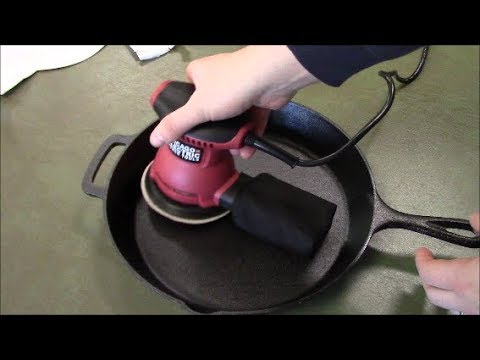
Random-orbit sanders: Best for cast iron restoration with dual-action motion that prevents visible scratch patterns.
Belt sanders: Effective for initial material removal on heavily damaged skillets but require constant movement.
Angle grinders with sanding discs: Offer precision for specific problem areas but demand careful handling.
Always pair power tools with a sanding block or firm backing pad to maintain even pressure across the curved cooking surface. Never use aggressive tools on thin or vintage skillets without experience—hand sanding provides better control for delicate restoration projects.
Critical Safety Equipment You Must Wear
NIOSH-approved respirator: Essential protection against metal dust inhalation (N95 minimum, P100 recommended).
Safety goggles: Prevent eye injuries from flying metal particles during power sanding.
Nitrile gloves: Protect hands from abrasive action and chemical residues.
Well-ventilated workspace: Reduce dust concentration with open windows or exhaust fans.
Wet sanding dramatically reduces airborne particles—keep the surface damp with a spray bottle while working. Never skip respiratory protection; inhaling cast iron dust causes respiratory irritation and potential long-term health effects.
Step-by-Step Sanding Process for Perfect Results
Start with Proper Surface Assessment and Cleaning
Before sanding, wash your skillet with hot, soapy water to remove surface grime and reveal the true metal condition. Dry completely with low heat on your stove to eliminate moisture that causes flash rust during sanding. Examine the cooking surface carefully—run your fingers across it (gently!) to identify problem areas requiring attention. Check for cracks, warping, or thin spots that might compromise structural integrity after restoration.
Execute Coarse Sanding With Correct Technique
Begin with 80-120 grit sandpaper wrapped around a sanding block, applying even pressure while moving in overlapping strokes across the entire cooking surface. Work methodically from edge to edge, then perpendicular to your original direction to ensure complete coverage. Critical warning: Never apply excessive pressure—let the sandpaper do the work to avoid creating deep scratches or removing too much material. Check progress frequently by wiping away dust; the goal is uniform removal of all rust and pitting, not complete smoothing.
Progress Through Grits Systematically
After achieving uniform coverage with coarse grit, switch to 150-180 grit to remove deep scratches from the previous stage. Continue the same overlapping pattern, working perpendicular to your previous direction. Each grit must completely eliminate the scratch pattern from the previous stage before progressing—this requires patience but prevents frustrating backtracking. Move to 320-400 grit for the final smoothing stage, which creates the ideal microscopic texture for seasoning adhesion. Pro tip: Hold the skillet at an angle to light to reveal remaining scratches that might be invisible under normal viewing.
Critical Post-Sanding Cleaning Steps
:max_bytes(150000):strip_icc()/Can_You_Really_Use_Soap_On_Cast_Iron_035-1-2000-b16f0215240742929f2ecdc3e71a1611.jpg)
Remove All Abrasive Residue Thoroughly
Wash the sanded skillet with hot, soapy water and a non-abrasive sponge, scrubbing all surfaces vigorously. This step cannot be rushed—any remaining metal dust will interfere with seasoning adhesion. For complete cleaning, soak in a 4:1 water-to-vinegar solution for 30-60 minutes, then scrub again. Rinse thoroughly until water runs clear, then check for grit by running a clean finger across the surface—it should feel perfectly smooth with no scratchy sensation.
Prevent Flash Rust With Proper Drying Technique
Dry immediately with lint-free towels, then place on a stove burner set to low heat for 10-15 minutes. The skillet must become hot enough to evaporate all moisture from its porous structure—test by placing a drop of water on the surface; it should sizzle and evaporate instantly. Critical mistake to avoid: Skipping this step causes immediate flash rust that requires restarting the entire process. Apply a thin layer of oil while the skillet is still warm as temporary protection until seasoning.
Season Your Sanded Skillet for Professional Results
Choose the Right Oil and Apply Correctly
Select high-smoke point oils like grapeseed, avocado, or vegetable shortening for reliable seasoning. Never apply thick oil layers—pour a small amount onto the cooking surface, then use a clean cloth to spread until no visible oil remains. The layer should be so thin it appears invisible. Apply the same thin coat to all exterior surfaces, including handle and bottom.
Bake for Perfect Polymerization
Preheat oven to 400-450°F and place the oiled skillet upside down on the middle rack with aluminum foil on the lower rack to catch drips. Bake for 1-2 hours, then turn off the oven and let the skillet cool completely inside. Repeat this process 3-5 times for the most durable seasoning. Critical tip: Oven temperatures often vary—use an independent oven thermometer to verify actual temperature, as incorrect heat causes sticky or uneven seasoning.
Maintain Your Restored Cast Iron Properly
Clean your sanded skillet while still warm (not hot) using hot water and a stiff brush—never cold water on hot metal. Dry immediately and apply a thin oil layer while the skillet remains warm. Store in a dry location with good air circulation; hanging is ideal. Reseason when food begins sticking or rust spots appear, typically addressing minor wear with light 320-400 grit sanding followed by oiling and baking.
Avoid these common restoration mistakes: over-sanding that thins the cooking surface, creating excessively smooth finishes that repel seasoning, inadequate cleaning that leaves abrasive residues, and rushing through grit progression. With proper technique, your sanded cast iron skillet will deliver decades of reliable cooking performance, transforming damaged cookware into a cherished kitchen tool that improves with every use.