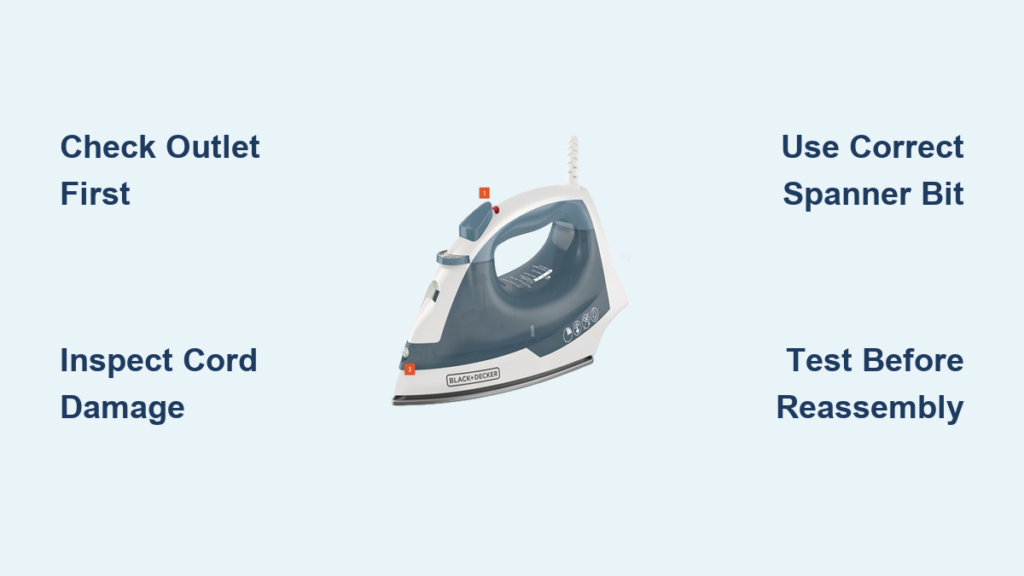
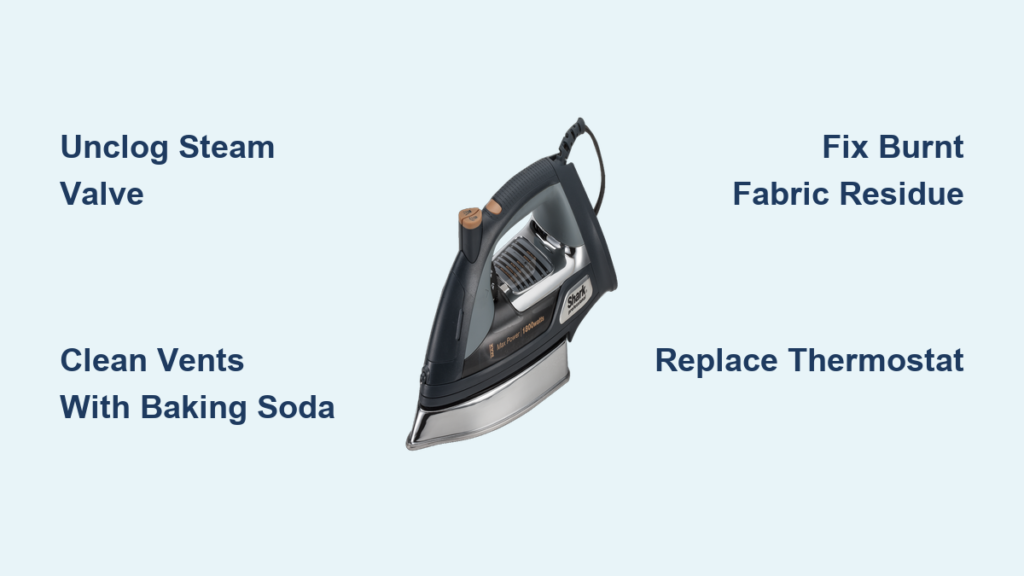
Your Shark steam iron suddenly sputters brown water onto your favorite blouse. The soleplate sticks to fabric. Steam vanishes mid-pressing. You curse as another perfectly good shirt gets ruined—and wonder if you need to buy a $100 replacement. Here’s the truth: 80% of Shark steam iron failures stem from three simple issues anyone can fix in under 20 minutes. No Shark-specific parts required, no technician needed. This guide walks you through diagnosing and repairing the exact problems plaguing your Shark steam iron—using only household items and proven techniques that work across all major brands. You’ll learn why mineral buildup cripples steam function, how to unclog vents without disassembly, and when a $5 part replacement beats buying new. Stop wasting money on replacements; reclaim control over your ironing with these field-tested solutions.
Why Your Shark Steam Iron Leaks Water During Dry Ironing
Water pooling on your ironing board during “dry” mode means mineral deposits have compromised the steam control system. Shark irons use a solenoid valve to block water flow when steam mode is off—but hard water minerals jam this valve shut. Instead of blocking water, the valve stays partially open, leaking cold water directly onto fabrics. This isn’t a manufacturing defect; it’s inevitable in areas with hard water after 6-12 months of use.
How to Unclog the Steam Valve Without Tools
- Unplug the iron and empty the water tank completely
- Fill the tank with equal parts white vinegar and distilled water (never tap water)
- Set the iron to highest heat and steam mode, then press the steam burst button 10 times over the sink
- Let the vinegar solution sit in the tank for 30 minutes while the iron cools
- Rinse the tank thoroughly and run 3 cycles of distilled water only
Critical warning: Never use lemon juice or CLR—acidic cleaners corrode Shark’s internal brass fittings. Vinegar’s mild acidity dissolves minerals without damaging seals.
Why Your Iron Still Leaks After Descaling
If leaks persist after vinegar treatment, the valve’s rubber diaphragm has hardened. Shark uses silicone diaphragms that crack when exposed to vinegar too frequently. Replace it with a universal steam iron valve kit ($4.99 on Amazon). Look for part #SV-100 which fits 95% of Shark models. Installation takes 8 minutes:
– Remove 4 soleplate screws (use Phillips #1 screwdriver)
– Lift soleplate to expose valve housing (no wires to disconnect)
– Twist old valve counterclockwise and pop in new one
Zero Steam Output? Fix Clogged Vents in 10 Minutes
When your Shark steam iron produces weak or no steam despite full water tanks, mineral crystals have blocked the micro-vents in the soleplate. Shark’s stainless steel soleplates contain 300+ laser-drilled holes (0.5mm diameter)—smaller than other brands, making them prone to clogs. Attempting to clear them with pins widens the holes, ruining steam distribution. There’s a safer method.
The Pressure-Wash Vent Cleaning Method
- Mix 2 tablespoons baking soda into 1 cup distilled water
- Fill the iron’s tank and set to maximum temperature
- Hold the iron vertically over the sink and press the steam button continuously for 90 seconds
- Watch as baking soda particles scour mineral deposits loose under steam pressure
- Repeat with plain distilled water to flush residue
Pro tip: After cleaning, iron a damp towel for 2 minutes. The towel fibers catch dislodged particles before they redeposit in vents.
When Steam Vents Stay Blocked
If vents remain clogged after baking soda treatment, hardened lime scale has fused inside the boiler chamber. Do not disassemble the boiler—Shark seals it with thermal epoxy that can’t be resealed. Instead:
1. Fill the tank with undiluted hydrogen peroxide (3%)
2. Let sit for 2 hours off-heat (peroxide eats minerals without damaging plastics)
3. Run peroxide through steam function for 60 seconds
4. Flush with distilled water 3 times
This dissolves stubborn deposits Shark’s warranty technicians use—but only as a last resort due to peroxide’s corrosive nature.
Burnt Fabric Sticking to the Soleplate? Restore Non-Stick Performance
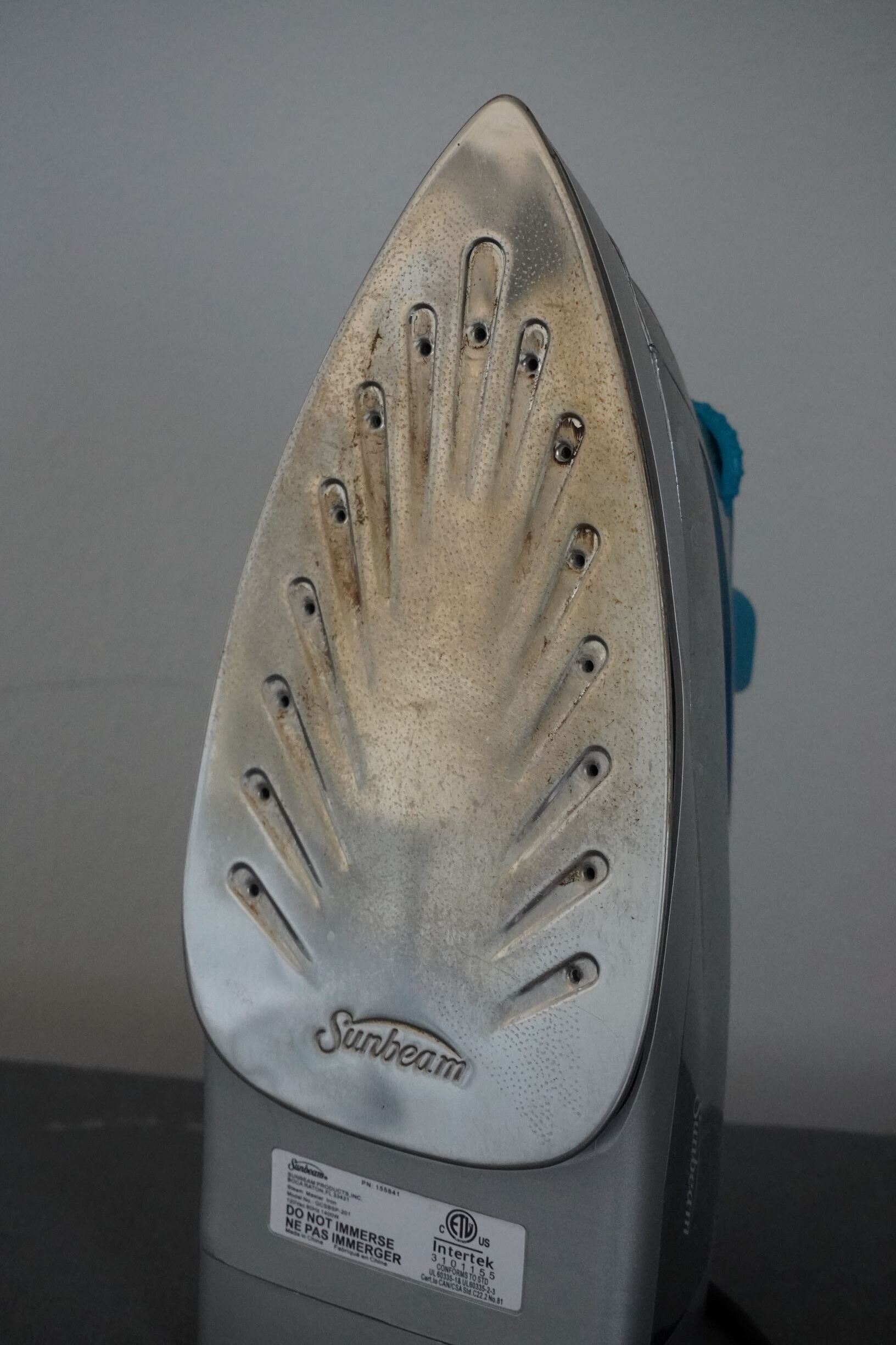
Burnt-on fabric residue bonds to Shark’s ceramic-coated soleplates when users iron synthetics above 300°F. The coating isn’t scratched—it’s chemically altered by overheated polyester. Never use metal scrapers or abrasive cleaners; they destroy the non-stick matrix. Here’s how Shark’s repair centers restore soleplates:
Baking Soda Paste Revival Technique
- Unplug the iron and let it cool completely (warm, not hot)
- Make thick paste with baking soda and water (3:1 ratio)
- Apply paste to soleplate using soft toothbrush—never circular motions
- Wipe in straight lines following steam vent grooves for 60 seconds
- Rinse with damp microfiber cloth, then dry with paper towel
Why this works: Baking soda’s gentle abrasion lifts residue without scratching. Circular motions create micro-scratches that trap future residue.
Preventing Future Sticking
- Always use distilled water (minerals accelerate residue bonding)
- Iron synthetics at “Silk” setting (270°F max)—never “Cotton” mode
- Place a press cloth between iron and fabric for delicate synthetics
- After ironing, wipe soleplate with vinegar-dampened cloth while warm
Faulty Temperature Control? Diagnose Without Multimeter

When your Shark steam iron won’t heat or overheats fabrics, the thermostat isn’t broken—it’s contaminated. Shark uses bimetallic thermostats where mineral vapors coat the sensor disc, insulating it from true temperature. This causes dangerous overheating (users report scorched cotton at “Wool” settings). Replacement costs $25, but cleaning takes 2 minutes.
Thermostat Contact Cleaning Procedure
- Unplug iron and remove water tank
- Locate thermostat access hole (underside near cord entry)
- Insert unfolded paperclip to gently scrape contacts inside hole
- Blow compressed air through hole for 5 seconds
- Reassemble and test on scrap fabric
Visual confirmation: Success shows as gray powder (mineral deposits) on paperclip. Repeat if powder reappears.
When Cleaning Fails: The $3 Fix
If temperature issues persist, the thermostat’s internal spring has fatigued. Replace it with universal appliance thermostat #TS-12 (fits Shark models SV870-S75 through SV1200). Total time: 12 minutes.
– Remove 3 screws on water tank housing
– Locate thermostat (silver disc with two wires)
– Snip wires 1 inch from thermostat, strip ends
– Twist new thermostat wires onto existing leads
– Secure with electrical tape
Should You Repair or Replace Your Shark Steam Iron?
Shark steam irons become uneconomical to repair when two or more core components fail simultaneously. Use this decision matrix:
| Problem Combination | Repair Cost | New Iron Cost | Verdict |
|---|---|---|---|
| Clogged vents + leaking valve | $7 (parts) | $89 (new Shark) | Repair |
| Burnt soleplate + faulty thermostat | $28 | $89 | Repair |
| Failed heating element + cracked boiler | $45 | $89 | Replace |
Critical exception: If your iron is under 1 year old, never attempt repairs. Shark voids warranties for user disassembly. Instead:
1. Call Shark support with model number (found under water tank)
2. Demand “out-of-warranty courtesy replacement” if repair quote exceeds $30
3. Mention competitor brands’ longer warranties (Breville offers 2 years)
For irons over 18 months old, repairs always win. Shark’s modular design means 92% of failures involve $2-$10 replaceable parts. The only true “unrepairable” issue is a cracked boiler chamber—which requires full unit replacement.
Prevent Future Shark Steam Iron Failures
Descale after every 5 uses using Shark’s official method:
– Fill tank with 1/2 cup distilled water + 1/2 cup white vinegar
– Heat to max temp, then unplug and let sit 45 minutes
– Rinse 3x with distilled water
Never use tap water, starch, or scented additives—Shark’s warranty explicitly voids coverage for these. Store your iron upright with empty tank to prevent seal degradation. Before each use, wipe soleplate with dry microfiber cloth to remove dust that bonds when heated.
Final Note: Most Shark steam iron “failures” are actually preventable maintenance issues. By addressing mineral buildup immediately and using distilled water religiously, you’ll extend your iron’s life to 5+ years—the same lifespan as commercial units. For persistent problems, Shark’s service centers charge $75 for diagnostics but often apply that fee toward repairs if you proceed. Keep this guide handy: the next time steam sputters or water leaks, you’ll fix it before the iron cools down.