Nothing beats the sizzle of a thick T-bone steak hitting a scorching cast iron pan—the aroma that fills your kitchen, the deep brown crust that forms in minutes, and the satisfaction of creating restaurant-quality steak at home. The cast iron pan’s unmatched heat retention creates the ideal environment for developing that signature crust while keeping the interior tender and juicy. Whether you’re cooking for a special occasion or treating yourself to a quality meal, mastering the art of cooking T-bone steak in cast iron pan delivers consistently impressive results that elevate your culinary skills.
This guide walks you through every step of the process, from selecting the right cut to achieving perfect doneness. You’ll learn why cast iron outperforms other cookware, how to prep your steak for maximum flavor, and the precise techniques that separate good steaks from extraordinary ones—all without complicated equipment or professional training.
Why Cast Iron Creates the Best Steak Crust
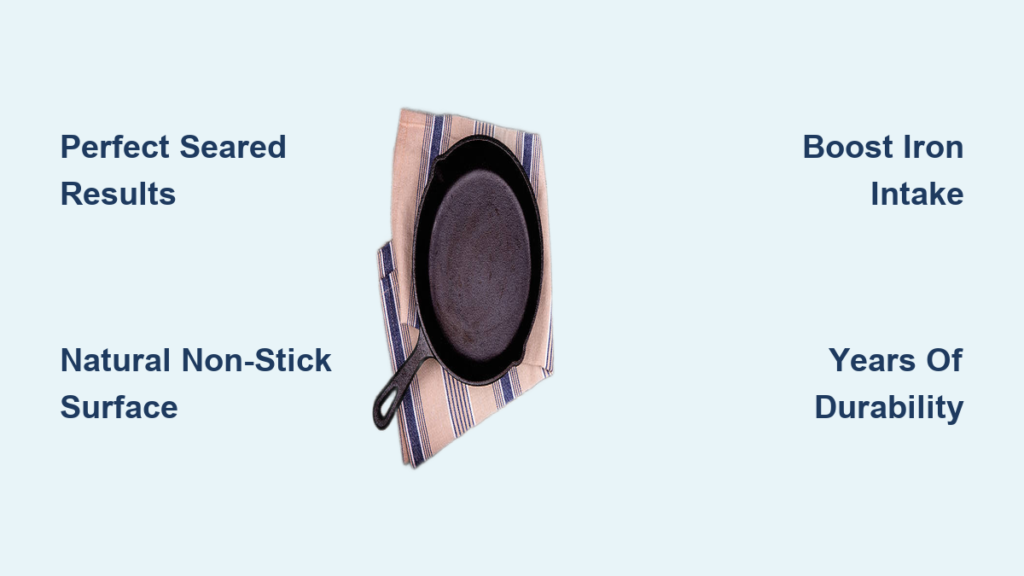
Cast iron’s thermal properties make it the undisputed champion for searing T-bone steak. Unlike stainless steel or non-stick pans, cast iron maintains consistent temperature across its surface even when you add a cold steak. This sustained heat is crucial for triggering the Maillard reaction—the chemical process that creates the flavorful brown crust on properly seared meat.
When you place your T-bone in a properly heated cast iron pan, the immediate and sustained contact creates rapid browning that develops complex flavors other cookware simply can’t match. Cast iron absorbs and holds heat like a thermal battery, resisting temperature drops when cold meat hits the surface. This stability ensures a consistent sear from edge to edge without hot spots or cooling that would prevent proper crust formation.
Additionally, properly seasoned cast iron develops a natural non-stick surface over time that improves with use. This patina not only makes cleanup easier but also contributes to crust formation by providing the ideal cooking surface. The result? That deep, caramelized sear characteristic of high-end steakhouses—all achievable right in your home kitchen.
How to Test Your Pan’s Temperature
Skip the guesswork by confirming your cast iron pan has reached optimal searing temperature. Preheat over medium-high to high heat for 5-10 minutes until the pan begins to emit slight wisps of smoke. Perform the water droplet test—flick a few drops onto the surface; they should dance and evaporate instantly. If water beads up and rolls around, your pan needs more time. When properly heated, add high-smoke point oil like avocado or grapeseed until it shimmers and flows easily across the surface.
Selecting the Ideal T-Bone for Cast Iron Cooking
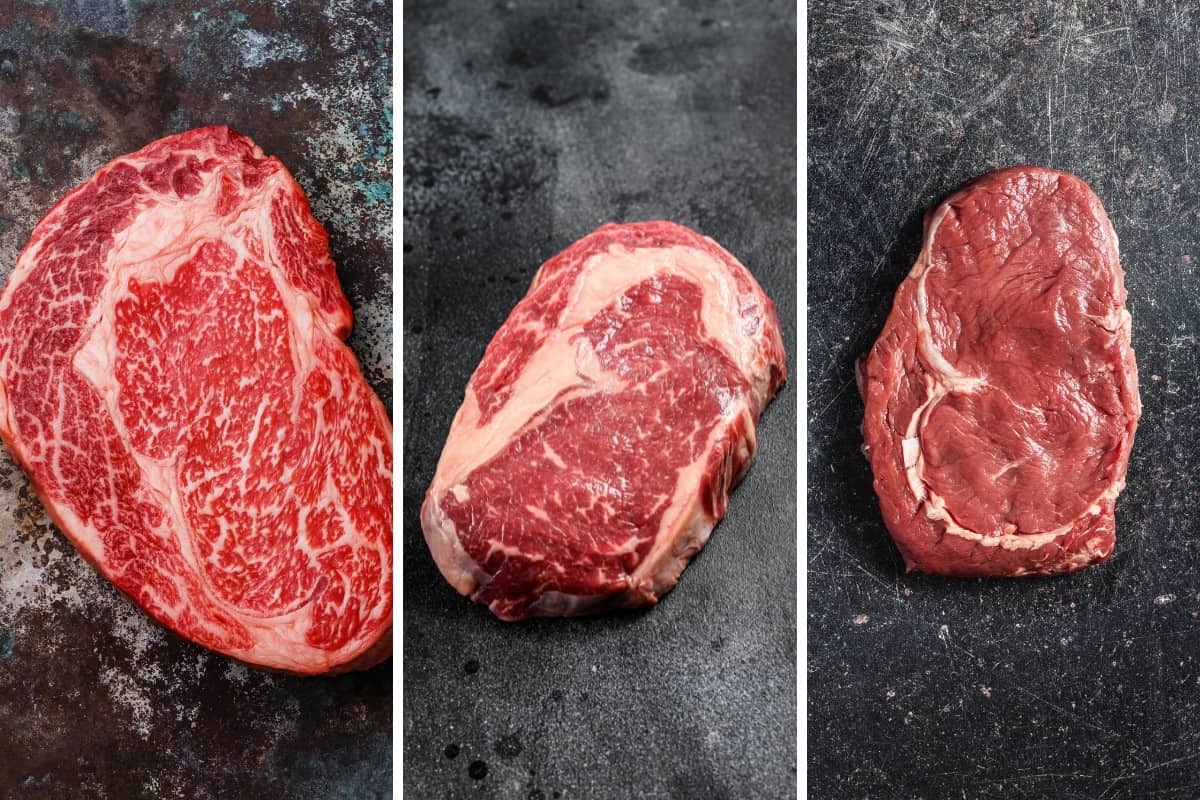
The quality of your finished steak begins at the butcher counter. A true T-bone steak comes from the short loin section and features the distinctive T-shaped bone with meat on both sides—the strip steak portion on one side and the tenderloin on the other.
When selecting your T-bone, prioritize good marbling—the white flecks of fat distributed throughout the meat. Marbling indicates flavor and juiciness potential. Prime-grade offers the most marbling for optimal results, while Choice-grade provides good quality at a lower price point. Avoid Select-grade for this cooking method as it typically lacks sufficient marbling.
Look for bright cherry-red meat color indicating freshness—avoid brown or grayish tones. The fat should be white or cream-colored rather than yellowed. Most importantly, select steaks that are at least 1.25 to 1.5 inches thick. Thinner cuts cook too quickly and become overcooked before developing a proper crust, while thicker steaks allow for better crust development while keeping the interior at your desired doneness.
Essential Prep Steps Before Cooking
Proper preparation transforms a good steak into an exceptional one. Remove your T-bone steak from the refrigerator 30-45 minutes before cooking to bring it to room temperature. This critical step promotes even cooking throughout—cold steak creates a temperature gradient where the center remains cold while the outside overcooks.
While your steak rests, pat it completely dry with paper towels, applying gentle pressure to remove all surface moisture. This non-negotiable step prevents steaming and enables proper browning—moisture on the surface inhibits crust formation. Season both sides liberally with kosher salt and freshly ground black pepper, pressing gently to help the seasoning adhere. The robust flavor of T-bone steak stands up to bold seasoning, so don’t be shy with your salt.
Why Room Temperature Matters
Cold steak placed directly into a hot pan creates significant temperature disparity between the exterior and interior. As the outside rapidly sears, the inside remains cold, making it nearly impossible to achieve uniform doneness. By bringing your steak to room temperature first, you create conditions for even cooking from edge to center, resulting in a perfectly cooked steak rather than one with an overcooked exterior and raw interior.
Perfect Cooking Technique for T-Bone Steak
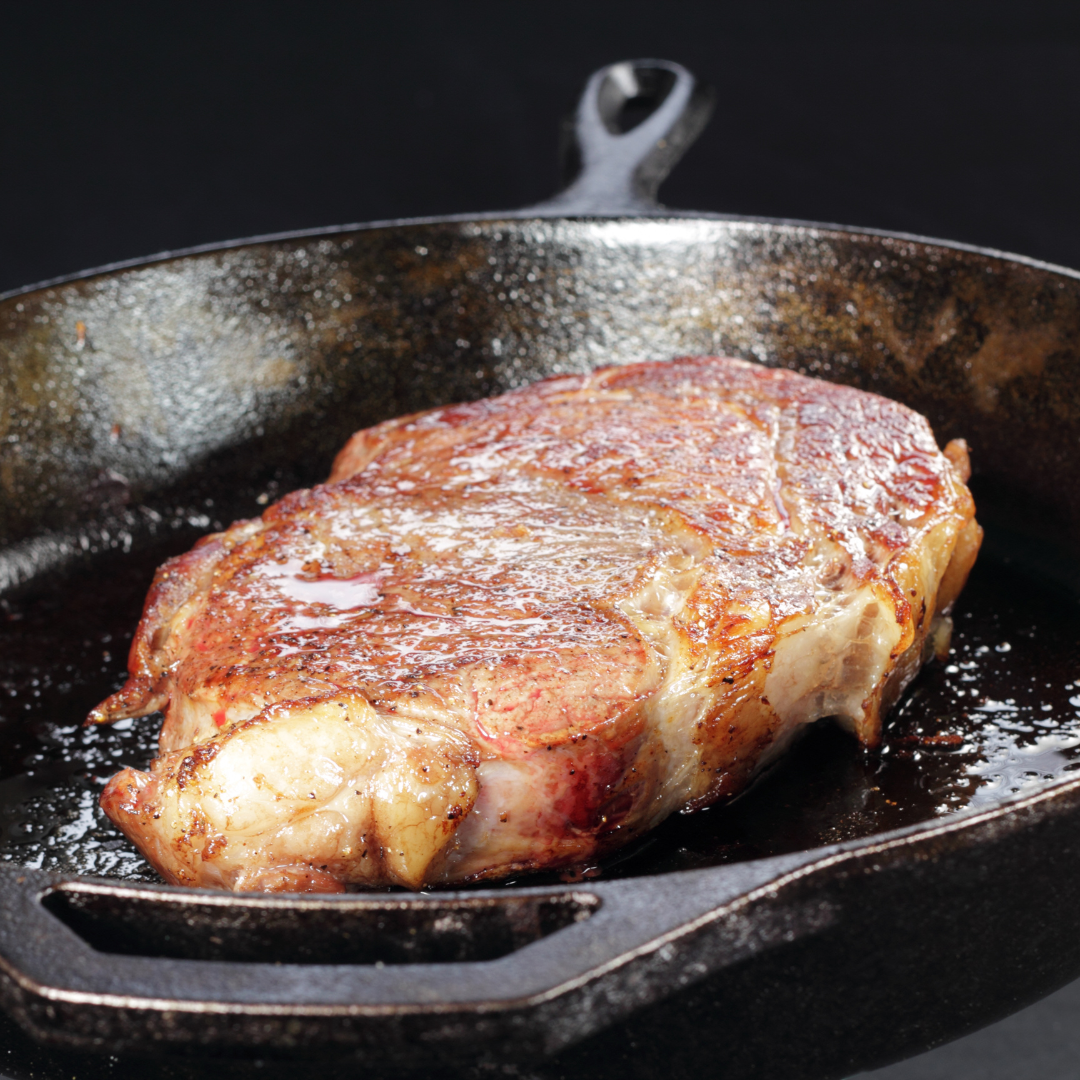
With your pan properly preheated and steak at room temperature, it’s time for the main event. Carefully place your seasoned T-bone in the hot pan—it should sizzle immediately and loudly. Resist moving the steak for 2-3 minutes to develop a proper crust. After this initial sear, use tongs to flip the steak (never pierce with a fork, which releases juices).
For a 1.25 to 1.5-inch T-bone cooked to medium-rare, plan for approximately 4-5 minutes per side. However, time alone is imprecise—rely on an instant-read thermometer for perfect results. Target 130-135°F internal temperature for medium-rare, knowing the steak will continue cooking 5°F during resting.
During the final minute of cooking, add aromatics to the pan for basting. A pat of butter, crushed garlic cloves, and fresh thyme create a fragrant mixture. Tilt the pan and spoon the melted butter continuously over the steak for added richness and depth.
Mastering Steak Doneness Levels

Understanding internal temperatures ensures you cook your T-bone steak to your exact preference:
Rare (125-130°F): Cool red center with minimal resistance when prodded. Preserves the steak’s natural tenderness and beefy flavor with almost no interior cooking.
Medium-Rare (130-135°F): Warm pink center with some resistance but still yielding texture. Most professional chefs consider this the perfect doneness level for maximizing flavor and texture.
Medium (140-145°F): Warm pink center transitioning to firmer, cooked meat toward the edges. Offers more developed flavor while maintaining reasonable tenderness.
Medium-Well (150-155°F): Only a hint of pink at the center with mostly gray-brown meat throughout. Results in noticeably firmer texture with reduced juiciness.
Well-Done (160°F+): Uniform brown color throughout with no pink. Produces the least tender and driest steak as extended cooking drives out most moisture.
Resting and Serving Your Perfect Steak
The resting period is essential for optimal results. Transfer your cooked T-bone to a clean cutting board and tent loosely with aluminum foil for 5-10 minutes. This allows juices to redistribute throughout the meat rather than running out when cut.
While resting, prepare serving plates and finishing touches. A compound butter melting over the hot steak adds luxurious richness, while a sprinkle of flaky sea salt enhances flavor. Carve properly by slicing perpendicular to the bone or cutting against the grain into strips for maximum tenderness.
Why Resting Time Is Non-Negotiable
Skipping the rest period results in dry steak as juices immediately run out onto your cutting board. During cooking, juices migrate toward the center of the steak. Resting allows these juices to reabsorb into the meat fibers, ensuring each bite remains moist and flavorful. The proteins also relax during this time, releasing tension created during cooking for superior texture.
Avoid These Common T-Bone Steak Mistakes
Learning from others’ errors puts you on the path to perfect results. Several common mistakes consistently undermine attempts to cook T-bone steak in cast iron pan:
Moving the steak too frequently prevents proper crust formation. Let it cook undisturbed for the full recommended time before flipping.
Using a cold pan ruins sear quality. Proper preheating of 5-10 minutes is essential—test with the water droplet method.
Overcrowding the pan causes steaming rather than searing. Work in batches with adequate space between steaks.
Cutting into the steak to check doneness releases juices. Use an instant-read thermometer instead.
Skipping the rest period results in dry steak. Plan 5-10 minutes of resting time into your cooking timeline.
Underseasoning hides the steak’s potential. Generous salt and pepper enhance rather than overpower quality beef.
Pro Tips for Cast Iron Steak Excellence
Elevate your results with professional techniques:
Reverse-searing involves cooking the steak slowly at low temperature in the oven first (275°F until internal temperature reaches 115°F), then finishing with a high-heat sear in the cast iron pan for 1-2 minutes per side. This produces more uniform doneness and an exceptional crust.
Dry-brining overnight intensifies flavor and improves texture. Season with salt 12-24 hours before cooking, leave uncovered on a rack in the refrigerator, then bring to room temperature before searing.
Finishing with herb butter adds restaurant-quality richness. Combine softened butter with fresh herbs and refrigerate. A generous pat atop your rested steak melts into a glossy, flavorful sauce.
Basting with aromatics during the final minutes infuses additional flavor. After flipping, add butter, garlic, and herbs to the pan, then continuously spoon the mixture over the steak.
Perfecting T-bone steak in cast iron pan combines simple technique with exceptional results. By selecting quality meat, preparing properly, preheating adequately, and resting appropriately, you consistently achieve steakhouse-quality results at home. Master these fundamentals, avoid common mistakes, and enjoy the satisfaction of perfectly cooked T-bone steak whenever the craving strikes.