You’ve admired those elegant fences gracing historic properties and modern estates alike—wrought iron fences that blend timeless beauty with formidable security. Today’s market offers diverse types of wrought iron fences that combine traditional aesthetics with modern manufacturing techniques, making them accessible for nearly any property. Whether you’re securing a suburban backyard or enhancing a commercial perimeter, understanding the different types of wrought iron fences helps you select the perfect balance of form and function. These fences have evolved beyond their historical roots to include advanced materials and protective coatings that deliver decades of reliable service without constant maintenance.
Modern wrought iron style fencing actually uses steel construction rather than true wrought iron, which hasn’t been commercially produced since the 19th century. Manufacturers now offer two primary construction approaches—solid steel and tubular steel—that replicate traditional wrought iron appearance while improving durability and security. Each type serves different applications and budgets, from ornamental residential boundaries to high-security commercial installations. This guide breaks down the essential types of wrought iron fences so you can make an informed decision for your specific property needs.
Solid Steel vs Tubular Steel Construction

Your choice between solid steel and tubular steel construction fundamentally shapes your fence’s performance, appearance, and installation process. Understanding these differences ensures you select the right type for your property’s specific requirements and security needs.
Solid Steel Wrought Iron Fencing
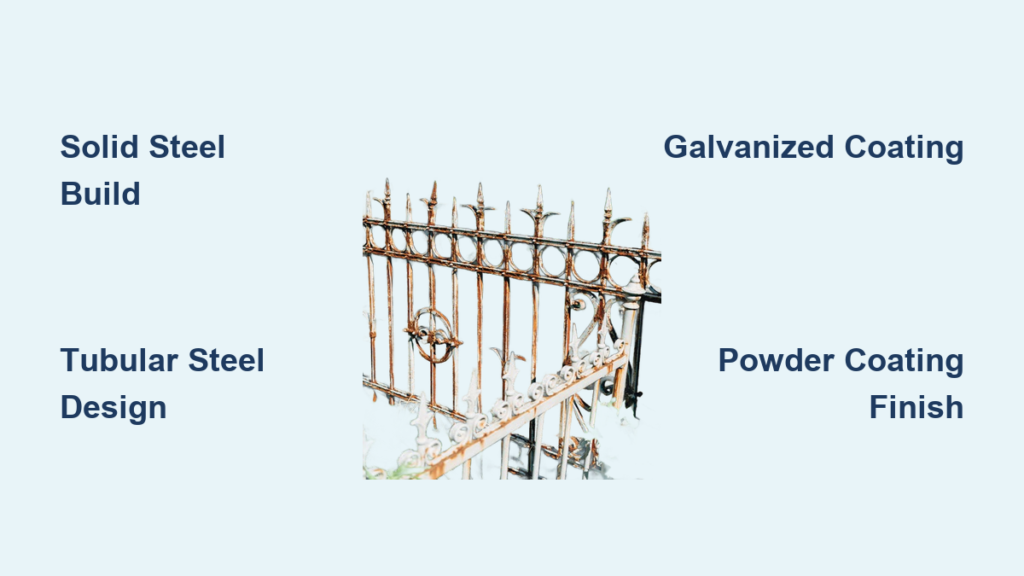
Solid steel fencing delivers maximum strength and security through its substantial construction using solid steel components rather than hollow tubes. This type of wrought iron fence provides the most authentic representation of traditional wrought iron aesthetics while offering superior structural integrity. You’ll notice the substantial weight immediately—this contributes to stability but means you’ll likely need professional installation assistance, especially for larger properties or commercial applications.
When evaluating solid steel fences, check for heavy-duty galvanization underneath the powder coating. This dual protection system prevents rust formation even when the surface finish gets scratched. Solid steel construction makes these fences particularly suitable for high-security applications where resistance to physical stress matters most. If you’re protecting valuable assets or need an imposing security barrier, solid steel’s resistance to cutting and bending provides peace of mind that lighter alternatives can’t match.
Tubular Steel Wrought Iron Fencing
Tubular steel fencing offers a practical alternative that maintains visual appeal while reducing cost and weight. Constructed from hollow steel tubes, this type of wrought iron fence gives you the classic ornamental look without the premium price tag of solid steel. The hollow construction makes panels significantly lighter, allowing DIY installation for standard residential projects without professional help.
Quality tubular steel fences feature powder-coated finishes that resist chipping and fading for years. Look for models with thick powder coating (at least 3-4 mils) over galvanized steel for maximum weather resistance. You’ll appreciate the versatility of tubular steel—it comes in various decorative patterns from simple pickets to elaborate scrollwork. For most residential applications where extreme security isn’t the primary concern, tubular steel provides the perfect balance of affordability, aesthetics, and adequate protection.
Design Styles and Ornamental Variations

The visual character of your wrought iron fence depends heavily on design elements that transform basic metal structures into distinctive property features. Understanding these ornamental variations helps you select a style that complements your architecture while meeting functional needs.
Picket Designs with Decorative Accents
Picket fencing remains one of the most popular types of wrought iron fences for residential properties, featuring vertical pickets that define boundaries while maintaining visibility. Modern picket designs incorporate decorative elements that elevate them beyond basic functionality. Pointed spear tops add security by creating physical and psychological barriers against climbing attempts—ideal if you need deterrence without appearing overly fortress-like.
Finial accents provide another customization option, with ornamental caps installed atop posts or pickets in various designs from simple balls to intricate scroll patterns. When selecting picket styles, consider how the spacing between pickets affects visibility and security. Closer spacing offers more privacy but less visibility, while wider spacing maintains sightlines but reduces security. For historic properties, reproduction finials matching your home’s architectural period create authentic curb appeal that boosts property value.
Scrollwork and Hoop Designs
Scroll designs feature curved metalwork that creates flowing, decorative patterns within fence panels, adding visual interest without compromising security. These organic shapes soften the typically imposing appearance of metal fencing, making them ideal for front yard installations where you want welcoming aesthetics. Look for continuous scroll patterns that run through multiple panels for a cohesive, custom appearance rather than repetitive stamped designs that look mass-produced.
Hoop designs incorporate arched or circular elements that create rhythm and traditional styling. Hoop-topped fence panels draw from classical fencing traditions, perfect for formal gardens or historic properties. When evaluating hoop designs, check the curvature quality—hand-forged or precision-bent hoops with smooth transitions indicate higher craftsmanship. These designs work particularly well for pool enclosures where safety requirements mandate specific heights but you still want attractive aesthetics.
Security-Focused Configurations
Security-oriented wrought iron fences incorporate specialized features engineered to deter unauthorized access while maintaining visual appeal. Anti-climb designs feature horizontal bars positioned to prevent footholds, making fences significantly harder to scale than standard vertical picket styles. Some high-security models include outward-facing spikes or rotating elements at the top that prevent climbing attempts.
When selecting security-focused fencing, prioritize construction quality over decorative elements. Look for heavy-gauge steel (10 gauge or thicker) with welded connections rather than bolted assemblies that could be disassembled. For commercial properties, consider integrating your fence with security systems—many wrought iron styles include mounting points for cameras, lighting, and access control systems. Remember that even decorative scrollwork can enhance security by creating complex surfaces that are difficult to grip.
Protective Coating Systems

The longevity of your wrought iron fence depends almost entirely on the quality of its protective coating system. Understanding these systems helps you evaluate product quality and expected service life before making your purchase.
Galvanization Process and Benefits
High-quality wrought iron fences use hot-dip galvanization as the foundational protective layer. This process bonds zinc to steel through metallurgical reaction, creating protection that works even when the surface gets scratched. Galvanized steel resists rust for decades under normal conditions, with service life extending significantly beyond wood or vinyl alternatives. In coastal areas with salt exposure, galvanized steel still outperforms unprotected metal by 5-10 times.
When shopping for wrought iron fences, ask for the galvanization specification—ASTM A123 is the standard for hot-dip galvanizing. Properly galvanized steel should have a minimum coating weight of 1.8 oz/ft² for optimal protection. This zinc layer provides sacrificial protection, meaning it corrodes first while protecting the underlying steel. Even if you accidentally scratch the surface during installation, the galvanization continues protecting the exposed steel.
Powder Coating Applications
Modern wrought iron fences almost always feature powder coating as the visible finish layer. This electrostatically applied dry powder creates a thicker, more durable finish than traditional paint. Powder coating resists chipping, fading, and peeling far better than liquid paints, maintaining your fence’s appearance for years with minimal maintenance. Available in nearly any color, powder coating lets you customize your fence to match your property’s aesthetic.
Premium manufacturers use a duplex system combining galvanization with powder coating for maximum protection. The powder coating thickness matters—look for finishes of at least 3-4 mils (0.003-0.004 inches). Thicker coatings provide better UV resistance and physical protection against scratches. When inspecting samples, check for smooth texture without orange peel effect or runs, which indicate poor application technique that could compromise protection.
Installation Methods for Different Terrain
Your property’s terrain significantly impacts installation requirements for wrought iron fences. Understanding these methods ensures your fence remains stable and attractive regardless of ground conditions.
Stepped Installation for Sloped Terrain
If your property has slopes, stepped installation creates the most visually appealing result while maintaining structural integrity. This method installs each fence panel horizontally rather than following the slope, creating distinct “steps” as the terrain rises. You’ll need to excavate terraces at each post location to create level surfaces for proper panel alignment—this requires more labor but delivers superior results.
For slopes exceeding 15 degrees, stepped installation prevents the fence from appearing to lean or sag. Each horizontal section should span no more than 6-8 feet between posts for optimal stability. Professional installers use laser levels to ensure perfect alignment across multiple stepped sections. While more labor-intensive, this method preserves the clean lines that make wrought iron fences so visually appealing, avoiding the awkward appearance of fences that follow steep slopes.
Maintenance and Service Life Expectations
Wrought iron fences require minimal maintenance compared to wood alternatives, but proper care extends their service life significantly. Understanding these requirements helps you plan for long-term ownership.
Routine Maintenance Procedures
Your wrought iron fence needs only occasional cleaning with mild detergent and a soft brush to remove dirt and debris. Avoid pressure washing at close range, as high pressure can damage powder coating and force water into joints. Inspect your fence annually for coating damage—small scratches can be touched up with matching paint to prevent rust formation.
Pay special attention to gate hardware, which requires periodic lubrication for smooth operation. Check post stability annually, especially after extreme weather events. If you notice any rust spots despite protective coatings, address them immediately by removing rust, applying rust converter, and repainting the affected area. With these simple maintenance steps, your wrought iron fence will maintain its appearance and structural integrity for decades.
Selecting the Right Fence Style
Choosing the perfect wrought iron fence requires balancing aesthetics with functionality. Consider these factors to ensure your fence meets both visual and practical requirements.
Matching Style to Application Requirements
For front yard installations where curb appeal matters most, prioritize ornamental features like scrollwork and finials that complement your home’s architecture. Pool enclosures require specific safety features including self-closing gates and heights meeting local codes—typically 48-60 inches with no climbable elements below 36 inches. Commercial properties benefit from taller panels (6-8 feet) with security-focused designs that deter climbing attempts.
When evaluating different types of wrought iron fences, consider how the design affects visibility. More open designs maintain sightlines but offer less privacy, while denser patterns provide better security at the cost of visibility. For historic properties, research period-appropriate styles to maintain architectural integrity. The right wrought iron fence enhances your property’s appearance while fulfilling its functional purpose—don’t sacrifice security for aesthetics or vice versa.