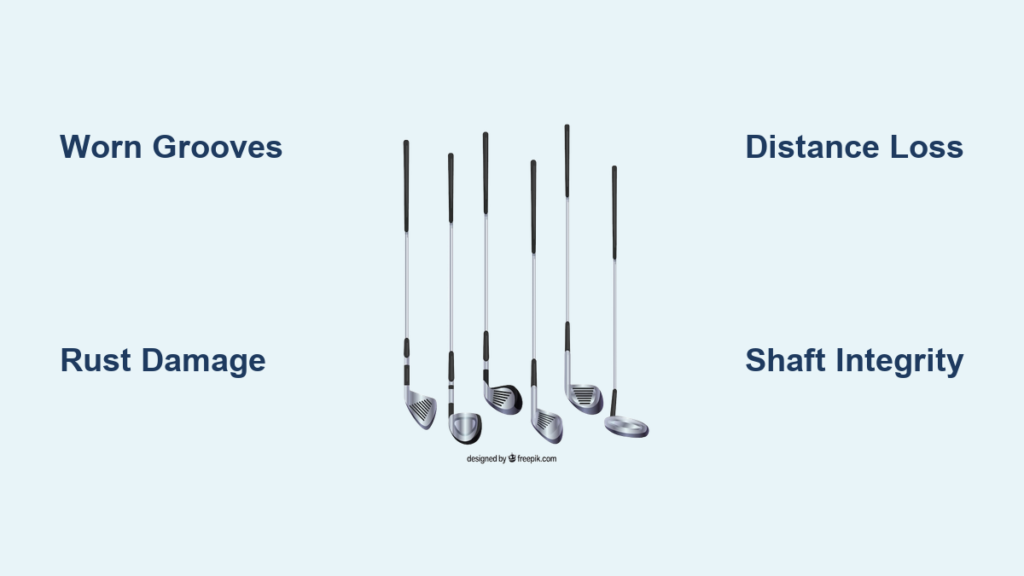
Your golf irons quietly shape every approach shot you play, yet most golfers overlook the critical question of when to replace golf irons until performance issues become impossible to ignore. Holding onto worn clubs can cost you several strokes per round without you even realizing equipment is the culprit. Modern irons lose performance characteristics after thousands of impacts, with groove wear, face degradation, and shaft fatigue silently undermining your scoring potential. This comprehensive guide reveals the exact signs that signal it’s time for new irons—from visible damage you can spot with a quick inspection to subtle performance changes that affect your game more than you might think. Understanding when to replace golf irs isn’t just about calendar dates; it’s about recognizing the physical evidence and performance metrics that determine your equipment’s true lifespan.
Spot Critical Wear on Your Iron Clubfaces
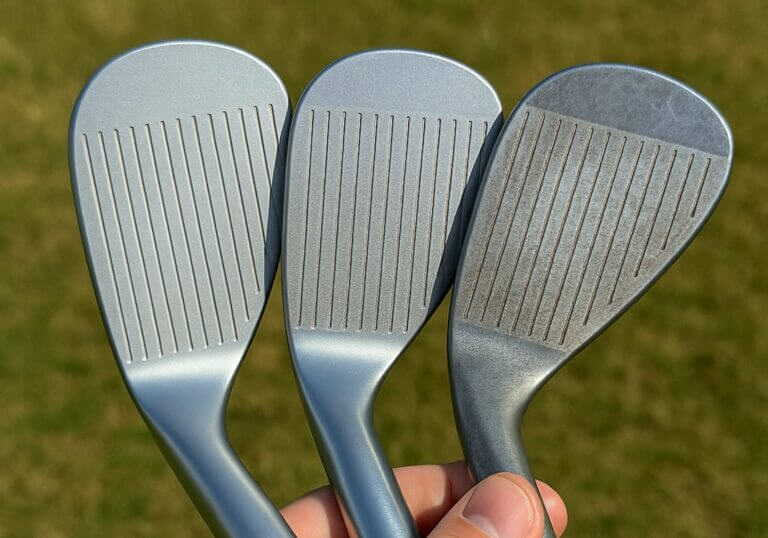
Visible damage provides the clearest evidence that it’s time to replace golf irons, with clubface condition directly impacting ball interaction at impact. Regular inspection takes only minutes but prevents months of frustrating inconsistency.
Check for Groove Degradation That Kills Spin
Worn grooves dramatically reduce your ability to control approach shots, especially in wet conditions where spin matters most. Run your fingernail across the face—if you don’t feel distinct edges between grooves, they’ve worn down significantly. When groove depth decreases by 30% or more, your irons can’t grip the ball properly, causing approach shots to release unpredictably on greens. Players who practice frequently notice this wear within 12-18 months, while weekend golfers might extend groove life to three years. If you’re suddenly struggling to stop balls on the green despite solid contact, inspect your grooves immediately—this common sign often gets misdiagnosed as a swing flaw.
Identify Dangerous Rust and Pitting
Surface rust and pitting create an uneven striking surface that sends balls off-line without warning. Check for discoloration or rough spots on the face, particularly around the sweet spot. Rust develops when clubs stay damp after rounds or get stored in humid environments, progressively weakening the metal structure. Deep pitting requires immediate replacement—not just for performance reasons but safety concerns, as severely corroded faces could potentially fail on impact. While minor surface wear is normal, any rust that catches your fingernail indicates significant degradation that affects ball flight consistency.
Detect Hidden Shaft Damage
Shaft problems often go unnoticed until performance plummets. Steel shafts develop internal rust where they enter the hosel, while graphite shafts splinter near connection points. Rotate each shaft slowly while applying light pressure—you should feel for flat spots, dents, or areas with different flex characteristics. A damaged shaft transfers energy inefficiently, causing distance loss and inconsistent feel that undermines confidence. If your once-reliable seven-iron now produces unpredictable results despite solid contact, shaft integrity deserves immediate inspection before you waste time chasing phantom swing issues.
Recognize Performance Decline Before It Ruins Your Game
Your irons communicate replacement needs through changing performance characteristics that many golfers mistakenly attribute to swing flaws rather than equipment failure.
Track Widening Distance Gaps Between Clubs
Consistent yardage gaps define an effective iron set, so when you notice unexpected variations of 10-15 yards between identical swings with the same club, your irons have likely reached their functional limit. This inconsistency stems from degraded face spring—the engineered flex that diminishes over thousands of impacts. Monitor your distances using a GPS or rangefinder app over several rounds; significant widening between clubs signals it’s time to replace golf irons. Many golfers ignore this indicator until their five-iron performs like a six-iron and their six like a seven, creating dangerous gaps in their scoring clubs.
Notice Reduced Ball Control on Approach Shots
Control issues manifest as shots that once stopped quickly now racing across greens or chips that release unpredictably. These problems often trace back to worn grooves that fail to impart proper spin at impact. If you find yourself unable to execute specific distances or control shot shape despite maintaining solid fundamentals, your equipment deserves scrutiny. The psychological impact compounds physical limitations—as control diminishes, confidence erodes, making rounds increasingly frustrating. Don’t assume these issues reflect declining skill; your irons might simply be worn out.
Measure Unexpected Distance Loss
Significant distance reduction with irons often indicates equipment degradation rather than physical decline. If your seven-iron now travels 10-15 yards shorter without changes to your swing speed or fitness level, worn clubheads likely cause the loss. Modern irons are engineered with specific flex characteristics that deteriorate over time. Compare current distances against past performance records—if iron distances decline consistently across your set, replacement becomes necessary. Many golfers mistakenly blame aging bodies for distance loss when their equipment has simply reached its replacement point.
Determine Your Personal Iron Replacement Timeline
General guidelines help plan equipment purchases, but your specific usage patterns dramatically affect when to replace golf irons.
Match Replacement to Your Playing Frequency
Golfers who play regularly—two to three times weekly—typically need iron replacement every three to five years. Aggressive swingers wearing out clubs faster may need replacement closer to the three-year mark, while casual players might extend iron life toward seven years. Competitive golfers and teaching professionals often replace irons annually to maintain peak performance. Track your round count and practice frequency to estimate your personal timeline rather than following generic advice that doesn’t account for your actual usage.
Factor in Your Unique Usage Conditions
Cart golfers experience less impact shock than walking players who carry their bags, affecting shaft longevity differently. Those who practice extensively at driving ranges subject irons to additional impacts beyond tournament play. Wet conditions and humid storage accelerate rust development, while aggressive ball-strikers generate more face stress than sweeping swingers. Consider your complete usage profile—playing frequency, practice habits, environmental conditions, and swing characteristics—to determine your true replacement timing.
Balance Technology Advancements Against Performance Needs
Major manufacturer advances in clubhead design occur roughly every four to five years, offering tangible performance benefits. Golfers using irons older than seven to ten years often discover meaningful distance and forgiveness improvements by upgrading. However, technology alone shouldn’t dictate replacement—performance decline provides the primary signal. If your current irons perform satisfactorily and fit your game well, waiting for compelling technological reasons makes financial sense rather than upgrading on a fixed schedule.
Maximize Value Through Smart Replacement Decisions

Understanding cost versus performance helps time purchases intelligently without overspending or underinvesting in new irons.
Calculate Your True Cost Per Round
If you purchased irons for $1,200 and used them for five years while playing 200 rounds annually, your cost equals approximately $1.20 per round—a reasonable investment for equipment impacting every aspect of your game. Compare this against performance benefits new irons provide. When current irons limit scoring potential and new clubs demonstrably improve distance or accuracy, the incremental cost often justifies replacement. Conversely, replacing functional irons prematurely wastes money better spent on lessons or practice.
Evaluate Performance Return on Investment
Higher handicap golfers often gain more from iron replacement than low handicappers, since game improvement irons offer substantial forgiveness benefits. A fifteen-handicap golfer switching from decade-old irons to modern equivalents might see meaningful improvements in consistency. Single-digit handicappers using forged blades gain less from incremental technology, as their skill level already maximizes equipment performance. Assess whether new irons genuinely unlock additional performance or offer only marginal improvements—lessons and practice often yield better returns than equipment upgrades for most golfers.
Leverage Trade-In and Resale Options
Used iron values decline rapidly, with most sets losing 60-70% of retail value within two years. However, quality brands retain better resale values than lesser-known alternatives. Investigate trade-in programs from major retailers offering 20-40% credit toward new purchases. Online marketplaces provide additional resale options for sets in good condition. Factor these proceeds into your replacement timing decision—they can make new irons significantly more affordable when you know precisely when to replace golf irons.
Extend New Iron Lifespan Through Proper Care
After replacing your irons, proper maintenance protects your investment and maximizes performance throughout ownership.
Implement Simple Cleaning and Storage Habits
Clean irons after every round using warm water, mild soap, and a soft brush to remove debris from grooves. Dry clubs thoroughly before storage to prevent rust development, and store them in climate-controlled environments away from temperature extremes. Bag dividers that keep clubs separated prevent unnecessary contact damage during transport. These simple habits add years to iron lifespan while maintaining peak performance.
Establish Monthly Inspection Routines
Schedule regular inspections checking groove condition, shaft integrity, and grip wear. Early detection of developing problems allows for repairs or gradual planning toward eventual replacement rather than surprise failures during competitive seasons. Document findings to track wear progression and anticipate replacement timing more accurately. Pay particular attention to your most-used irons (typically five through seven), which show wear faster than others in your set.
Knowing exactly when to replace golf irons transforms your approach shots from inconsistent variables to reliable scoring tools. Monitor visible wear, track performance changes, and trust your confidence levels as primary indicators—when approach shots feel unpredictable despite solid contact, replacement becomes necessary. For most regular players, the three-to-five-year window provides a useful guideline, but your personal usage patterns ultimately determine the optimal timing. When replacement arrives, invest in a professional fitting to ensure new irons complement your swing characteristics, then protect your investment through proper maintenance that extends peak performance throughout ownership.